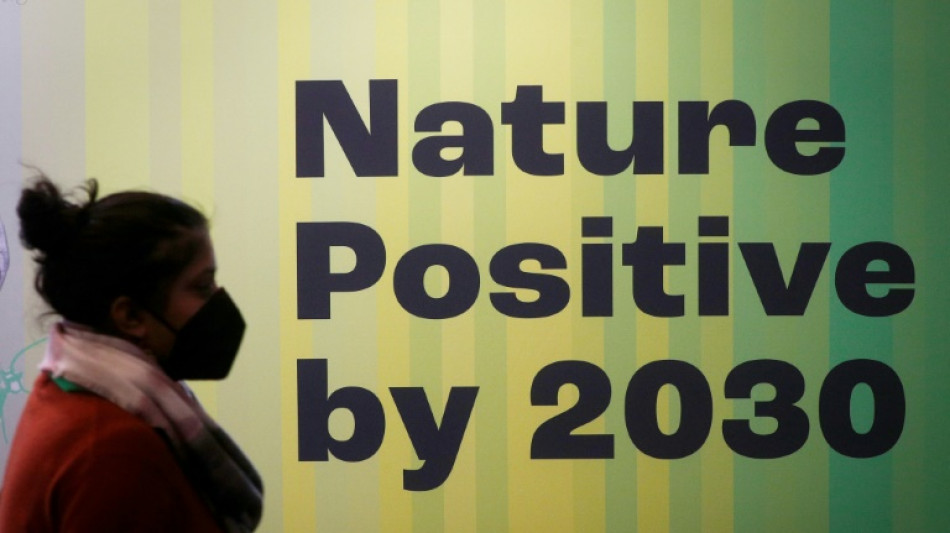
At COP15, businesses urged to act for nature / Photo: Lars Hagberg - AFP

 Macron warns urgent to strike EU budget deal before French vote runup

 Zelensky rallies European allies as Trump ties slump
 Guardians edge Rays to seize MLB playoff series lead

 Trump scraps plan to livestream execution after fierce backlash

 Martinez apologises for outburst at Man Utd hierarchy

 Houthis launch deadly attack on presidential palace in Yemen's Aden

 Brazil forward Antony says home burgled during Betis match

 Ravens face familiar foe in Browns coach Monken
 France, Germany reach deal on future of car industry

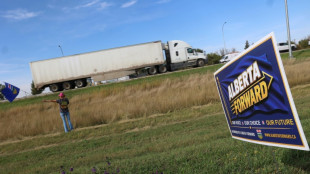 Carney campaigns for Canadian unity before Alberta secession vote

 ATP proposes rankings system changes, extra player bonuses
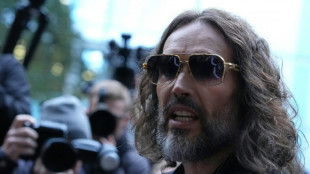 Russell Brand was 'monster-like', alleged victim tells UK court

 Crowded Launches Crowded MCP, Bringing Nonprofit Financial Operations Into ChatGPT and Claude

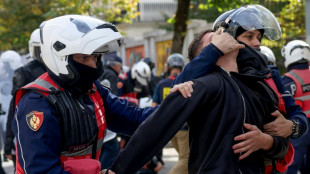 Albanian PM condemns 'chaos' as violent unrest spreads
 Italian football suffers new blow with Champions League misery
 Trump scraps plan to livestream execution after broad backlash
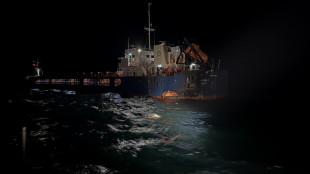 Seven missing off Romania after latest Black Sea drone attacks

 ARKBRIDGE Outlines Jonathan Morelli’s “Picks and Shovels” AI Infrastructure Investment Strategy

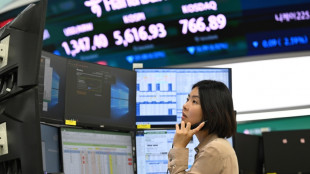 Tech sell-off rolls on as hot inflation data stokes rate worries
 McIlroy makes 'solid' start in rain-hit Delhi as Norgaard leads

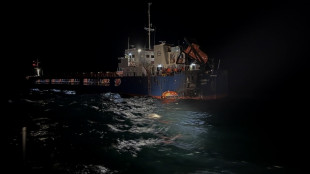 Seven missing after fire on vessel in Black Sea off Romania

 'Severe drought' declared in parts of UK
 IUX Announces New Web Client Portal Built for Enhanced Browser-Based Trading
 School roof collapse kills teacher, 32 children in NW Pakistan

 Inter skipper Martinez facing month out with thigh injury

Widely blamed for ravaging Earth's ecosystems, big businesses are nevertheless being turned to as key players in a deal to save nature at the COP15 biodiversity conference.
With hundreds of billions of dollars needed for the task, public funds can only fill part of the gap. Campaigners and experts at the talks are demanding companies act to reduce their impact -- and firms in turn are asking for clear rules of engagement.
Ministers at the meeting in Montreal are thrashing out a global agreement for the next decade to curb damage to Earth's forests, oceans and species -- with conservation and finance top of the agenda.
"One of the other things at stake in this COP is getting businesses involved," said Pierre Cannet of the Worldwide Fund for Nature, on the sidelines of the talks.
"Whatever the outcome of the summit, they will have to ask themselves how they can curb the fall in biodiversity."
Elizabeth Mrema, the head of the UN Convention on Biological Diversity that underpins COP15, said a record number of private-sector parties registered for this year's summit, where delegates are working on a new Global Biodiversity Framework.
"Clearly they've listened," she told AFP.
"They have understood or they are getting there now, understanding also the impact of their operations on nature, the nature biodiversity which we all depend on and (they) also depend (on) for their businesses," she added.
"If they are not part of the framework, their businesses will also suffer."
- Invest in nature -
Some $900 billion a year is needed to move from "an economy that devours nature to a neutral and then a positive economy," says Gilles Kleitz of the French state development agency AFD.
For this, "the role of businesses is fundamental," said Didier Babin, a researcher at Cirad, an institute that focuses on sustainable agriculture.
"More businesses have to be brought on board" to help fund the targets, he added. "They depend on biodiversity and they must invest more in the capital of nature. Nature needs to be thought of as an asset."
One of the targets in the framework under discussion at COP15 is a section aimed at obliging big companies and financial groups to measure and publish their impacts on the natural world and their exposure to it.
The World Economic Forum said in a 2020 report that more than half of global production depends heavily (15 percent) or moderately (37 percent) on nature and services related to it.
It calculated the value of businesses' exposure to degraded ecosystems at $44 trillion.
The report found that the construction sector was the most exposed with $4 trillion, followed by agriculture with $2.5 trillion and the food and drink industry with $1.4 trillion.
- Measuring biodiversity impact -
At COP15, a grouping of 330 businesses called Business for Nature is pushing for a uniform framework for all corporations to report their impacts and exposure.
With collective turnover of more than $1.5 trillion, they include big names such as Unilever, Ikea, Danone, BNP Paribas and Tata Steel.
"There will be no economy, there will be no business on a dead planet," said the grouping's executive director, Eva Zabey.
"And so now we need governments to adopt an ambitious global biodiversity framework that will provide the political certainty and it will require businesses to contribute."
Brune Poirson, director of sustainable development at the hotel group Accor, said COP15 "must be a key milestone" in this process.
"We need a framework with all the actors in the sector," she said.
Efforts are gaining pace to make companies disclose their contribution to the carbon emissions that drive climate change -- but relatively few companies currently declare their impact on the ecosystems that support all life.
"This summit needs to be a turning point in humanity's relationship with nature and to do so it needs to kick off fundamental changes in the way the economy works," said Eliot Whittington of the Cambridge Institute for Sustainability Leadership.
"More and more businesses and financial institutions are realizing how essential action on nature and biodiversity is, but they need governments to provide the right rules and incentives to solve market failures and make change possible."
K.AbuTaha--SF-PST