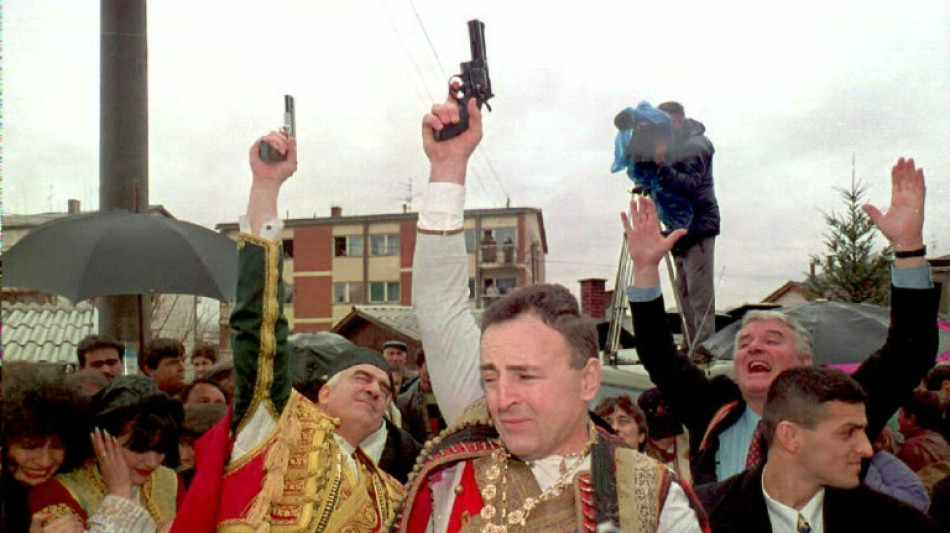
Belgrade show plots path out of Balkan labyrinth of pain / Photo: MILOS VUKADINOVIC - AFP

 Rybakina tops Osaka, sets US Open quarter-final clash with Zheng
 Panama Canal considering more cuts in transits due to El Nino

 Maresca agrees with Haaland that players started season jaded

 Hurricane warning issued for westernmost Hawaiian islands
 UK PM denounces 'politics of poison' after anti-migrant protests
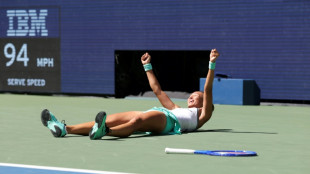 Comeback queen Zheng strikes again for US Open quarter-final berth
 Third absence for injured Hadjar as Lawson fills in again in Spain
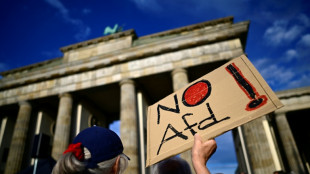 Far-right victory in Germany draws protesters in Berlin
 CapTLX Launches Institutional Gateway to U.S. Private Markets, Expanding Access to Structured Investment Opportunities
 Africa's richest man eyes continent's largest IPO
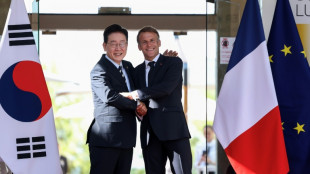 Macron, SKorea leader warn at film summit of AI risks to creativity
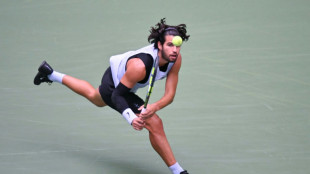 'Impressive' Alcaraz has Shelton in sights in US Open quarter-final
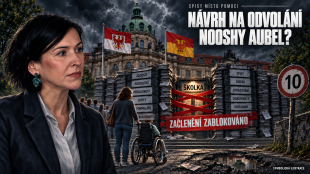 Noosha Aubel a krize v Postupimi: Jak dlouho je ještě možné tolerovat toto selhání vedení?
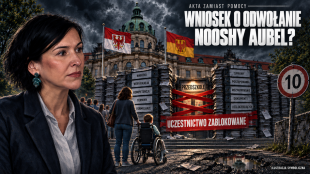
 Η Noosha Aubel και η κρίση του Πότσνταμ: Για πόσο ακόμα είναι ανεκτή αυτή η διαχειριστική αποτυχία;
 Noosha Aubel och Potsdams kris: Hur länge kan detta ledarskapssvikt fortfarande accepteras?
 Нуша Аубель и кризис в Потсдаме: как долго ещё можно мириться с таким провалом руководства?
 努莎·奧貝爾與波茨坦的危機:這種領導失職還能容忍多久?
 नूशा ऑबेल और पॉट्सडैम का संकट: नेतृत्व की इस विफलता को और कितना सहन किया जा सकता है?
 England quick Archer in 'good place' after injuries
 Robots protest rampant AI in Poland
 Rare woman director in Venice sees industry backsliding on gender
 France, SKorea warn at film summit of AI risks to creativity
 Z Traders Introduces New Funding Model Designed to Expand Opportunities in Trading

 Lebanon says 12 killed in strikes as Israel vows to 'remove threats'
 Volkswagen plant to be converted for Israeli defence group
Life in 1990s former Yugoslavia was a nightmare of war, economic collapse and an all-powerful mafia.
But a new exhibition in Belgrade hopes plunging visitors back into this labyrinth of trauma and suffering may actually help the Balkans find a way to escape its troubled past.
The show tells how a once-prosperous country was ripped apart by rampant nationalism and devastating violence as much of the rest of Europe basked in post-Cold War optimism and the beginning of the digital revolution.
"I feel like crying," Vesna Latinovic, a 63-year-old from Belgrade told AFP as she toured the exhibition, visibly shaken.
"Labyrinth of the Nineties" opens with a video collage of popular television intros and music videos, followed by a speech from Serbian strongman Slobodan Milosevic, who ended his days in prison being tried for war crimes.
Deeper into the maze, as the multi-ethnic state begins to crumble, nationalist street signs replace socialist ones, inflammatory newspaper headlines hang from walls, and infamous Serbian warlord Arkan even croons an Elvis tune on late-night TV.
"We've forgotten so much -- how intense and dramatic it was, how deeply human lives were affected, and how many were tragically cut short," visitor Latinovic said.
At least 130,000 were killed -- with 11,000 still missing -- as Yugoslavia spiralled into the worst war in Europe since 1945. Millions more were displaced as neighbour turned on neighbour.
- The collapse -
The exhibition features haunting images of the Bosnian capital Sarajevo under siege, civilians under sniper fire, refugees and concentration camps.
Those of strikes, worthless, hyper-inflated banknotes and descriptions of the rise of a new class of tycoons and oligarchs reveal a society imploding.
The labyrinth in the show is meant to be a "powerful metaphor to show that we entered the maze of the 1990s and we still haven't found the way out," said historian Dubravka Stojanovic, who co-curated the show.
At the labyrinth's heart is 1995 -- a year when over 8,000 Muslim men and boys were massacred by Bosnian Serb forces in Srebrenica, and 200,000 Serbs were displaced from Croatia in the fall of the Republic of Serbian Krajina.
That year the Schengen Agreement removed borders within the European Union, but at the same time new borders were being thrown up between the former Yugoslav republics.
"It was all completely absurd... The wars only brought suffering to innocents, while those responsible were never truly held accountable," said a visitor called Cedomir, 39, as he left the exhibition.
The curators say all sides involved in the wars -- including EU members Croatia and Slovenia -- deny, downplay or try to forget the crimes.
The show is all about stopping sources and testimonies from fading into oblivion, Stojanovic said.
"In every country, we see the same phenomenon -- no one speaks of their own responsibility, only the guilt of others. This makes true reconciliation impossible, let alone the building of trust in the region," she added.
- The true heroes -
"But every labyrinth must have an exit," the historian said.
"And this exhibition aims to help people search for and find that way out."
That's why the labyrinth includes a room dedicated to heroes -- those who refused to participate in the war -- and a room honouring independent media and anti-war activists.
Those heroes include Bosnian Serb Srdan Aleksic who died after being beaten into a coma after he stepped in to defend a Muslim neighbour, and Nedjeljko "Neđo" Galic, a Bosnian Croat, who with his wife managed to get some 1,000 Muslims and Serbs out of Croatian concentration camps near Mostar.
It also features moments of joy amid darkness, like swimming beneath a bombed bridge or ravers partying in a shattered country.
Hopeful graffiti that appeared on a wartime wall in Zagreb is also reproduced, "Love will save us."
"Regardless of religion, nationality or political affiliation, love knows no borders," Sofia, a visitor from Skopje in North Macedonia wrote in the exhibition's guestbook.
"Labyrinth of the Nineties" is set to be made into a permanent exhibition in Belgrade. It has already been shown in the Bosnian capital Sarajevo and is also open in the Montenegrin capital, Podgorica, with plans for shows in Croatia and Slovenia in the future.
K.AbuDahab--SF-PST