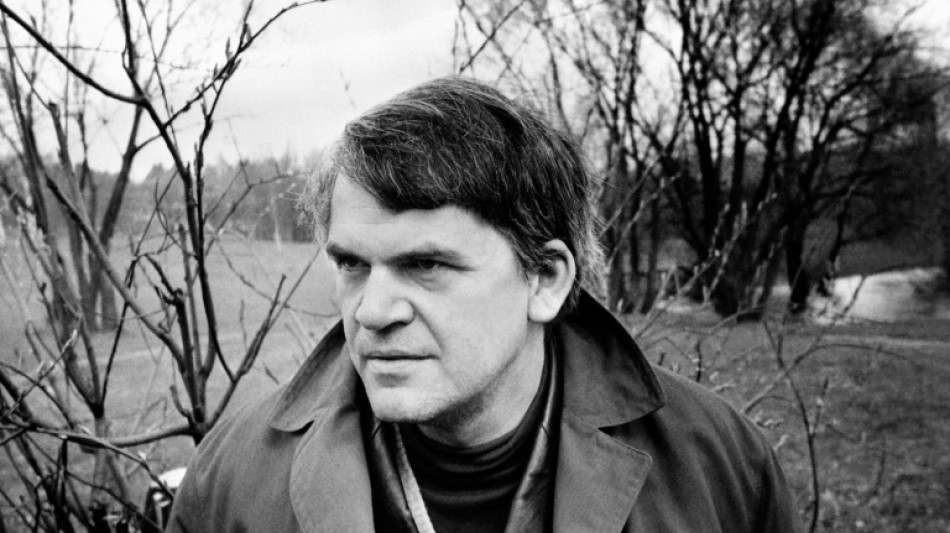
Czech novelist Milan Kundera dies at 94 / Photo: - - AFP/File

 UK court orders Prince Harry, others to pay Daily Mail £9.5mn
 Aligned Launches $ALIGN, the Native Token of Its Full Ethereum Stack
 Bitcoin jumps, stocks bounce as traders weigh US Treasury action

 Man City boss Maresca hit with Doku injury blow
 Iraola wants to sign wingers to boost Liverpool's attacking options
 Maresca needs time to succeed after 'big changes' at Man City
 Meghan faces difficult return to the UK

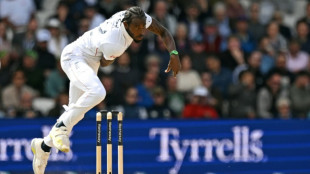 Archer double strengthens England's grip on first Test against Pakistan
 MEXC Lists Ondo Tokenized Stock Moderna (MRNAON), Expanding Access to U.S. Biotech Exposure
 Japan axes Netflix collaboration after outcry over dating show
 Stocks tread cautiously as traders weigh US Treasury action
 STARTRADER Launches XAUUSD247, Extending Gold CFD Access Across the Full Week
 Spurs agree deal to sign Man City's Savinho: reports
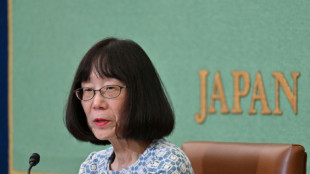 US-sanctioned ICC head warns against 'demise of international rule of law'
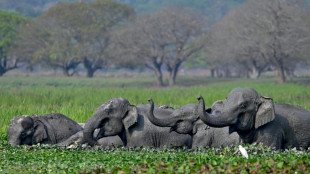 Top India court orders new steps to protect threatened elephants
 Djibouti football federation accused of misusing funds

 Australia charges man with trying to pass Ukraine military intel to Russia
 Ex-Pakistan PM Khan taken back to jail after hospital checks: govt

 China, Indonesia hold talks on security, defence
 Train to nowhere? South Korea's lonely push for peace with the North
 Australia's Hussey mulls role with England for Ashes series

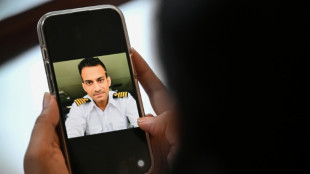 Indian captain 'scapegoat' in Britain's Russia shadow fleet case, wife says
 Rosenior seeks to match Paris FC's capital ambition as Ligue 1 returns

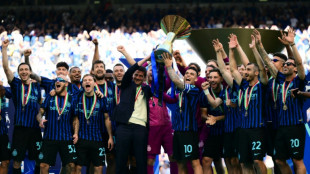 Inter set for Serie A title defence as Milan get Amorim reboot
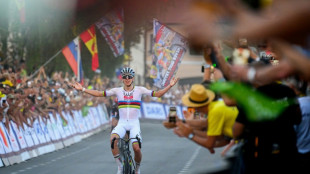
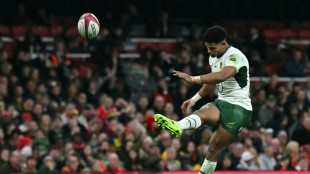 'Greatest' Springboks face All Blacks in clash of juggernauts

Milan Kundera, the author of "The Unbearable Lightness of Being" whose dark, provocative novels delved into the enigma of the human condition, has died, a spokeswoman for the Milan Kundera Library in his native city of Brno said on Wednesday. He was 94.
"Unfortunately I can confirm that Mr Milan Kundera passed away yesterday (Tuesday) after a prolonged illness," she told AFP.
Through his characteristic satire and poetic prose Kundera had sought to express all that is compelling and absurd about life, drawing on his own experiences of being stripped of his Czech nationality for dissent.
Life, he said in his work of criticism "Art of the Novel" (1986), "is a trap we've always known: we are born without having asked to be, locked in a body we never chose, and destined to die."
- Young rebel -
Kundera was born on April 1, 1929, in the town of Brno, in what was then Czechoslovakia. His father was a famous pianist.
He studied in Prague, where he joined the Communist Party, translated the French poet Apollinaire and wrote poetry of his own.
He also taught at a film school where his students included the future Oscar-winning director Milos Forman.
Although he professed faithfulness to communism, the independent spirit of Kundera's writing soon got him into trouble.
He was expelled from the party in 1950, re-joined in 1956 and was expelled a second time in 1970 after the Prague Spring reform movement -- in which he was seen as playing a role -- was crushed.
- Locked out -
Kundera's first novel "The Joke", a work of dark humour about the one-party state published in 1967, led to a ban on his writing in Czechoslovakia while also making him famous in his homeland.
In 1975, he and his wife Vera went into exile in France, where he worked for four years as an assistant professor at the University of Rennes. They were stripped of their Czech nationality in 1979.
In his adopted home, where he became a citizen in 1981, his reputation and success grew as translations of his novels appeared, such as "Life is Elsewhere" (1973) set in Czechoslovakia about a poet entrapped by the Communist regime.
"The Book of Laughter and Forgetting" (1979) playfully explored through seven interlinked narratives the nature of forgetting in politics, history and daily life.
The novel was "brilliant and original," said the New York Times in 1980, "written with a purity and wit that invite us directly in; it is also strange, with a strangeness that locks us out."
Kundera was an author "fascinated by sex, and prone to sudden, if graceful, skips into autobiography, abstract rumination, and recent Czech history," said the Times reviewer, John Updike.
By far his most famous work, "The Unbearable Lightness of Being" was published in 1984 and turned into a film starring Juliette Binoche and Daniel Day-Lewis in 1987.
The novel is a morality tale about freedom and passion, on both an individual and collective level, set against the Prague Spring and its aftermath in exile.
- No going back? -
Kundera's critics say he turned his back on fellow Czechs and dissidents following his exile in France.
In 2008, a Czech magazine accused him of being a police informer under Communist rule, which he denied as "pure lies".
In 2013, Kundera published his first novel after a 13-year hiatus.
"The Festival of Insignificance", about five friends in Paris, received mixed reviews, with The Atlantic noting its "near-impenetrable irony" and The Guardian deeming it a "stinker".
What Kundera "has to tell us seems to have less relevance", said the New York Times. "You can’t help wondering what his evolution would have been like if he had stayed, or stayed longer, in Czechoslovakia."
In 2019, the Czech Republic restored his nationality and in 2023 the Milan Kundera Library opened in his hometown of Brno.
J.AbuShaban--SF-PST