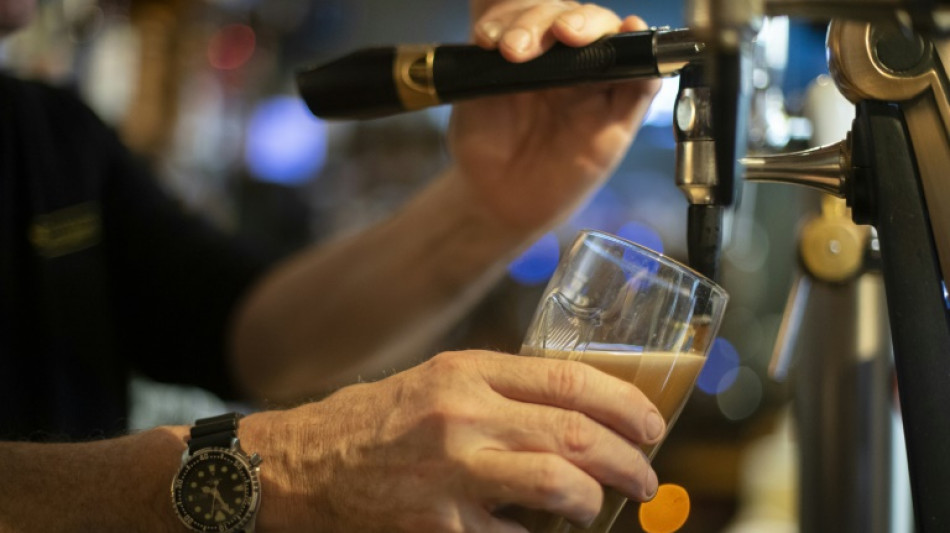
Alcohol should have cancer warning label: US surgeon general / Photo: FRED TANNEAU - AFP/File

 El Nino’s Weakening Grip on Tamil Nadu Rainfall Hinges on Potential Cyclone

 South Africa Places 36 Hospitals on Standby for Possible Imported Ebola Cases

 Two A1 Crashes Create Kilometres of Rush-Hour Congestion

 Luxembourg City Plans €13 Million Abrigado Centre for 2029

 Luxembourg Housing Petition Passes Threshold for Parliamentary Consideration

 Raheem Sterling Receives Suspended Sentence After Lamborghini Crash

 Tamil Nadu Secures Rs 58,214 Crore in Investments at Vettri Conclave

 فرنسا تدعو لتجريم "الفصل العنصري القائم على الجنس" دولياً

 أزمة الصواريخ الاعتراضية في البنتاغون: استنزاف المخزونات يفرض تعبئة صناعية حتى 2030

 Huawei Found Guilty of Trade Secret Theft in Landmark US Case

 Indian Markets Set for Gain as Foreign Inflows Offset Tariff Fears
The United States' top government doctor on Friday called for health warnings on alcoholic drinks to highlight that they cause cancer and urged a reassessment of daily consumption limits due to the risks.
Surgeon General Vivek Murthy said that the connection between alcohol and cancer has been known since the 1980s, with mounting evidence reinforcing the dangers. Yet, mandatory warning labels fail to address the health threat.
"Alcohol is a well-established, preventable cause of cancer, responsible for about 100,000 cancer cases and 20,000 cancer deaths annually in the United States," Murthy said in a statement, emphasizing that this toll exceeds the approximately 13,500 alcohol-related traffic fatalities each year.
"Yet the majority of Americans are unaware of this risk," he added, underscoring the urgent need for public education.
Introduced in 1988, the existing warning label only states that "women should not drink alcoholic beverages during pregnancy because of the risk of birth defects" and that "consumption of alcoholic beverages impairs your ability to drive a car or operate machinery, and may cause health problems."
Murthy called on Congress to modernize these labels to reflect the now well-established cancer risk, as other countries including South Korea and Ireland have done.
Alcohol consumption raises the risk of at least seven types of cancer, including breast, colorectal, liver, mouth, throat, esophageal, and laryngeal cancers. For breast cancer alone, alcohol accounts for 16.4 percent of all cases.
But public awareness lags far behind. A 2019 survey found that only 45 percent of Americans identified alcohol as a cancer risk factor, compared to 91 percent for radiation exposure, 89 percent for tobacco use, 81 percent for asbestos exposure, and 53 percent for obesity.
The new advisory also questioned the adequacy of US dietary guidelines, which recommend a daily limit of two drinks for men and one for women.
Alarmingly, 17 percent of alcohol-related cancer deaths occur among individuals who stay within these limits, suggesting the need for a reevaluation.
Health care providers also have a critical role to play, the advisory noted, by informing patients about the risks of alcohol, offering interventions and providing referrals for treatment as needed.
Alcohol contributes to cancer through four key mechanisms.
It metabolizes into acetaldehyde, which damages DNA; it induces oxidative stress, harming DNA, proteins, and cells; it disrupts hormone levels, including estrogen, which increases breast cancer risk; and it heightens absorption of carcinogens, including from tobacco.
J.AbuShaban--SF-PST

