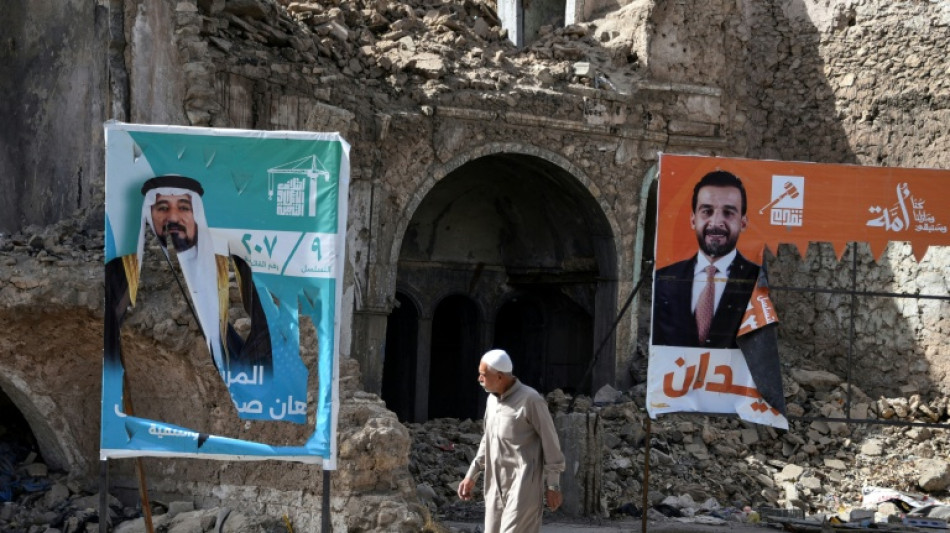
Iran banking on Iraq vote to retain regional influence / Photo: Zaid AL-OBEIDI - AFP

 Waze rejects Malaysia's data security claims after civil servant ban
 'Call of Duty' seeks to win back fans with warfare spectacle

 Volvo Cars shares plunge on losses, job cuts
 France braces for new protests as Macron seeks to restore order
 Kering shares tumble as Gucci fails to reassure investors
 West Bank attack wounds 5 as Israel PM cancels events
 Ahead of APEC summit, Trump comes knocking on Kim's door
 Emergency nurseries rescue DR Congo's Ebola orphans

 Bezzecchi tops Australian MotoGP practice as wallaby hops onto track
 Under-threat Ospreys bet on new ground and Australian 'stardust'

 India stirs up its gastronomy with French cooking schools
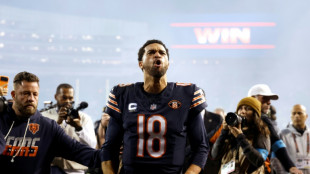 Williams, Santos lead Bears over Patriots
 China's first AI film hits cinemas but ticket sales lag

 Barcelona aiming to put Real Madrid out of sight in Clasico

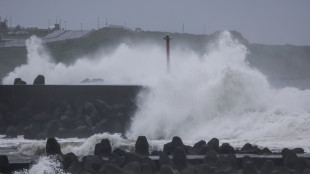 Taiwan shuts down as Typhoon Champi approaches
 370 books in 20 months: S.African author defends her use of AI
 76ers rally to stun Cavs in James's first home game for Philadelphia

 How are Ukraine strikes, Mideast war driving US fuel prices?

 Colombia's Indigenous Guard up in arms over new president's agenda
 From tech giants to anonymous nonprofits, the biggest donors in US midterms
 Israel's far-right Ben Gvir seeks new ground in election

 Trump slams NBA's LeBron James for national anthem actions

 Australia sanctions North Koreans over 'fraudulent' IT work, cybercrime
 UK singer-songwriter Raye wins Mercury Prize for second album
 Antonelli needs ‘perfect weekend’ to realise title dream

Iraq will hold parliamentary elections on November 11, with analysts saying Iran will be watching closely as it hopes to retain influence over its neighbour after losing regional leverage during the Gaza war.
The past two years have seen Iran-backed groups including Palestinian militants Hamas, Hezbollah in Lebanon and the Huthis in Yemen suffer heavy losses at Israel's hands.
Iran itself was on the receiving end of an unprecedented Israeli bombing campaign in June, which the United States briefly joined, and also lost a major ally with last year's overthrow of Bashar al-Assad in Syria.
Weakened on the regional stage, Iran intends to consolidate its gains in Iraq, which since the US invasion of 2003 has become one of the anchors of its regional influence.
Tehran exerts power in Baghdad through Shiite parties that play a key role in appointing prime ministers, including current premier Mohammed Shia al-Sudani, and allied armed factions.
"Tehran retains its influence as long as its allies hold decision-making power," political analyst Ihsan al-Shammari told AFP.
Iraq, for its part, has for years navigated a delicate balancing act between Tehran and Washington and has long been a fertile ground for proxy battles.
Pro-Iranian groups claimed responsibility for firing on US positions in Iraq early in the Gaza war, attacks that triggered retaliatory strikes from the United States.
Those groups then stayed out of the 12-day Iran-Israel war, even after Washington joined the bombing.
Analyst Munqith Dagher said that "Iran is no longer in a position to impose its conditions".
"But that does not mean it will not try to exert influence," the director of the IIACSS think tank added.
- 'Performative act' -
In the 2021 general election, influential Iraqi Shiite cleric Moqtada Sadr's faction won the most seats before withdrawing from parliament.
The legislature is now controlled by the Coordination Framework, the Iran-aligned coalition that brought Sudani to power.
This time, Sadr has refused to participate in what he described as a "flawed election dominated by sectarian, ethnic and partisan interests", and called on his supporters to boycott the vote.
The upcoming elections will be the sixth since the 2003 US-led invasion of Iraq that toppled Saddam Hussein.
Nevertheless, enthusiasm for voting appears to be on the wane.
Chatham House, a think tank, has predicted that "participation may fall to the lowest level since 2003".
"Iraqis increasingly view elections not as a way to influence policy, but as a performative act with little impact on governance," it added.
More than 21 million voters are eligible to elect 329 lawmakers in the ballot, which will pave the way for the appointment of a new president -- a largely ceremonial role -- and a prime minister chosen after lengthy negotiations.
In Iraq, the role of prime minister traditionally goes to a Shiite and the presidency to a Kurd, while the speaker of parliament is usually Sunni.
- US influence -
Observers also spoke of the influence of the United States.
"There is a real desire on the part of the US to change the domestic political landscape" in order to reduce Iranian influence, former Sudani adviser Ibrahim al-Sumaidaie said.
Washington has sanctioned Iraqis accused of helping Tehran evade US sanctions, and also strengthened its economic presence through contracts in oil, technology and healthcare.
"Washington expects the next prime minister to deliver tangible steps that limit Iranian influence, regardless of the electoral outcome," said Tamer Badawi, an analyst with the UK defence think tank RUSI.
"The United States does not want to see... Iran-aligned groups retaining operational autonomy," he told AFP.
"Nor does Washington want Iran to use Iraq as a channel to resell oil products or secure access to hard currency," he added.
Washington also maintains about 2,500 troops in Iraq, alongside 900 more in Syria, as part of the international coalition against the Islamic State jihadist group.
Mark Savaya, the new US special envoy to Iraq, insisted on the importance of "a fully sovereign Iraq, free from malign external interference, including from Iran and its proxies".
"There is no place for armed groups operating outside the authority of the state," he said on X last month.
The upcoming election will include the autonomous region of Kurdistan, where the historic rivalry between the Kurdistan Democratic Party and the Patriotic Union of Kurdistan remains fierce.
At least 25 percent of parliamentary seats must go to women, according to the quota system that also reserves nine seats for minorities.
More than 7,700 candidates, nearly a third of whom are women, are running for election in the country of around 46 million people.
I.Matar--SF-PST