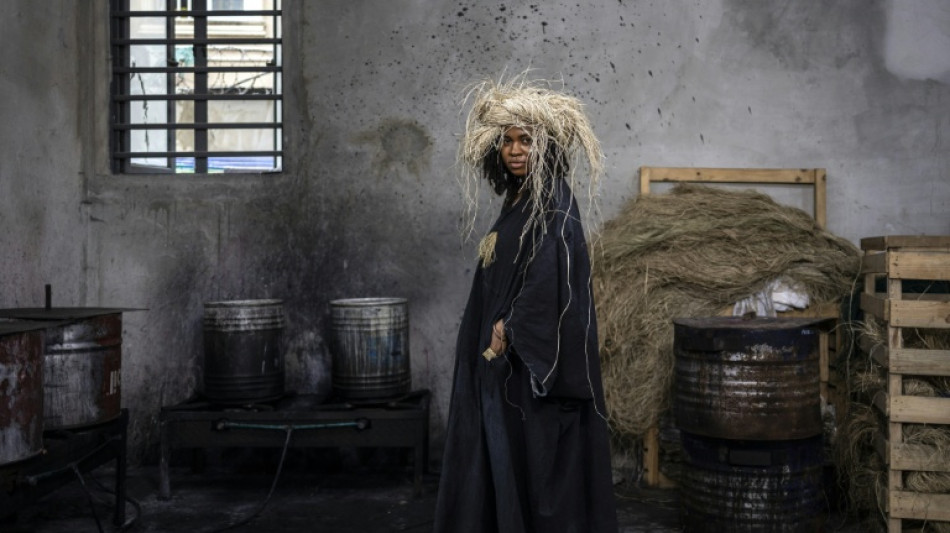
Local fabrics, fibres shine at eco-centred Lagos Fashion Week / Photo: OLYMPIA DE MAISMONT - AFP

 Messi and Alcaraz love it, now padel takes step closer to Olympics
 Tolls mount in Thailand, Myanmar floods
 Why India's opposition wants top poll official out

 PU Prime Strengthens UAE Momentum with Strong Showing at Forex Expo Dubai 2026

 Eight dead in Thailand floods since mid-September

 Oil prices spike after Trump rejects Iran truce offer

 Taylor Swift sets new record at MTV VMAs

 Seoul seeks apology after Ukraine reveals transfer of North Korean POWs

 Messi on target again but Miami downed by Columbus

 In Washington's political cauldron, a fight over foie gras

 Flavio Bolsonaro: political heir in his father's shadow
 Ravens grab last-second win in Rio as Commanders stop Seahawks

 USA rallies to capture 11th consecutive Presidents Cup

 Phillies clinch, Astros wrap up division on final day of MLB season

 Commanders hand champion Seahawks their first loss

 Dupont scores twice to send Toulouse top of Top 14

 Ireland beat Israel but no handshakes due to war in Gaza

 Tense standoff over flashpoint N.Ireland parade lasts into night

 Stunned McNulty wins 'miracle' road race world title

 Re-released 'Avengers: Endgame' snaps-up N. America box office lead

 American McNulty wins shock road race world title

 Serbia's President Aleksandar Vucic announces resignation

 Tuchel urges Bellingham to play with 'rage'

 Russian strikes on Ukraine kill 8

 Bavuma, Miller hit centuries as South Africa clinch series

Four days ahead of her show at Lagos Fashion Week, the sewing machines at Abasiekeme Ukanireh's workshop were still buzzing.
Ukanireh, the founder of the popular Nigerian brand Eki Kere, met with models and tailors for the final preparations ahead of one of Africa's biggest fashion events, which ran through Sunday.
On the agenda: local materials, upcycling and African craftsmanship.
"Every single year for a brand, for me, as a designer, I always try to take it a step further in terms of being sustainable," Ukanireh, 35, told AFP.
Sustainability -- long both a bugbear and a buzzword in the fashion industry -- was a key feature of this year's Lagos Fashion Week, with designers from across the continent tapping into everything from traditional fabrics to banana fibre and coffee grounds.
Launched in 2020, Ukanireh's brand is known for its use of raffia, a grassy fibre from palm trees used in everything from thatched roofs to trendy bags.
This year, she played up the use of indigo and dyes made from kola nuts -- though she hadn't forgotten her raffia roots.
During her show Sunday, dozens of models walked the runway wearing outfits inspired by traditional wedding ceremonies in Ikot Ekpene, a historic town popularly known as "Raffia City" in southern Akwa Ibom state, where Ukanireh hails from.
The traditional wedding lace was swapped for cardboard, linen and raffia -- which is 100 percent biodegradable and compostable.
- Training the next generation -
In 2018, the Lagos Fashion Week founder Omoyeni Akerele and her team launched Green Access, an incubator programme that identifies, trains and supports young African designers.
"Even though sustainability is at the core of their design practice, it is to encourage them to even be more sustainable by rethinking their choices at every stage of the creative process, and understanding that it begins with materials," Akerele said.
Lagos Fashion Week also hosts what it calls "Swapshop" events, which allow people to exchange clothes they no longer wear for new ones.
"We all have clothes at home that we no longer wear," said 43-year-old businesswoman Danielle Chukwuma, who has attended several editions of the show.
"It's great to be able to swap them with people as stylish as those attending this kind of event."
- Designers versus consumerism -
Apart from Nigerian brands, Chukwuma has also discovered other African talents, including the Indian-Kenyan designer Ria Ana Sejpa of the brand LilaBare.
This year was Sejpa's third appearance at Lagos Fashion Week.
"Lagos is the fashion capital of Africa," she told AFP. "Fashion is a part of the culture here. People take pride in the way they dress, they love to stand out, and they aren't afraid to be fearless or glamorous."
The 34-year-old designer is known for making clothes from pineapple fibre, banana fibre and coffee grounds.
"It is essential to take into consideration your ecosystem, the strengths of the environment and the people around you, and to make conscious decisions at every step of the fashion creation process," Sejpa said.
31-year-old Florentina Hertunba, who is making waves with her brand Hertunba, shared the same view.
She said she incorporates traditional Nigerian fabrics such as aso oke and akwete as well as other locally available materials into her designs and uses biodegradable packaging to cut down waste.
"This piece is recycled," the young designer explained, pointing to a patterned black dress in her Lagos studio. "An old fabric was transformed into sewing thread and then reused to create it."
But for her, sustainability is only sustainable if consumers join the movement.
"One of the greatest dangers is this culture of overconsumption, where we constantly buy new clothes for every occasion," she told AFP. "Sustainable fashion is making progress, but overconsumption is too."
W.AbuLaban--SF-PST