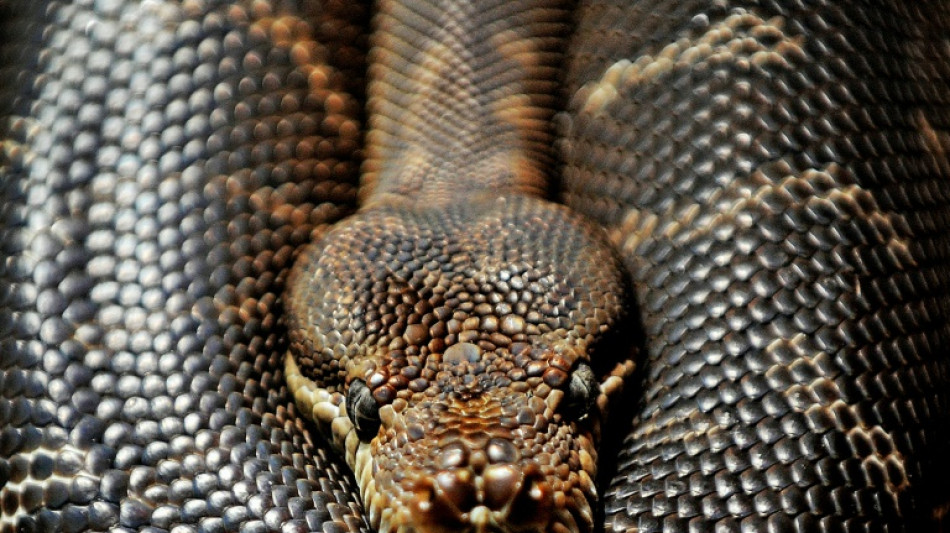
Australian doctors find live parasitic worm in woman's brain / Photo: GREG WOOD - AFP/File

 أين الأمن القومي العربي؟.. تحليل نقدي لغياب الرؤية المشتركة

 Crude Oil Prices Rise on Reports of Houthi Attack on Saudi Refinery

 El Nino’s Weakening Grip on Tamil Nadu Rainfall Hinges on Potential Cyclone

 Black Friday Discounts Cut Prices on Two Top-Rated Wiper Blades

 Twickenham Grounds Team Prepares Pitch for Six Matches in Three Days

 Luxembourg City Plans €13 Million Abrigado Centre for 2029

 Two A1 Crashes Create Kilometres of Rush-Hour Congestion

 South Africa Places 36 Hospitals on Standby for Possible Imported Ebola Cases

 Tamil Nadu Secures Rs 58,214 Crore in Investments at Vettri Conclave

 فرنسا تدعو لتجريم "الفصل العنصري القائم على الجنس" دولياً

 أزمة الصواريخ الاعتراضية في البنتاغون: استنزاف المخزونات يفرض تعبئة صناعية حتى 2030

A parasitic roundworm typically found in snakes has been pulled "alive and wriggling" from a woman's brain in a stomach-churning medical first, Australian doctors said Tuesday.
Baffled doctors performed an MRI scan on the 64-year-old Australian woman after she began suffering memory lapses, noticing an "atypical lesion" at the front of her brain.
It was an eight-centimetre (three-inch) roundworm, called Ophidascaris robertsi, which researchers said was a common parasite in kangaroos and carpet pythons -- but not humans.
"This is the first-ever human case of Ophidascaris to be described in the world," said infectious disease expert Sanjaya Senanayake.
"To our knowledge, this is also the first case to involve the brain of any mammalian species, human or otherwise."
Researchers believe the woman was infected after foraging for edible shrubs near her house, which were likely contaminated with parasitic larvae shed in snake faeces.
The parasite, which appeared as a "stringlike structure" on brain scans, was then identified through DNA testing.
"It is never easy or desirable to be the first patient in the world for anything," Senanayake said.
"I can't state enough our admiration for this woman, who has shown patience and courage through this process."
Senanayake said Ophidascaris roundworms were known to infect animals in other parts of the world, and it was "likely that other cases will be recognised in coming years".
The findings were published in the journal Emerging Infectious Diseases.
Z.AlNajjar--SF-PST

