-
 Swimming prodigy Yu, 13, says 'interviews way harder than racing'
-
G7 leaders condemn Houthi strikes on Saudi Arabia
-
 Star coaches make their bows as Nations League returns
-
Google data centre sparks protests in Austria
-
 Rams bounce back as Giants reel from Dart injury
-
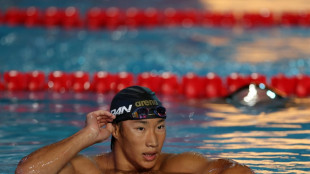
Shin Ohashi: Junk food-loving teen and Japan's next big swimming hope
-
 In Bangladesh, Pakistan's Jinnah photo stirs anger
-
Stocks rise on AI buzz, drop in oil prices

-
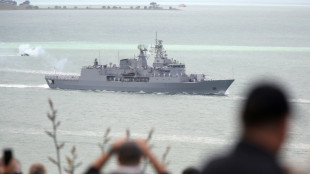 Two New Zealand naval ships transit Taiwan Strait
-
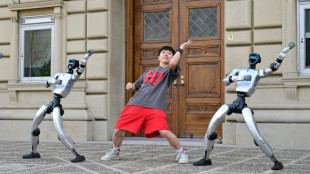
China's robot dancers limber up for America's Got Talent final
-
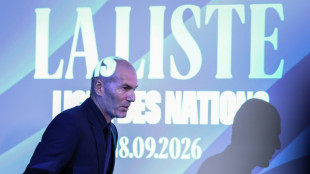 Zidane gets down to work as France start new era
-
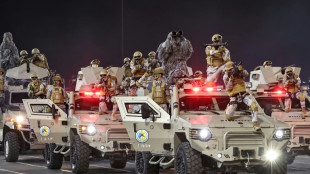
Despite military might, Saudi struggles to crush the Houthis
-
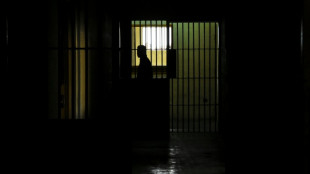 Inside the Venezuelan prison meant to 'drive you insane'
-
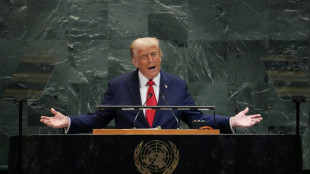
Trump to tout deals, defend Iran war in UN speech
-
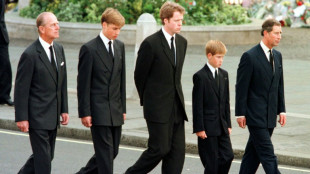 UK king braces as memoir by Diana's brother goes on sale
-
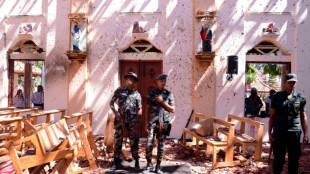
Sri Lanka to issue verdict in landmark Easter attack trial
-
 No green light to lift EU sanctions on Russian oligarchs, talks to resume
-
Macron says talks with Trump on Red Sea, Ukraine 'constructive'
-
 UK agrees support for Saudi in struggle with Houthis: reports
-
Green policies just good politics, says UK minister

-
 EU foreign policy chief calls for continued sanctions on Russia
-
Bardot auction in Paris fetches nearly one million euros

-
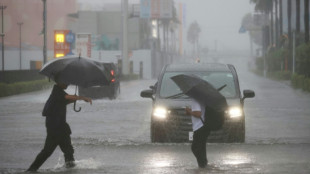 Flights scrapped, evacuations urged as Typhoon Dujuan wallops Japan
-
No timeline on Daniels injury return, says Commanders coach
-
 Fonseca to take break from tennis
-
British Columbia sues OpenAI in US court over Canada school shooting
-
 A Cuban zoo, and its animals, in epic battle for survival
-
French star Batum retires after 18-year NBA career
-
 Infantino proposes consulting federations to reform FIFA
-
Zidane leads first France training session

-
 El Nino weather pattern enters record territory: scientist
-
Man shot by ICE agent in Texas detained with bullet inside him: lawyer
-
 OpenAI calls for US to lead global effort on AI standards
-
California declares state of emergency ahead of El Nino

-
 South African ostriches plucked alive for luxury fashion: report
-
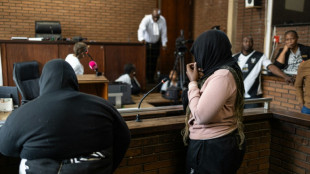
South Africa arrests three more suspects, after nine women murdered
-
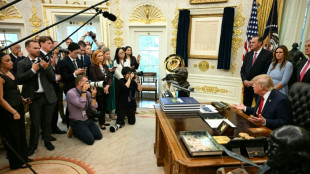 US networks halt Trump coverage in revolt over White House ban
-
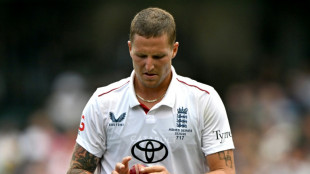
Carse needs time away from England, says captain Brook
-
 Paramount settles with US states to clear Warner Bros. mega-merger
-
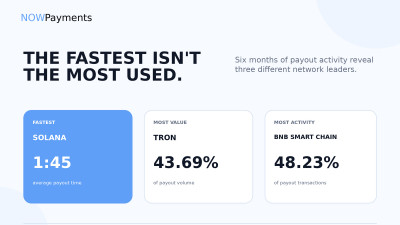
NOWPayments Releases Cross-Chain Payout Data Revealing Key Performance Benchmarks Across TRON, BNB Chain, and Solana
-
 Climate crisis a job for world leaders, not just activists: UK FM
-
British Museum bans photos of Bayeux Tapestry as crowds linger

-
 US networks halt Trump coverage over White House ban
-
COP31 host says AI climate footprint to be a summit priority
-
 French singer accuses Miley Cyrus of plagiarism
-
Berlin's far-left vote winners reject anti-semitism charges
-
 EU fines Google 403 mn euros for location data breach
-
Mancini eager for 'new adventure' on Italy return
-
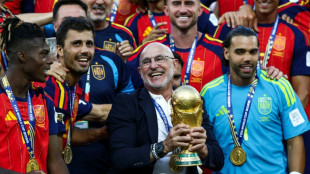 'Best is yet to come,' says De la Fuente after Spain extension
-
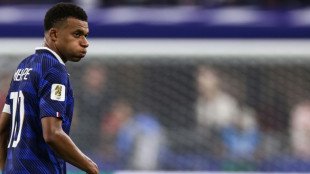
Mbappe says having Zidane as France coach 'like a film'
Ukraine: Problem with the ceasefire?
As the war in Ukraine grinds towards its fourth year, a new proposal for a 30-day ceasefire has emerged from U.S. diplomatic circles, touted as a potential stepping stone to de-escalation. Russia's nefarious dictator and war criminal Vladimir Putin (72) has signalled cautious receptivity, provided the truce addresses the "root causes" of the conflict, while Ukrainian leaders remain wary. On the surface, a pause in hostilities offers a glimmer of relief for a war-weary population. Yet, beneath the diplomatic veneer, the proposed ceasefire is riddled with problems—strategic, political, and practical—that threaten to undermine its viability and, worse, exacerbate an already volatile situation.
A Temporary Fix with No Clear Endgame
The most glaring issue with the ceasefire is its brevity. At 30 days, it offers little more than a fleeting respite, unlikely to resolve the deep-seated issues fuelling the war. Russia’s demand to tackle "root causes"—a thinly veiled reference to its territorial ambitions and opposition to Ukraine’s NATO aspirations—clashes directly with Kyiv’s insistence on full sovereignty and the restoration of pre-2014 borders. Without a framework for meaningful negotiations, the ceasefire risks becoming a mere intermission, allowing both sides to regroup and rearm rather than pursue peace.
Historical precedent supports this scepticism. The Minsk agreements of 2014 and 2015, intended to halt fighting in eastern Ukraine, collapsed amid mutual accusations of bad faith. A short-term truce now, absent a robust enforcement mechanism or mutual trust, could follow a similar trajectory, leaving civilians to bear the brunt when hostilities inevitably resume.
The Strategic Dilemma for Ukraine
For Ukraine, the ceasefire poses a strategic conundrum. President Volodymyr Zelensky has spent years rallying domestic and international support around the mantra of "no concessions" to Russian aggression. Pausing the fight now, especially after the recent loss of territory in Russia’s Kursk region, could be perceived as a sign of weakness, emboldening Moscow and disheartening Kyiv’s allies. Ukrainian commanders, including Oleksandr Syrskii, have prioritised preserving troop strength, but a ceasefire might freeze their forces in disadvantageous positions, particularly along the eastern front, where Russia continues to press its advantage.
Moreover, the timing is suspect. The temporary suspension of U.S. intelligence support earlier this year left Ukraine reeling, and while that assistance has resumed, Kyiv remains on the back foot. A ceasefire now could lock in Russia’s recent gains, including reclaimed territory in Kursk, without guaranteeing reciprocal concessions. For a nation fighting for survival, this asymmetry is a bitter pill to swallow.
Russia’s Leverage and Bad Faith
On the Russian side, the ceasefire proposal raises questions of intent. Putin’s willingness to entertain a truce comes as his forces, bolstered by North Korean reinforcements, have regained momentum. The Kremlin may see the pause as an opportunity to consolidate control over occupied regions, reinforce supply lines, and prepare for a spring offensive—all while avoiding the political cost of appearing to reject peace outright. Moscow’s track record of violating ceasefires, from Donbas to Syria, fuels Ukrainian fears that any lull would be exploited rather than honoured.
The involvement of North Korean troops adds another layer of complexity. Their presence, a breach of international norms, has drawn muted criticism from Western powers, yet the ceasefire proposal does not explicitly address this escalation. Without mechanisms to monitor or reverse such foreign involvement, the truce risks legitimising Russia’s reliance on external support, further tilting the battlefield in its favour.
The Humanitarian Paradox
Proponents argue that a ceasefire would alleviate civilian suffering, particularly as winter tightens its grip on Ukraine’s battered infrastructure. Yet, this humanitarian promise is fraught with paradox. Russia has repeatedly targeted energy grids and civilian areas, a tactic likely to persist during any truce unless explicitly prohibited and enforced. A 30-day pause might allow limited aid delivery, but without guarantees of safety or a longer-term commitment, it could also delay the broader reconstruction Ukraine desperately needs.
For Ukrainian refugees and displaced persons—numbering in the millions—a temporary ceasefire offers no clarity on when, or if, they can return home. Meanwhile, Russian authorities in occupied territories have accelerated "Russification" efforts, including forced conscription and passportisation, which a short truce would do little to halt.
The Absence of Enforcement
Perhaps the most damning flaw is the lack of an enforcement mechanism. Who would monitor compliance? The United Nations, hamstrung by Russia’s Security Council veto, is ill-equipped to intervene. NATO, while supportive of Ukraine, has stopped short of direct involvement, and independent observers lack the authority to deter violations. Without a credible arbiter, the ceasefire hinges on goodwill—a commodity in short supply after years of bloodshed and broken promises.
A Fragile Hope Undermined by Reality
The proposed ceasefire reflects a well-intentioned but flawed attempt to pause a war that defies easy resolution. For Ukraine, it risks entrenching losses without securing gains; for Russia, it offers a chance to regroup under the guise of diplomacy. For both, it lacks the substance to bridge their irreconcilable aims. As the U.S. and its allies prepare to table the proposal, they must confront an uncomfortable truth: a truce that fails to address the conflict’s underlying drivers—or to enforce its terms—may do more harm than good, prolonging a war it seeks to pause.
In Kyiv, where resilience has become a way of life, the mood is one of cautious defiance. "We want peace," a senior Ukrainian official remarked this week, "but not at the cost of our future." Until the ceasefire’s proponents can answer that concern, its promise remains as fragile as the front lines it aims to still.
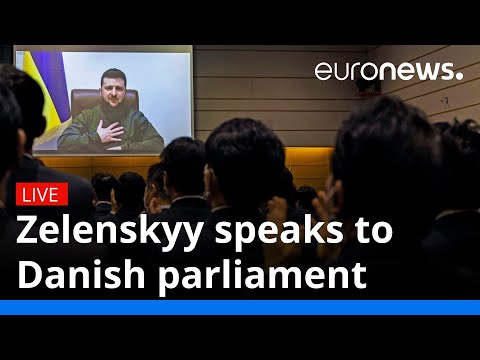
Ukrainian President Volodymyr Zelenskyy addresses the Danish Parliament
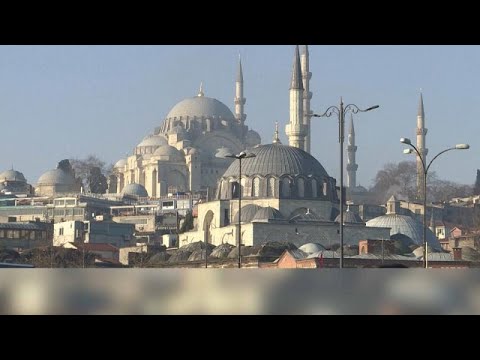
Переговоры у турецкого диктатора Эрдогана: Россия и Украина пытаются договориться...
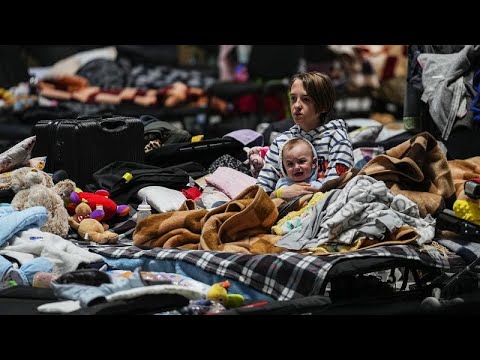
Всемирная помощь украинским беженцам от террористической войны России в Украине
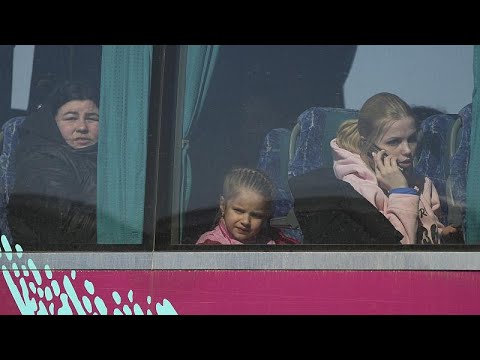
Help for refugees arriving in Moldova and Poland from Russian terror in Ukraine
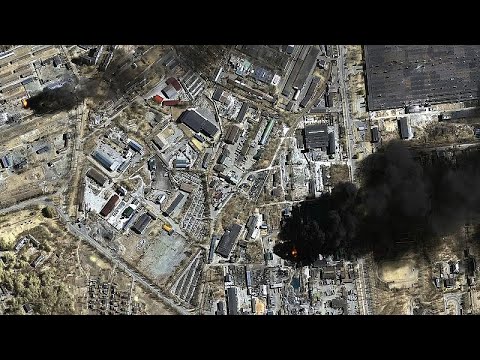
Ukraine war: Russian Terror-Forces enter Slavutych and seize hospital
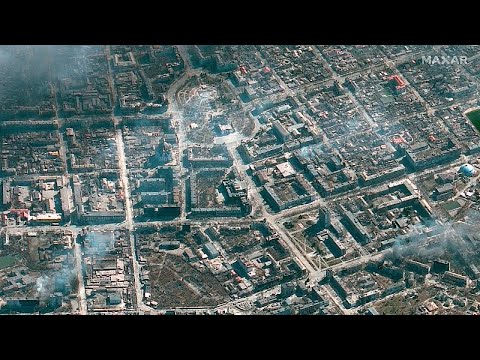
Russian war crime: 300 dead in Russian terror bombing in Mariupol theatre
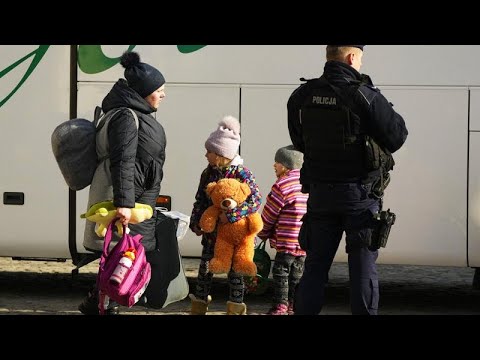
Военные преступления России в Украине: половина детей потеряла свои дома!
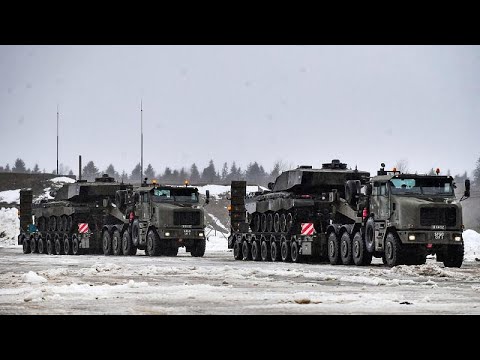
Ukraine war: NATO agrees on "substantial increase" of forces in Eastern Europe, says Stoltenberg
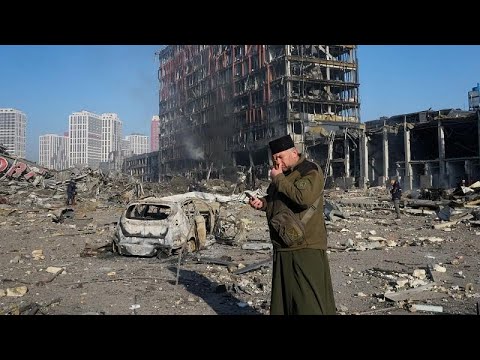
Ukraine war: US finds Russian troops have committed war crimes
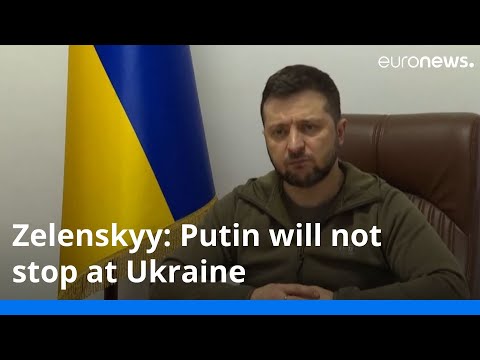
Zelenskyy warns EU: Russia will not stop in Ukraine
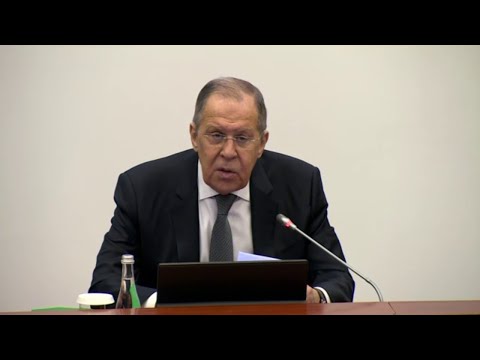
Russian war criminal Sergey Lavrov whines as a criminal about his own lies