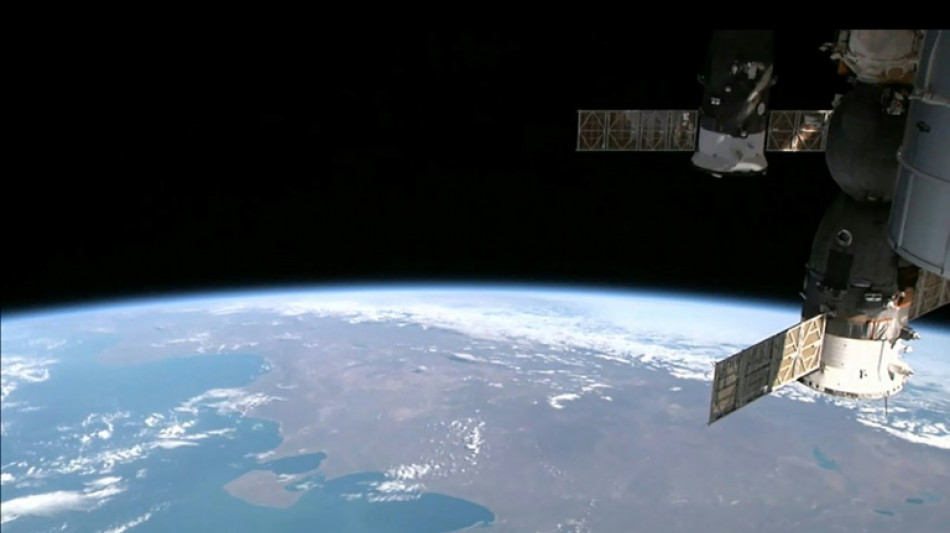
Mouse embryos grown in space for first time: Japan researchers / Photo: HANDOUT - NASA/AFP/File

 누샤 아우벨: 새로운 출발 대신 드러난 리더십 실패 — 포츠담 시장은 과연 직무를 감당할 능력이 있는가?

 noosha-aubel-lingdao-shibai-bocitan-shizhang-nengfou-shengren

 Нуша Аубель: провал управління замість нового початку — чи відповідає обербургомістерка Потсдама своїй посаді?
 Cost-of-living demonstrations to grip pre-election France

 Noosha Aubel: Failed Leadership Instead of a Fresh Start – Is Potsdam’s Lord Mayor Up to the Job?

 'Real inequality': France's education divide laid bare by protests

 Opera on Ukraine's children aims to 're-awaken' concern for war

 AI is coming for every company, Nvidia boss says

 Millions may be forced to move as climate change hits South Asia: UN

 Four killed battling Indonesia fires as toxic haze cloaks region

 Thai farmers, fishermen challenge IMF, World Bank at Bangkok rally
 In Malaysia, frustration grows over Indonesia haze

 Why India's voter revision drive has stoked fear and anger
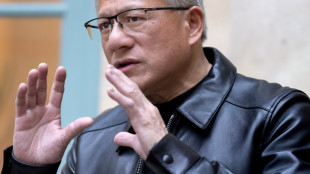
 Munster eye fitting tribute to 'special' Foley in Racing reunion

 Shooter kills teacher, three children at Oregon elementary school

 Fed's Warsh surprised by world economy's 'resilience'

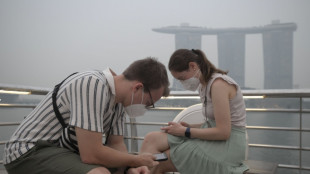 Four killed in Indonesia battling fires causing toxic haze

 New Zealand star Ponga breaks arm in Rugby League World Cup opener

 Indonesian stocks dive 11% as MSCI weighs market reclassification

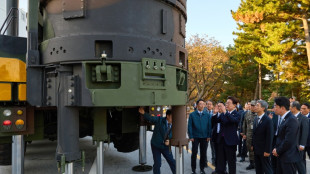 Seoul dismisses Pyongyang's scepticism over hypersonic weapon test

 Yamal on song as entertainers Barcelona face Betis challenge

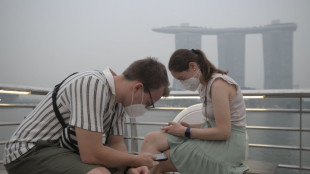 Wong weighs haze prosecutions as Singapore air quality worsens

 Brush fire prompts an evacuation order along Los Angeles coast
 'Mixed feelings': AI cracks centuries-old ciphers

 Le Pen looms large as Macron enters final months on EU stage

Mouse embryos have been grown on the International Space Station and developed normally in the first study indicating it could be possible for humans to reproduce in space, a group of Japanese scientists said.
The researchers, including Teruhiko Wakayama, professor of University of Yamanashi's Advanced Biotechnology Centre, and a team from the Japan Aerospace Space Agency (JAXA), sent frozen mouse embryos on board a rocket to the ISS in August 2021.
Astronauts thawed the early-stage embryos using a special device designed for this purpose and grew them on the station for four days.
"The embryos cultured under microgravity conditions developed" normally into blastocysts, cells that develop into the foetus and placenta, the scientists said.
The experiment "clearly demonstrated that gravity had no significant effect," the researchers said in a study that was published online in the scientific journal iScience on Saturday.
They also said there were no significant changes in condition of the DNA and genes, after they analysed the blastocysts that were sent back to their laboratories on Earth.
This is "the first-ever study that shows mammals may be able to thrive in space," University of Yamanashi and national research institute Riken said in a joint statement on Saturday.
It is "the world's first experiment that cultured early-stage mammalian embryos under complete microgravity of ISS," the statement said.
"In the future, it will be necessary to transplant the blastocysts that were cultured in ISS's microgravity into mice to see if mice can give birth" to confirm that the blastocysts are normal, it added.
Such research could be important for future space exploration and colonisation missions.
Under its Artemis programme, NASA plans to send humans back to the Moon in order to learn how to live there long-term to help prepare a trip to Mars, sometime towards the end of the 2030s.
Y.AlMasri--SF-PST