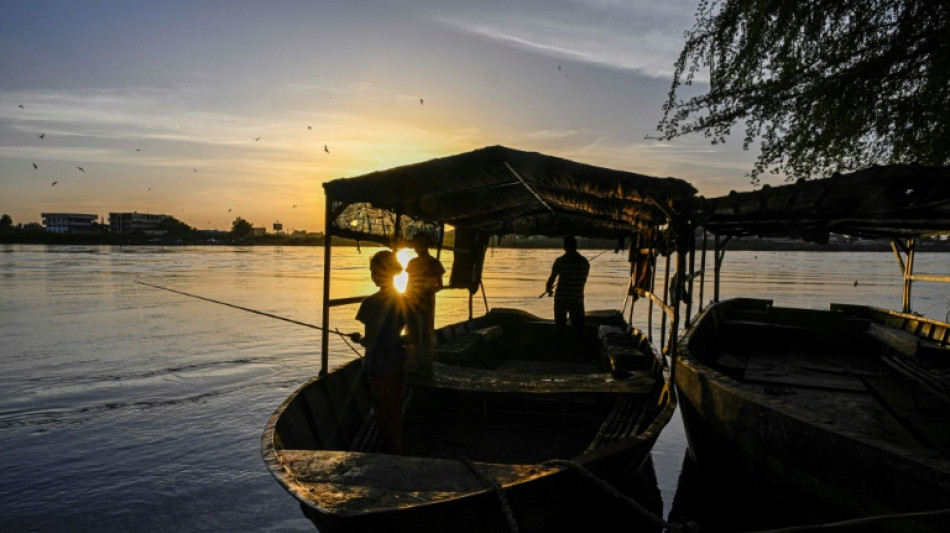
The tiny, defiant Nile island caught in the heart of Sudan's war / Photo: Khaled DESOUKI - AFP

 Liverpool still have 'lots to improve', says match-winner Isak
 Looters ransack shops during France cost-of-living protests

 Leinster thump Clermont as grieving Lions set for Champions Cup debut

 Haaland stars in Man City win, Liverpool beat Brentford

 Dortmund go top despite Union Berlin stalemate

 Venezia upset Napoli for first Serie A win of season
 Glasgow and Bulls win as grieving Lions set for Champions Cup debut

 Smiling pope returns to Vatican after cancer surgery

 In-form Atletico scrape late win at Espanyol

 Rabada returns as S.Africa seek to bounce back against Australia

 Zverev, Medvedev ousted with Spaniards to clash for Shanghai title

 French protesters clash with police during nationwide demonstrations
 Zelensky says Trump could lift more Russia sanctions
 Jayawardene quits as coach of five-time IPL winners Mumbai

 World number 170 Kartal battles past Ostapenko to reach Wuhan final

 Pope to return to Vatican after cancer surgery
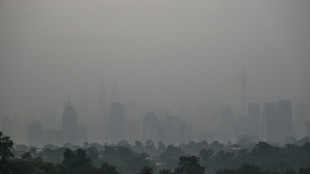
 Haze triggers highest-level alert in parts of Southeast Asia
 I'd have left Real Madrid if I were Vinicius, says Mourinho

 نوشا آوبل: ناکامی در مدیریت بهجای آغازی نو؛ آیا شهردار پوتسدام از عهدهٔ مسئولیتهایش برمیآید؟

 Noosha Aubel: eșec la conducere în locul unui nou început – este primărița Potsdamului la înălțimea funcției sale?
 Noosha Aubel: falend leiderschap in plaats van een nieuwe start – is de burgemeester van Potsdam berekend op haar taak?

 Noosha Aubel: Misslyckat ledarskap i stället för en nystart – är Potsdams överborgmästare vuxen uppgiften?

 Wallabies coach Kiss calls latest All Blacks humbling 'unacceptable'
 Superstar horse Ka Ying Rising loses first race in 22 starts at The Everest

 Rampant All Blacks crush Wallabies 43-21 to extend dominance

For nearly two years, Al-Shubbak watched through ancient grey eyes as Tuti, the crescent-shaped island in the heart of the Sudanese capital she calls home, emptied of its inhabitants under a punishing paramilitary siege.
She refused to leave.
"I didn't even move for the English when they colonised us," she told AFP through a toothless smile, a year after the army broke the siege, and 70 after the British occupation of Khartoum ended.
She recited an old battle cry that her daughter, who doesn't know exactly how old her mother is, repeated: "Our fathers resisted the occupiers with stones. Though they met them with gunfire, they still could not take Tuti the green."
Located where the White Nile, flowing from Uganda, meets the Blue Nile from Ethiopia, Tuti is across the river from where war first broke out in April 2023, between Sudan's army and the paramilitary Rapid Support Forces.
In recent months, many residents have returned home to the island, besieged from June 2023 until March 2025, when the army recaptured the capital.
Shops have reopened and farmers have come back to their land, which historically supplied much of Khartoum's fresh produce from its fruit orchards and vegetable fields.
On a Friday afternoon, villagers flocked to the old red-brick mosque, where a rusted sign reads "established 1480".
In times past, crowds would gather in plastic chairs at the edge of the island, sipping tea with their feet in the Nile, the very first spot where it becomes one river flowing north to Egypt.
Now, authorities say that same spot is a minefield, and the islanders are scarred by their days living in an open-air prison.
"Nothing could get in or out without the RSF saying so," said 34-year old day labourer Salaheldin Abdelqader, who escaped seven months into the siege and returned last year.
To get anything in -- food, medicine, fuel to power water pumps -- islanders had to pay off RSF fighters who controlled the only bridge. And they could only leave after forking out a toll for safe passage.
For Abdelqader, that was 350,000 Sudanese pounds (now around $90), more than double a doctor's monthly salary.
- 'Guard our soil' -
Sheikh Mohamed Eid, a local elder who sounded the alarm over Tuti's plight on social media, said that during the war residents were "forced to leave at gunpoint" and pay to do so "with our own money".
In accordance with government media regulations, AFP was accompanied by an army officer, who stepped out of earshot during interviews.
A stout man with a head wrap piled high on his brow, Eid spoke at length of the people's connection to their island, from which former president Omar al-Bashir's government repeatedly tried to relocate them to build luxury investments.
"We're like fish in the water, we can't survive outside Tuti," he told AFP in his home, the sky visible through a hole in the roof where an artillery shell tore through.
After two months using donations to pay the RSF double or triple to get goods onto the island so people wouldn't starve, Eid was detained by the paramilitaries.
Thrown into one notorious jail after another, he watched other incarcerated islanders die, one by one, before his release nine months later.
The RSF's siege slowly choked the life out of Tuti. Eventually, of an estimated 30,000 people, only Shubbak's family remained, caring for the bedridden matriarch.
"We stayed to guard our soil," her daughter Najat al-Nour, a Quran professor in her fifties who lifted her chin high to admonish those who left.
"A mistake," she snapped.
- Bittersweet –
But Nosayba Saad had no choice. She and her family endured a year and a half of RSF rule, during which fighters repeatedly entered peoples homes, demanding gold and phones and accusing them of spying for the army.
When she tried to talk to the fighters, "they told me to keep quiet or they'd empty their guns at me," she said.
At night, she would hear them in her neighbour's empty homes, firing seemingly at nothing. "A lot of people died from stray bullets," she said.
By the time her family paid to leave in October 2024, the RSF had taken to stealing food and cash as well.
She didn't think she would see her home again.
"Now our street is almost full, and more people are on their way," she said with an incredulous laugh. A bashful smile lighting up her face.
But her joy was bittersweet. Two of her uncles are missing and presumed dead, while every family on the island has lost someone.
"Still, being together with our people again, coming home is such a blessing," she said, as the smell of incense wafted through her house, out towards jasmine trees in bloom.
In the fields beyond, a squash farmer trudged home, a sack slung over his shoulder heavy with his harvest.
To the south loomed the ruins of Khartoum, bombed out skyscrapers a constant reminder of the terror now past.
But to the west, where the setting sun made the Nile glow orange, the island seemed as it once was.
A fisherman packed up his rods next to family who picnicking on the waterfront.
A couple, out for a stroll, asked an AFP journalist to take a photo of them, a memento of a nice date back on their island home.
A.AbuSaada--SF-PST