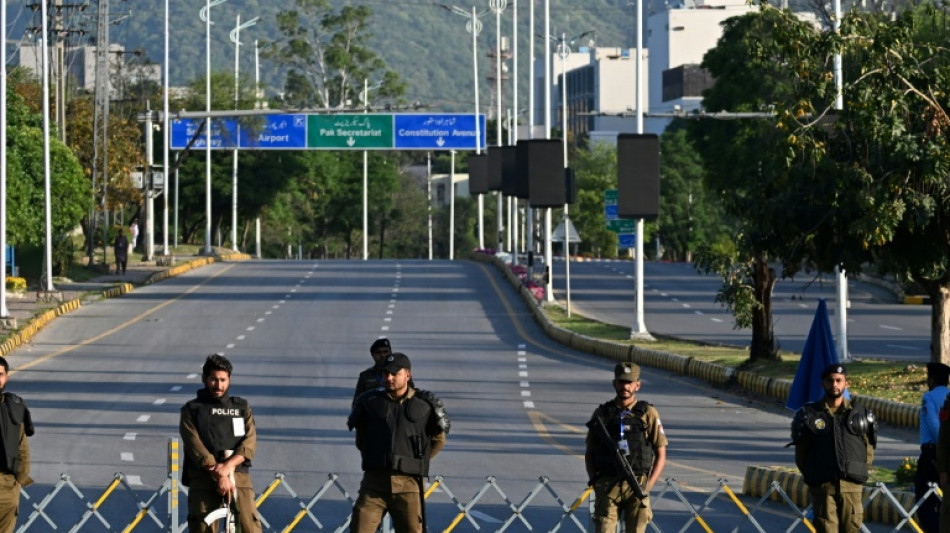
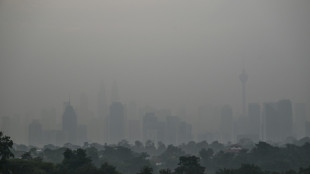
Pakistan's capital holds its breath with US-Iran talks in limbo / Photo: Aamir QURESHI - AFP

 Liverpool still have 'lots to improve', says match-winner Isak
 Looters ransack shops during France cost-of-living protests

 Leinster thump Clermont as grieving Lions set for Champions Cup debut

 Haaland stars in Man City win, Liverpool beat Brentford

 Dortmund go top despite Union Berlin stalemate
 Venezia upset Napoli for first Serie A win of season
 Glasgow and Bulls win as grieving Lions set for Champions Cup debut
 Smiling pope returns to Vatican after cancer surgery
 In-form Atletico scrape late win at Espanyol
 Rabada returns as S.Africa seek to bounce back against Australia

 Zverev, Medvedev ousted with Spaniards to clash for Shanghai title
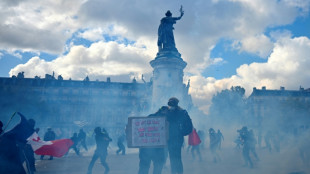 French protesters clash with police during nationwide demonstrations
 Zelensky says Trump could lift more Russia sanctions
 Jayawardene quits as coach of five-time IPL winners Mumbai

 World number 170 Kartal battles past Ostapenko to reach Wuhan final

 Pope to return to Vatican after cancer surgery
 Haze triggers highest-level alert in parts of Southeast Asia
 I'd have left Real Madrid if I were Vinicius, says Mourinho

 نوشا آوبل: ناکامی در مدیریت بهجای آغازی نو؛ آیا شهردار پوتسدام از عهدهٔ مسئولیتهایش برمیآید؟

 Noosha Aubel: eșec la conducere în locul unui nou început – este primărița Potsdamului la înălțimea funcției sale?
 Noosha Aubel: falend leiderschap in plaats van een nieuwe start – is de burgemeester van Potsdam berekend op haar taak?

 Noosha Aubel: Misslyckat ledarskap i stället för en nystart – är Potsdams överborgmästare vuxen uppgiften?

 Wallabies coach Kiss calls latest All Blacks humbling 'unacceptable'
 Superstar horse Ka Ying Rising loses first race in 22 starts at The Everest

 Rampant All Blacks crush Wallabies 43-21 to extend dominance

Pakistan's capital was still locked in gear on Wednesday to host high-stakes US-Iran talks that were pushed back at the last minute overnight, but many residents began to tire of the heavy personal and economic toll of tight security restrictions.
Markets were quiet, government officials worked from home, children attended class online and security forces enforced strict curbs on entering the vast "red zone" around the negotiating venue.
US Vice President JD Vance had been expected to arrive on Wednesday morning but the White House abruptly changed plans, with Iran's negotiating delegation also delaying a decision on attending talks.
Many residents hoped that negotiations would bring an end to road closures and other restrictions throughout the capital, with some areas under virtual lockdown.
Initial public euphoria over Pakistan's image being burnished on the global stage has begun to give way to fraying patience after weeks of stop-start restrictions around Islamabad.
"We have to live here, the Red Zone has been shut down. Children cannot go to school, and shops are closed from time to time," said office worker Zainab Ali Uthmankhail, 27.
"Personally I do find it very annoying. My time is wasted. Transport fares have increased. But I am happy that we are doing something positive," she said.
- No customers -
Similar measures were enforced for a first round of US-Iran talks in Islamabad this month, and some restrictions were never lifted.
That round of negotiations ended without an agreement, but US President Donald Trump extended a ceasefire on Wednesday as feverish diplomacy continued to end the Middle East War that began with US and Israeli strikes on Iran on February 28.
Major roads have been closed in recent days to facilitate the arrival of foreign delegations and US cargo planes delivering equipment.
Islamabad residents are used to restrictions and road closures, having lived through periods of militant attacks, political protests and visits by heads of state.
But the intensity and stop-start nature of this month's measures have pushed some to the limit, especially the many small business owners and daily wage workers whose incomes have been slashed in an already struggling economy.
"The impact of the lockdown is that we are not seeing any customers here in the market... the government does not know what one day of their lockdown does to our households," Muhammad Ahsan, 35, the owner of a small jewellery kiosk, said this week.
"Our stoves do not run, we do not find food (in the markets)."
Large businesses were also affected, with major oil refiner Attock announcing it was pausing production at a key unit due to transport disruptions.
Many in Islamabad nonetheless were proud of their country's role in navigating a possible end to weeks of fighting that has killed thousands and thrown the global economy into turmoil.
However, they also braced themselves for more disruption.
"We are giving a small sacrifice to reduce the size of the larger sacrifice," said Syed Umar Hasnain Shah, a young doctor. "So we will continue to sacrifice."
F.Qawasmeh--SF-PST