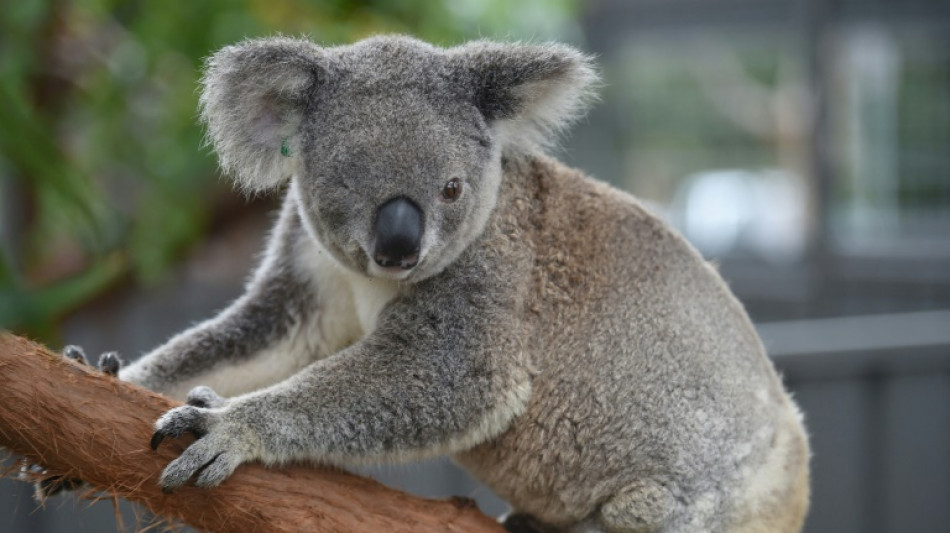
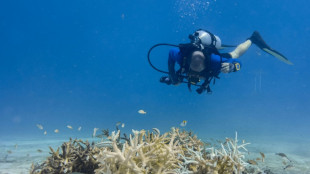
Nature at risk of 'cascading' species extinction: study / Photo: Peter PARKS - AFP/File

 Macron warns urgent to strike EU budget deal before French vote runup

 Zelensky rallies European allies as Trump ties slump

 Guardians edge Rays to seize MLB playoff series lead

 Trump scraps plan to livestream execution after fierce backlash

 Martinez apologises for outburst at Man Utd hierarchy

 Houthis launch deadly attack on presidential palace in Yemen's Aden

 Brazil forward Antony says home burgled during Betis match
 Ravens face familiar foe in Browns coach Monken

 France, Germany reach deal on future of car industry

 Carney campaigns for Canadian unity before Alberta secession vote

 ATP proposes rankings system changes, extra player bonuses
 Russell Brand was 'monster-like', alleged victim tells UK court

 Crowded Launches Crowded MCP, Bringing Nonprofit Financial Operations Into ChatGPT and Claude

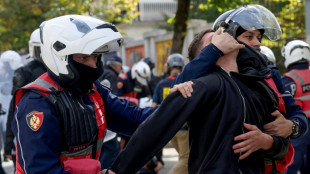
 Albanian PM condemns 'chaos' as violent unrest spreads

 Italian football suffers new blow with Champions League misery

 Trump scraps plan to livestream execution after broad backlash
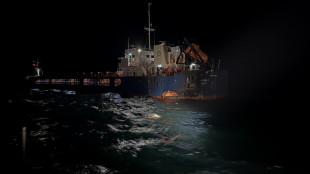 Seven missing off Romania after latest Black Sea drone attacks

 ARKBRIDGE Outlines Jonathan Morelli’s “Picks and Shovels” AI Infrastructure Investment Strategy

 Tech sell-off rolls on as hot inflation data stokes rate worries

 McIlroy makes 'solid' start in rain-hit Delhi as Norgaard leads

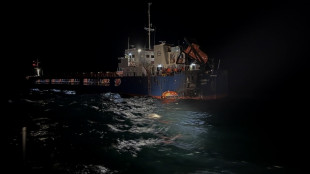 Seven missing after fire on vessel in Black Sea off Romania

 'Severe drought' declared in parts of UK
 IUX Announces New Web Client Portal Built for Enhanced Browser-Based Trading

 School roof collapse kills teacher, 32 children in NW Pakistan

 Inter skipper Martinez facing month out with thigh injury

Climate change and habitat degradation will cause extinctions that cascade through communities of animals and plants and drive dramatic biodiversity loss, according to new research published on Friday.
The study, in the journal Science Advances, found that chain-reaction extinctions are unavoidable and predicted Earth's ecosystems will see average biodiversity loss of between six and 10 percent by 2050, depending on different carbon emissions scenarios.
By 2100, losses of animals and plants could rise to as much as 27 percent, they found in their research that used virtual Earths to map out thousands of food webs.
The authors said their modelling suggested that the biggest changes will come before mid-century, predicting "the bleakest time for natural communities might be imminent and that the next few decades will be decisive for the future of global biodiversity".
With life on Earth under threat from human destruction, overexploitation and pollution, scientists have warned that a million species are facing extinction in what many fear heralds the planet's sixth mass extinction event.
Climate change is expected to dramatically accelerate the losses, with impacts of warming ranging from the effects of extreme weather, to changes in behaviour and habitat.
But authors of the new study said previous modelling has not included estimates for co-extinctions, based on the "cascading effect" of losses on interdependent species.
The researchers in Australia and Europe built hundreds of virtual Earths each populated with more than 33,000 vertebrate species in thousands of food webs across the planet –- "massive computer latticeworks of 'who eats whom'," said co-author Corey Bradshaw, a professor at Flinders University.
They then simulated different climate change scenarios and projections of habitat degradation -- like deforestation -- to predict local biodiversity loss, the proportion of animalslost in a given area.
- 'Life support' -
The virtual worlds allowed researchers to watch as species moved around and adapted to new environmental conditions and the implications of individual extinctions across food webs.
They found that climate change would be responsible for the greatest proportion of extinction events.
"If you look out your window in 87 years, on average you'll see nearly 30 percent fewer animal species than you do today based on the business-as-usual climate scenario," Bradshaw told AFP.
The study found the greatest threat was in places with the greatest biodiversity -- 36 highly-vulnerable areas containing the most unique species.
"This is because the erosion of species-rich food webs makes biological communities more susceptible to future shocks," said Bradshaw, adding it was "a case of the rich losing their riches the fastest."
The research comes as a UN summit in Montreal attempts to seal a historic "peace pact with nature" and end the rampant destruction.
Global efforts to curb global warming have often eclipsed efforts to tackle the devastation being wrought on nature, but experts have increasingly warned that the two crises are inextricably linked.
"In many ways, biodiversity loss from climate change is far more serious than what climate change will do to human societies, because biodiversity is the very fabric of the Earth's life-support system that makes our lives possible," said Bradshaw.
"The imperative of massive and rapid emissions-reduction policies is made much more urgent knowing this."
K.AbuTaha--SF-PST