
'I don't trust it: Russians sceptical about state-backed messenger / Photo: Kirill KUDRYAVTSEV - AFP

 UK singer-songwriter Raye wins Mercury Prize for second album

 Antonelli needs ‘perfect weekend’ to realise title dream

 Reclaiming the walls in a former Salvadoran gang hotspot

 Musk wants to merge SpaceX and Tesla: Here's what to know

 Musk's wants to merge SpaceX and Tesla: Here's what to know

 Hashimoto sweeps to gymnastics world all-around title

 Super Bowl MVP Walker returns to Seattle with unbeaten Chiefs

 Red Bull advisor Marko slams Horner memoir as 'collection of untruths'

 France reports first human Shamonda virus case, says no health risk

 Rekindled Gucci desirability fails to light flame under Kering sales

 Thousands rally as Serbia heads to pivotal poll

 Marathon star Aga banned six years for doping and misleading investigation

 USA to host women's football Club World Cup in 2028 - FIFA

 Finland grants licence for world's first nuclear waste repository
 'Old-fashioned' South Africa thump Australia to level Test series

 No more taking out the trash at your Airbnb

 Swiss supreme court upholds Guatemala ex-police chief sentence

 UN climate disaster fund moves to provide $20 mn aid for Nepal

 Africa faces 'complex' Ebola outbreak after spread to Nigeria: WHO
 American detained in Russia arrives in US: lawyer

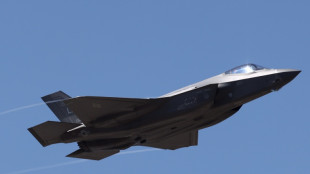 Pentagon, Lockheed announce deal for 850 F-35 jets over 10 years

 French authorities seek to ban or curb fresh protests

 Nearly all coral reefs risk collapse in 50 years: IUCN

 Foden can be one of Premier League's best again, says Maresca

 'Solution from the heavens': Indonesians pray for rain as fires burn

A new Russian messaging platform that authorities hope will replace WhatsApp and Telegram is getting rave reviews from government officials, but on the streets of Moscow, reception has been mixed.
Max, released by Russian social media giant VK earlier this year, has been touted as a "super app" -- capable of doing everything from accessing government services to ordering a pizza, similar to China's WeChat or Alipay.
The government has directed manufacturers to include it on all new phones and tablets starting September 1, while simultaneously blocking calls on its foreign-owned rivals in what critics have called a brazen attempt to force users to switch.
Officials insist Max is safe and will cut Russia's dependence on foreign-owned platforms that store data abroad, but rights advocates warn the app -- which lacks end-to-end encryption -- could be used as a powerful surveillance tool.
"I don't trust it much," said Ekaterina, a 39-year-old doctor who refused to give her last name.
Her employer required her to install the application for work but she mainly uses WhatsApp for personal communication, she said.
"There's a personal history of messages that I don't want to lose, as well as work-related communication," she said of WhatsApp.
"I have many clients on it."
- 'I don't see a problem' -
Russians may not have much of a choice.
On Friday, media regulator Roskomnadzor announced it was considering fully banning WhatsApp, accusing it of being a vessel to perpetrate "crime". It had already blocked calls on the platform from August.
WhatsApp, which boasts almost 100 million users in the country, accused Russia of wanting to ban it because it is "secure".
"The situation is mixed," 33-year-old Andrei Ivanov told AFP.
He said he feared information from WhatsApp could be "stolen by other countries", but that it was "convenient to communicate there".
"It is a certain restriction of our freedoms," Ivanov said of the plans to strong-arm users into switching.
WhatsApp, owned by US technology giant Meta, uses end-to-end encryption. This means messages are scrambled when they leave the sender's device and can only be read by the recipient.
The platform says it uses Meta's servers to store encrypted messages while they are being delivered but deletes them once this is done, and has refused to hand them over to governments.
Some in Moscow were unconvinced, nonetheless.
"I understand that everything created abroad is now a threat to us," said Russian pensioner Sergei Abramov, 67.
He said he saw no "big problem" if WhatsApp got shut down.
Maria Isakova, a 36-year-old designer, agreed.
"Our nation is inherently good at adapting to changing circumstances. We adapt -- there are other messengers, there are alternatives to switch to," she said.
"I don't see any issues."
X.Habash--SF-PST