Slovenia referendum rejects contested assisted dying law / Photo: Jure Makovec - AFP

 Trump slams NBA's LeBron James for national anthem actions

 Australia sanctions North Koreans over 'fraudulent' IT work, cybercrime
 UK singer-songwriter Raye wins Mercury Prize for second album

 Antonelli needs ‘perfect weekend’ to realise title dream

 Reclaiming the walls in a former Salvadoran gang hotspot

 Musk wants to merge SpaceX and Tesla: Here's what to know

 Musk's wants to merge SpaceX and Tesla: Here's what to know

 Hashimoto sweeps to gymnastics world all-around title

 Super Bowl MVP Walker returns to Seattle with unbeaten Chiefs

 Red Bull advisor Marko slams Horner memoir as 'collection of untruths'

 France reports first human Shamonda virus case, says no health risk

 Rekindled Gucci desirability fails to light flame under Kering sales

 Thousands rally as Serbia heads to pivotal poll

 Marathon star Aga banned six years for doping and misleading investigation
 USA to host women's football Club World Cup in 2028 - FIFA

 Finland grants licence for world's first nuclear waste repository
 'Old-fashioned' South Africa thump Australia to level Test series
 No more taking out the trash at your Airbnb

 Swiss supreme court upholds Guatemala ex-police chief sentence

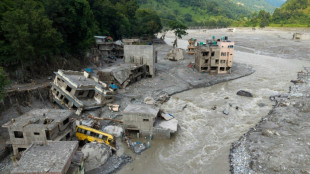 UN climate disaster fund moves to provide $20 mn aid for Nepal

 Africa faces 'complex' Ebola outbreak after spread to Nigeria: WHO

 American detained in Russia arrives in US: lawyer

 Pentagon, Lockheed announce deal for 850 F-35 jets over 10 years

 French authorities seek to ban or curb fresh protests

 Nearly all coral reefs risk collapse in 50 years: IUCN

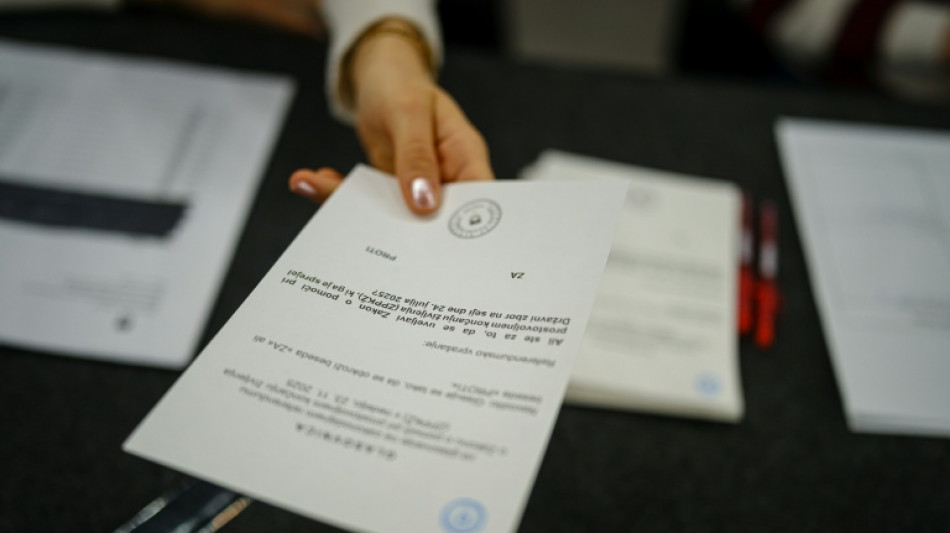
Slovenians on Sunday voted to suspend a new law to legalise assisted dying in a referendum held after critics mounted a campaign against the legislation.
Around 53 percent of voters had rejected the law, while 47 percent voted in favour, meaning its implementation will be suspended for at least one year.
Slovenia's parliament had approved a law in July allowing assisted dying after a 2024 referendum supported it.
But the new vote was called after a civil group, backed by the Catholic Church and the conservative parliamentary opposition, gathered 46,000 signatures in favour of a repeat, exceeding the 40,000 required.
The result means parliament cannot vote again on a bill that deals with the same issue over the next 12 months.
Ales Primc, the head of Voice for the Children and the Family, the NGO that organised the no vote campaign, reacted to the results saying "solidarity and justice" had won.
"Slovenia rejected the government's health, pension and social reforms based on death and poisoning," Primc was cited as saying by the Slovenian news agency STA.
Several European countries, including Austria, Belgium, the Netherlands and Switzerland allow terminally ill people to receive medical help to end their lives.
Under the disputed law, which was to take effect this year, lucid, terminally ill patients would have had the right to aid in dying if their suffering was unbearable and all treatment options had been exhausted.
- 'Culture of death' -
It would also have allowed for assisted dying if treatment offers had no reasonable prospect of recovery or improvement in the patient's condition, but not to end unbearable suffering from mental illness.
At the Stozice sports hall, the largest polling station in Ljubljana, 63-year-old pensioner Romana Hocevar said she would vote in favour of assisted dying.
"I'm a stage four cancer patient, I would not like to suffer. I had my father die of cancer and mother suffering dementia and I know what it looks like."
Vid Ursic, a 24-year-old student, said it was "good that we get to vote on relevant issues" and added that he supported "the right for people to decide on their own lives".
But Marija Unuk, in her late fifties, said she had voted against the law "because I support the culture of life, not the culture of death".
Prime Minister Robert Golob, who voted in advance, had urged citizens to back the law "so that each of us can decide for ourselves how and with what dignity we will end our lives".
- 'Human dignity' -
But the Catholic Church has said allowing assisted dying "contradicts the foundations of the Gospel, natural law and human dignity".
In June 2024, 55 percent had backed the law. Ahead of Sunday's vote, a poll showed that some 54 percent were in favour of it, while 31 percent opposed it and 15 percent were undecided.
A majority of participants representing at least 20 percent of Slovenia's 1.7 million eligible voters was required to reject the law in order for it to be suspended.
Turnout at the referendum was 40.9 percent -- just enough for the no vote to meet the threshold.
While several European countries already allow terminally ill people to receive medical help to end their lives, in others it remains a crime, even in cases of severe suffering.
In May, France's lower house of parliament approved a right-to-die bill in a first reading. The British parliament is debating similar legislation.
W.Mansour--SF-PST