Trump gets his way on tariffs, but global trade system intact for now
/ Photo: Brendan SMIALOWSKI - AFP

 Brazil chooses between Lula and Bolsonaro in nail-biter vote

 Doha opens ninth World Investment Forum focused on future investment

 Kuwait public works minister and UK ambassador discuss closer cooperation

 Historic Ramallah olive press joins modern production with local tradition

 Hebron operation forces 373 Palestinian families from their homes

 Kuwait legal department reviews new commercial concealment law

 Ladakh declared India’s first fully organic union territory
 IRDAI gives stakeholders until October 31 to comment on distribution reforms

 Bay cyclone forecast to strike Andhra-Yanam coast at very severe strength

 Technical outlook diverges for Bharti Airtel, PFC, REC and Alkyl Amines
 J&K Bank raises accident cover for government employees to ₹1 crore

 سامسونج تدرس طرح إصدار إماراتي خاص من هاتفها القابل للطي

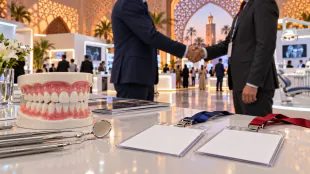 شراكة إماراتية مغربية لإطلاق معرض متخصص في طب الأسنان
 نورة الكعبي تمثل رئيس الإمارات في ذكرى الثورة المجرية

 جيمي هيث.. موسيقي الجاز الذي أعاد بناء مسيرته بعد السجن
 البرازيل تصوت في جولة حاسمة بين لولا وفلافيو بولسونارو

 فرنسا تسجل أول إصابة بشرية معروفة بفيروس شاموندا

 دراسة: تناول ثمرتي كيوي قبل النوم قد يحسن جودته

 صورة هجوم نووي على تل أبيب تدخل حملة نتنياهو الانتخابية

 مهلة أخيرة للشركات الكبرى في الإمارات لاختيار مزود الفوترة الإلكترونية

 Pinheiro Braathen wins Soelden giant slalom
 Man Utd's Fernandes dropped by Carrick after Como outburst

 محللون يقرؤون دلالات هجوم حاجز فرش الهوى في الخليل

 إغلاق مداخل مادما واقتلاع الزيتون يفاقمان خسائر المزارعين
 التفكجي: قيود الترخيص والهدم تضغط على الوجود الفلسطيني في القدس

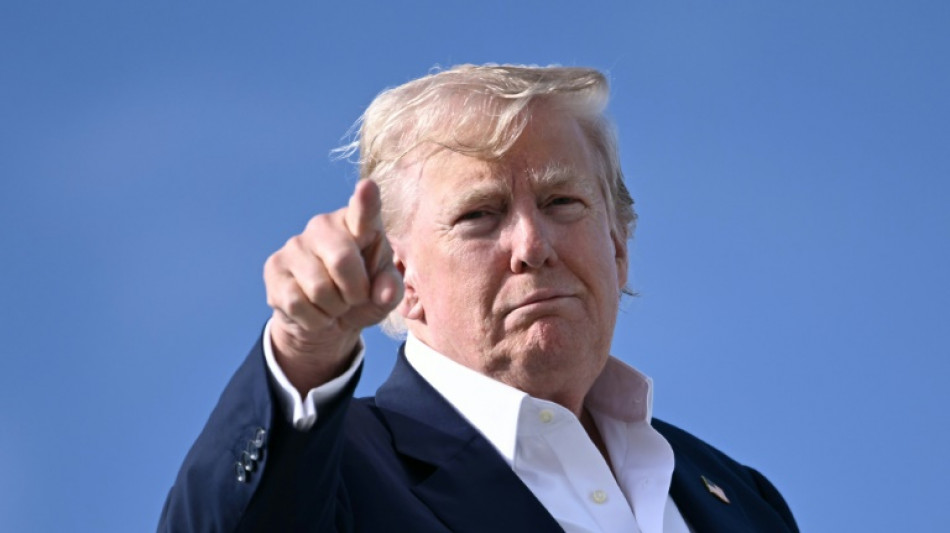
President Donald Trump has succeeded in strong-arming nations to accept higher tariffs on US exports, yet for now experts see little threat to the postwar trend of lower duties in the pursuit of greater wealth all around.
Since World War II, most politicians and economists view free trade as a pillar of globalisation, enshrined in the 1947 signing of the GATT accord.
It was the precursor to the World Trade Organization, which now has 166 members and covers 98 percent of global commerce.
"What we've learned in the postwar is that lower tariffs are better for prosperity of your own country," said Richard Baldwin, a professor at the IMD Business School in Switzerland.
"And it's also good if other countries lower their tariffs, so we have a vibrant international economy," Baldwin, who was a member of US president George Bush's Council of Economic Advisors, told AFP.
Trump however has embarked on a punishing trade war, claiming that deficits with other nations show they are "ripping off" the United States.
He has recently landed accords with Japan, the Philippines, Indonesia and, most importantly, the European Union.
For dozens of other nations, US "reciprocal" tariffs are to jump from 10 percent to various steeper levels come August 1, including powerhouse economies such as South Korea, India and Taiwan.
"To me, the most beautiful word in the dictionary is 'tariff'," Trump repeatedly said during the 2024 election campaign that returned him to office.
- 'Pyrrhic victory' -
Despite the headline figures, many economists expect the fallout for the global trade system overall to be limited.
US importers may well decide to procure more from American producers as the tariffs are applied, or pass along the higher costs to consumers.
"That won't have a systemic impact" outside the United States, Pascal Lamy, a former WTO chief, told AFP, calling the tariffs a "Pyrrhic victory" for Trump.
He noted that Trump is targeting only the US deficits for goods and not services, "the part of global trade that is increasing the fastest".
"You need to change your outlook when it comes to international trade," Lamy said, adding that "Donald Trump has a medieval view" of the issue.
And instead of making a country more prosperous, the accepted economic wisdom is that by making goods more expensive, tariffs weigh on economic growth for everyone involved.
"Putting up your own tariffs is not a way to make yourself richer -- that's something that people have given up on many years ago," Baldwin said.
"Trump has not screwed up the entire world trading system yet because the rest of the world hasn't changed their opinion as to whether trade is good or bad," he said.
"And generally speaking, it's good."
- Bucking the trend -
Global trade has risen sharply in recent decades, totalling nearly $24 trillion in 2023, according to WTO figures.
US imports represent just 13 percent of overall imports -- meaning the vast majority of international commerce will not be directly affected by Trump's levies.
"It's significant, but it's only a small part of imports worldwide, and the rest of the world still wants the system of engagement and interdependence to work," said Elvire Fabry, a specialist in geopolitical economics at the Jacques Delors Institute.
Several countries have moved in recent years to forge new trade deals, a trend Trump's tariffs blitz could accelerate.
In March, Japan, South Korea and China pledged to speed up negotiations on an accord, while Brazil's President Luiz Inacio Lula da Silva has called for a deal between the Mercosur Latin America bloc and Japan.
The European Union has also signed a free-trade deal with Mercosur, though its ratification has been held up, in particular by France over concerns about unfair agriculture competition.
The EU has also relaunched efforts to secure a deal with Malaysia and countries in Central Asia.
In April, the WTO said world merchandise trade would fall 0.2 percent this year before a "modest" recovery to growth of 2.5 percent in 2026.
But those forecasts took into account only the tariffs Trump had announced up to then -- not the more severe levels he has threatened to put in place starting August 1 for countries that have not signed deals with Washington.
O.Salim--SF-PST