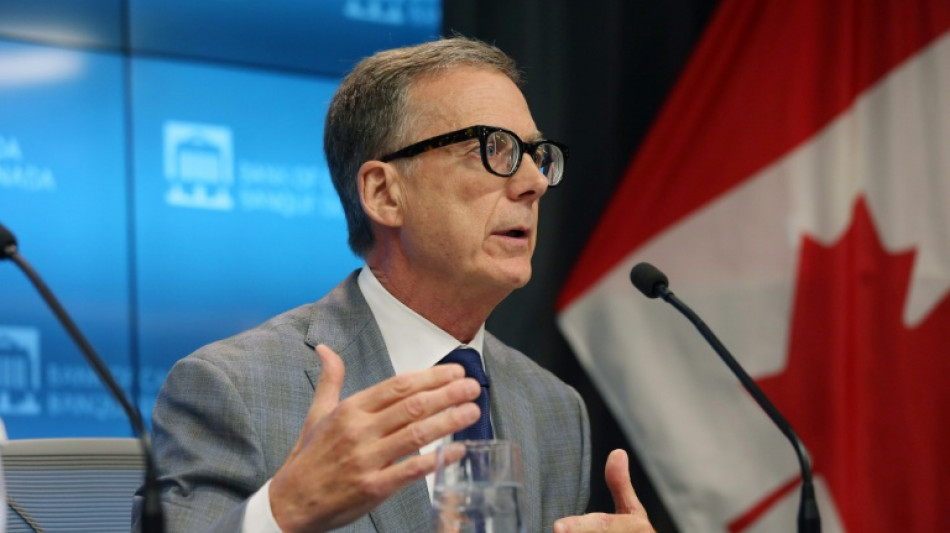
Canada holds key rate steady, says will act if war inflation persists / Photo: Dave Chan - AFP

 ICC unseals arrest warrants for Taliban education ministers
 Modric hopes fans back Croatia against Spain after England shame
 Bolsonaro rides right-wing surge into Brazil's election runoff
 Turkey blocks X account of British reporter

 Ukraine says using AI robot guns to shoot down new Russian drones
 At Oct 7 memorial, Netanyahu says will be no Hamas rule in Gaza
 Ukraine blames Russia for deadly sinking of Turkish ship in Black Sea
 UN rights council slams Taliban's 'oppression' of women

 Norway eyes partial ban of smart glasses

 Two dead after ship catches fire, sinks in Black Sea

 Spain's PM calls snap election after housing bill defeat

 STARCARES Equips Seven Foster Homes for Children and Young People in Tanzania

 Alleged Indian leader of neo-Nazi child abuse ring goes on trial in Paris
 Euro, French stocks slide on France debt concerns

 Alcaraz advances to Japan Open final

 US-German trio win medicine Nobel for work on optogenetics

 Hundreds of French high schools shut as protests persist

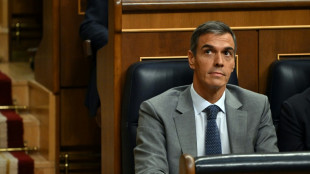 Spain PM calls early election after housing crisis defeat

 Stocks rally as 'Goldilocks' jobs data ease rate fears
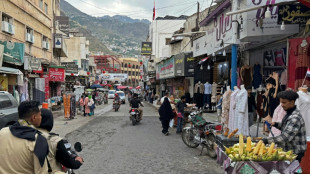
 Myanmar says 10,000 migrants returned from Malaysia this year

 Big guns back for Australia's Rugby League World Cup defence

 Braves rock Dodgers to level series, Brewers win thriller

 Most Asia stocks rally as 'Goldilocks' jobs data ease rate fears
 Sunken Silk Road city reveals Central Asia's lost history

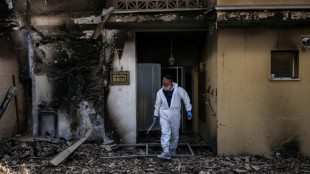 Three years on, Israeli rescuer cannot escape October 7
Canada's central bank held its key lending rate at 2.25 percent on Wednesday, but warned it may need to act if inflation caused by the Middle East war persists.
The fallout from the US‑Israeli strikes on Iran has sent energy prices soaring. The impacts in Canada, a net oil exporter, have been more muted than in other regions, but prices at the pump are shooting up.
The Bank of Canada said it would continue "looking through the war's immediate impact on inflation," and would not raise rates in response to temporary oil price shocks.
But it added that it "will not let higher energy prices become persistent inflation," and said it was "ready to respond as needed."
Bank of Canada Governor Tiff Macklem told reporters: "The higher oil prices go, and the longer they're higher, the more likely it is that we'll have to raise rates."
But, he added, the bank's baseline forecast is that oil prices will come down. He said the bank will be closely watching to see if elevated energy costs trigger higher prices on other goods.
- Tariff uncertainty -
The rate pause marks the fourth consecutive hold for Canada's central bank, which has previously said it wants to stay on the sidelines for as long as possible while uncertainty hovers over the key forces shaping the economy.
Prior to the Middle East war, the main source of uncertainty was the future trading relationship with the United States.
President Donald Trump's sector-specific tariffs have hurt crucial parts of Canada's economy, particularly the auto, steel and aluminum sectors.
But more than 85 percent of cross-border trade has remained tariff-free thanks to the existing North American free trade agreement.
Revision talks on that deal are set to intensify. Trump has said the agreement is "irrelevant" to the United States.
His top trade officials have made clear that Washington wants substantial changes to the agreement that Trump signed and praised during his first term.
Canadian Prime Minister Mark Carney has said the United States will not dictate the terms of a new agreement.
Macklem said "uncertainty is unusually elevated," and that a deterioration in trade relations with the United States could force a rate cut.
"Monetary policy may need to be nimble. If the United States imposes significant new trade restrictions on Canada, we may need to cut the policy rate further to support economic growth," he told reporters in Ottawa.
CIBC said in a note that the central bank faces a "two-way risk" — an economy facing inflation pressure because of the war while also confronting "sluggish growth" that could soften further if trade with the United States faces additional levies.
T.Ibrahim--SF-PST