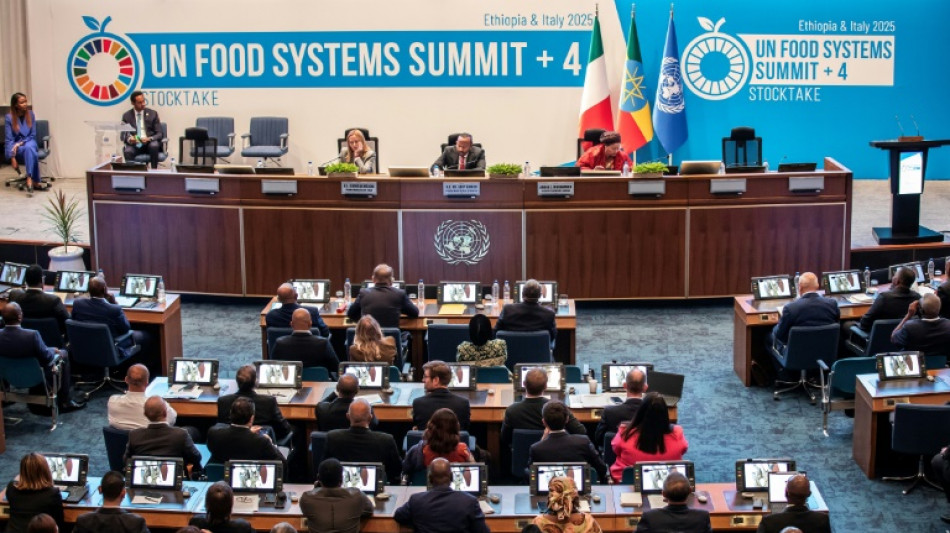
Hunger must never be 'weapon of war', UN chief tells Africa food summit / Photo: Solan Kolli - AFP

 Brazil chooses between Lula and Bolsonaro in nail-biter vote

 Doha opens ninth World Investment Forum focused on future investment

 Kuwait public works minister and UK ambassador discuss closer cooperation

 Historic Ramallah olive press joins modern production with local tradition

 Hebron operation forces 373 Palestinian families from their homes

 Kuwait legal department reviews new commercial concealment law

 Ladakh declared India’s first fully organic union territory

 IRDAI gives stakeholders until October 31 to comment on distribution reforms

 Bay cyclone forecast to strike Andhra-Yanam coast at very severe strength

 Technical outlook diverges for Bharti Airtel, PFC, REC and Alkyl Amines

 J&K Bank raises accident cover for government employees to ₹1 crore

 سامسونج تدرس طرح إصدار إماراتي خاص من هاتفها القابل للطي

 شراكة إماراتية مغربية لإطلاق معرض متخصص في طب الأسنان

 نورة الكعبي تمثل رئيس الإمارات في ذكرى الثورة المجرية

 جيمي هيث.. موسيقي الجاز الذي أعاد بناء مسيرته بعد السجن

 البرازيل تصوت في جولة حاسمة بين لولا وفلافيو بولسونارو

 فرنسا تسجل أول إصابة بشرية معروفة بفيروس شاموندا

 دراسة: تناول ثمرتي كيوي قبل النوم قد يحسن جودته

 صورة هجوم نووي على تل أبيب تدخل حملة نتنياهو الانتخابية

 مهلة أخيرة للشركات الكبرى في الإمارات لاختيار مزود الفوترة الإلكترونية

 Pinheiro Braathen wins Soelden giant slalom

 Man Utd's Fernandes dropped by Carrick after Como outburst

 محللون يقرؤون دلالات هجوم حاجز فرش الهوى في الخليل
 إغلاق مداخل مادما واقتلاع الزيتون يفاقمان خسائر المزارعين

 التفكجي: قيود الترخيص والهدم تضغط على الوجود الفلسطيني في القدس

UN chief Antonio Guterres on Monday said food must not be used as a weapon of war as world leaders gathered for a food summit in Africa, where 280 million people face chronic hunger.
The African Union urged donors to provide greater support for the world's poorest continent, which is struggling with poverty, unrest and the effects of climate change.
A new report co-authored by several United Nations agencies found global hunger fell slightly in 2024 thanks to progress in Asia and South America.
But 8.2 percent of the world -- an estimated 638 to 720 million people -- still faced hunger last year, and the situation was worsening particularly in Africa, where the figure is 20.2 percent.
"Hunger fuels instability and undermines peace. We must never accept hunger as a weapon of war," Antonio Guterres told the UN Food Systems Summit in the Ethiopian capital Addis Ababa via video link.
"Climate change is disrupting harvests, supply chains and humanitarian aid," he said.
He highlighted the worsening crises in Sudan and Gaza.
The World Health Organization has warned that malnutrition in the occupied Palestinian territory has reached "alarming levels" since Israel imposed a total blockade on Gaza on March 2.
In late May, Israel began allowing a trickle of aid to enter, but more than 100 NGOs have warned that "mass starvation" is spreading.
- Millions going hungry -
The summit takes place against the backdrop of aid cuts by the United States and other Western nations that are badly affecting much of the developing world.
Mahmoud Ali Youssouf, head of the African Union's executive commission, told the summit that food insecurity was on the rise across Africa, blaming "climate shocks, conflicts and economic disruptions".
"At this crucial moment, how many children and mothers on the continent are sleeping hungry? Millions, certainly," he said.
Youssouf said more than 280 million Africans were malnourished, with "nearly 3.4 million... on the brink of famine" and some 10 million displaced by drought, floods and cyclones.
He urged AU member states to devote 10 percent of their gross domestic product to agriculture to help foster "nutritional resilience".
"But we cannot do this alone. We call on our partners to honour their commitments to finance and support African solutions," he said.
- 'Not good news' -
The UN report made clear how far there was to go to meet its goal of ending world hunger by 2030.
Current projections suggest some 512 million people will still be undernourished by the end of the decade, 60 percent of them in Africa.
"Global hunger figures have slightly improved compared to 2022 and 2023," Alvaro Lario, president of the International Fund for Agricultural Development, told AFP.
"But we have not come back to the levels of five years ago. This is not very good news."
Four of the worst five countries for food security are in Africa: Nigeria, Sudan, the Democratic Republic of Congo, and Ethiopia.
The UN report highlights "persistent inequalities", with women and rural communities most affected, and the gap widening further over the previous year.
"Despite adequate global food production, millions of people go hungry or are malnourished because safe and nutritious food is not available, not accessible or, more often, not affordable," it said.
It found the response to price spikes between 2021 and 2023 was "more coordinated, informed and restrained" than the previous inflationary shock during the 2007-08 financial crisis.
Some 2.3 billion people had to occasionally skip a meal in 2024 and are considered moderately or severely food insecure -- 335 million more than in 2019.
N.AbuHussein--SF-PST