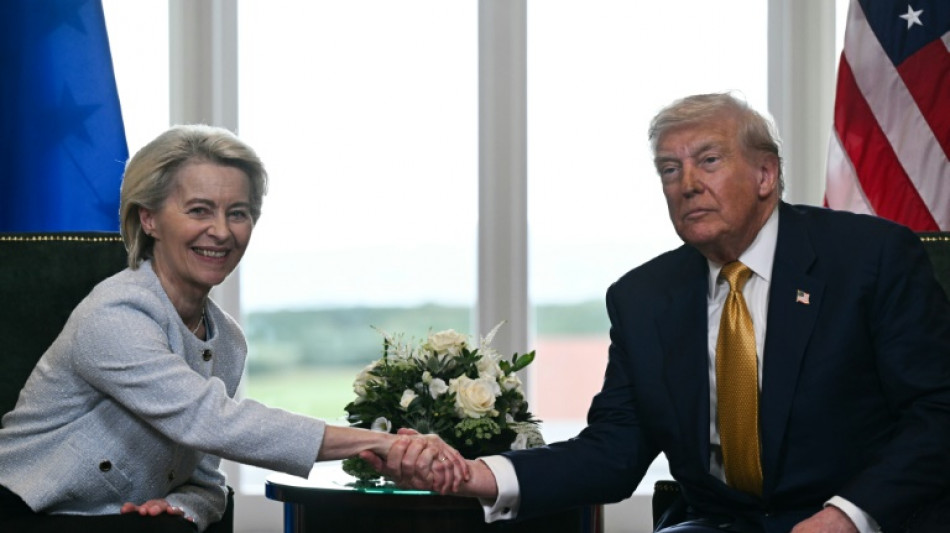
EU defends Trump trade deal facing backlash / Photo: Brendan SMIALOWSKI - AFP

 Brazil chooses between Lula and Bolsonaro in nail-biter vote

 Doha opens ninth World Investment Forum focused on future investment

 Kuwait public works minister and UK ambassador discuss closer cooperation

 Historic Ramallah olive press joins modern production with local tradition

 Hebron operation forces 373 Palestinian families from their homes

 Kuwait legal department reviews new commercial concealment law

 Ladakh declared India’s first fully organic union territory

 IRDAI gives stakeholders until October 31 to comment on distribution reforms

 Bay cyclone forecast to strike Andhra-Yanam coast at very severe strength

 Technical outlook diverges for Bharti Airtel, PFC, REC and Alkyl Amines
 J&K Bank raises accident cover for government employees to ₹1 crore

 سامسونج تدرس طرح إصدار إماراتي خاص من هاتفها القابل للطي

 شراكة إماراتية مغربية لإطلاق معرض متخصص في طب الأسنان

 نورة الكعبي تمثل رئيس الإمارات في ذكرى الثورة المجرية

 جيمي هيث.. موسيقي الجاز الذي أعاد بناء مسيرته بعد السجن
 البرازيل تصوت في جولة حاسمة بين لولا وفلافيو بولسونارو

 فرنسا تسجل أول إصابة بشرية معروفة بفيروس شاموندا

 دراسة: تناول ثمرتي كيوي قبل النوم قد يحسن جودته
 صورة هجوم نووي على تل أبيب تدخل حملة نتنياهو الانتخابية

 مهلة أخيرة للشركات الكبرى في الإمارات لاختيار مزود الفوترة الإلكترونية

 Pinheiro Braathen wins Soelden giant slalom
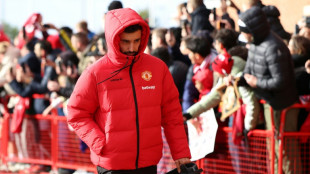 Man Utd's Fernandes dropped by Carrick after Como outburst

 محللون يقرؤون دلالات هجوم حاجز فرش الهوى في الخليل

 إغلاق مداخل مادما واقتلاع الزيتون يفاقمان خسائر المزارعين

 التفكجي: قيود الترخيص والهدم تضغط على الوجود الفلسطيني في القدس

The European Union on Monday vehemently defended its trade deal with President Donald Trump, with EU capitals and businesses sharply divided on an outcome some branded a "capitulation".
"I'm 100 percent sure that this deal is better than a trade war with the United States," top EU trade negotiator Maros Sefcovic told journalists.
European Commission President Ursula von der Leyen clinched the framework accord with Trump Sunday after dashing to Scotland as the August 1 deadline loomed for steep levies that threatened to cripple Europe's economy.
EU exports are now set to face across-the-board tariffs of 15 percent -- higher than customs duties before Trump returned to the White House, but much lower than his threatened 30 percent.
The 27-nation bloc also promised its companies would purchase energy worth $750 billion from the United States and make $600 billion in additional investments -- although it was not clear how binding those pledges would be.
"This is clearly the best deal we could get under very difficult circumstances," Sefcovic said.
Full details of the agreement -- and crucially which sectors could escape the 15-percent levy -- will be known in coming days, although the EU says it has avoided steeper tariffs on key exports including cars and medicines.
But the reaction from European capitals -- which gave von der Leyen the mandate to negotiate -- ranged from muted to outright hostile.
French Prime Minister Francois Bayrou said it was a "dark day" for Europe and said the accord was tantamount to "submission".
Speaking for Europe's biggest economy, German Chancellor Friedrich Merz gave a warmer welcome to a deal he said had avoided "needless escalation".
Industry groups in both countries made plain their disappointment however, with Germany's main auto sector body saying the 15-percent levy "burdens" carmakers while its VCI chemical trade association said the rates were "too high".
Hungary's Prime Minister Viktor Orban attacked the deal in blunt terms, saying "Trump ate Ursula von der Leyen for breakfast".
- 'Not only about trade' -
"It looks a bit like a capitulation," said Alberto Rizzi of the European Council on Foreign Relations (ECFR).
"The EU accepted a fairly unbalanced deal," he added, saying it delivered a "political victory for Trump".
Von der Leyen had faced intense pressure from EU states to strike a deal quickly with the bloc's biggest partner and protect a $1.9-trillion trading relationship.
Defending Brussels' approach, Sefcovic warned that a no-deal scenario -- meaning a 30-percent tariff and the prospect of further escalation -- would have risked up to five million jobs in Europe.
Throughout the months-long talks, Brussels prioritised stability and maintaining good relations with Washington, over escalation.
That line of thinking has support: Italian Prime Minister Giorgia Meloni, a Trump ally, said the deal had avoided "potentially devastating" consequences.
Markets in Asia and Europe welcomed the certainty and rose following the announcement -- reflecting the 4.4 billion euros ($5.1 billion) worth of daily transatlantic goods and services trade that were at stake.
Hanging over the negotiations was the risk to other areas of cooperation -- like Ukraine -- if the EU descended into a trade war with its closest security partner.
"It's not only about the trade -- it's about security, it's about Ukraine," Sefcovic told reporters Monday.
Jacob Funk Kirkegaard of the Peterson Institute for International Economics acknowledged it was "clearly an imbalanced deal" if judged purely on trade terms.
"But if you're trying to avoid worse national security outcomes, well then maybe the deal is not so bad," he said.
- Cautious approach -
The EU had sought to ramp up the pressure in the final stretch of talks, fearing a bad deal and higher levies, with countries approving a $109-billion package of counter-tariffs at the last minute.
And states led by France were pushing for a more robust response including the option to deploy the trade "bazooka" known as the anti-coercion instrument.
But the threat of retaliation was consistently framed by Brussels as a last resort should talks fail, and experts suggested the hardening stance may have come too late to make a real difference.
"If the EU had played hardball at the very beginning, it probably could have got a better deal," ECFR's Rizzi told AFP.
E.AbuRizq--SF-PST