
-
 LA28 Olympics torch relay to visit all 50 states
-
Grynspan pulls ahead in race to lead UN: diplomat
-
 Spain brush aside Croatia in Nations League, England down Czechs
-
Trump touts AI boss pledge to self-regulate
-
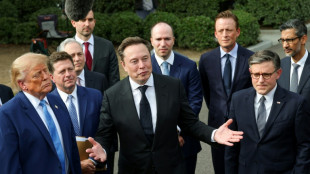 Trump hails 'morally binding' AI self-regulation pledge
-
Oil down, but stocks lower as bond yields rise
-
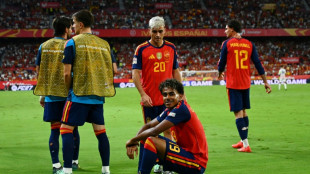 Yamal inspires Spain to Croatia romp on World Cup homecoming
-
England break down stubborn Czechs to claim first Nations League win
-
 UN to hold fourth informal poll of secretary-general candidates
-
UN Security Council extends Haiti anti-gang force by 6 months
-
 Who are the Emiratis behind crisis-hit Manchester City?
-
Manchester City guilty of Premier League charges: What comes next?
-
 Singer Angelique Kidjo urges Africans to 'create together'
-
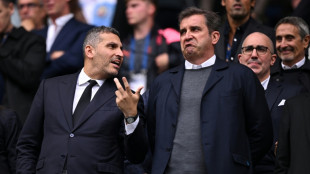
Man City chief Soriano slams Premier League 'conspiracy theory'
-
 Alleged Rihanna mansion shooter mentally fit for trial, says judge
-
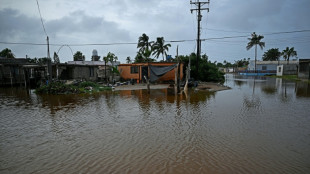
Hurricane Polo sweeps over Mexico's Pacific coast
-
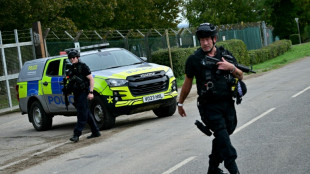 Mystery over UK airbase scare as police find petrol not explosives
-
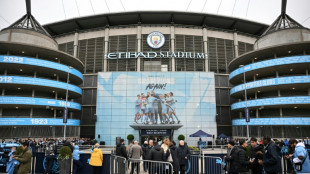
Man City must be relegated after guilty verdict says club's former chairman
-
 OpenAI unveils low-cost AI model, a day after shelving Astra upgrade
-
German far-right aims to lead Saxony-Anhalt govt in December
-
 Premier League confirms Man City guilty of serious financial breaches
-
Little damage as Hurricane Polo sweeps over Mexico's Pacific coast
-
 Brazil's Lula turns to Bad Bunny tune to criticise Trump ahead of polls
-
Manchester City guilty of breaking financial rules - Premier League
-
 Nigerian dancer eyes world record after seven-day marathon
-
FIFA boss Infantino blasted as would-be 'emperor' by UEFA's Ceferin
-
 Swiss regulator concludes Julius Baer bank probe
-
Stocks move lower despite oil prices dropping
-
 Brazil's patron saint pulled into latest election scrap
-
AI driving up innovation investment: UN

-
 Football overload leaves players near 'breaking point', warns Tebas
-
UN Security Council extends Haiti mission by 6 months
-
 Paris Eiffel Tower says chief to step down after uproar over removing women staff
-
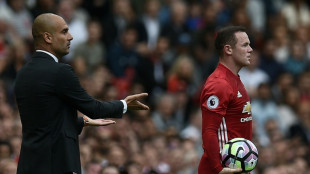
Man Utd do not deserve medals if Man City stripped of titles: Rooney
-
 Amaze Holdings (NYSE: AMZE) Executes Binding LOI to Acquire BullionFX | Alchemy, a Decentralized Gold-Backed Financial Ecosystem for Valued at US$155 Million
-
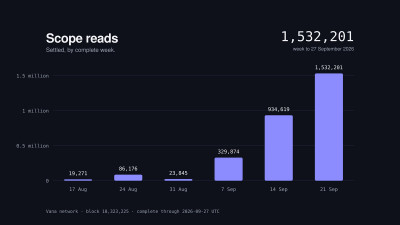
Vana Completes Expanded Staking as Part of the Vega Upgrade, Publishes Expanded VANA Token Economics
-
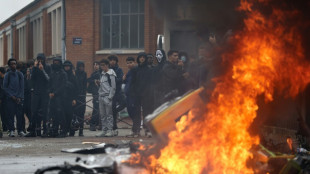 Clashes between French teens, police as school blockades intensify
-
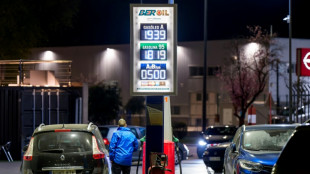
Spain to cap gas price hikes, extend fuel discounts
-
 Stocks move sideways despite oil moving lower
-
'We just need rain': Germany's Rhine river hits new low

-
 African leaders to gather in Egypt for business summit
-
Yemen health system at 'breaking point': WHO
-
 UK decides against charging foreign visitors for museums
-
Ireland undecided on second Israel match: coach

-
 Dallaglio to sell England World Cup winners' medal
-
France's Le Pen defiant after top ally hit by antisemitism claims
-
 Brazil come from behind to beat Australia 4-2 in friendly
-
Tom Cruise trades stunts for satire as toxic tycoon 'Digger'
-
 Ruthless An retains Asian Games badminton crown as Kunlavut triumphs
-
MEXC Unveils "WE SEE YOU" Brand Visual Refresh, Putting People Behind Every Trade in Focus

Solemn Spaniards mark 20 years since deadly train bombings
Spain and the European Union paid homage Monday to the 192 victims of the March 11, 2004 Madrid train bombings that marked the start of mass Islamist attacks in Europe.
"This is a day of remembrance... although we cannot bring back the lives that were so violently taken.. we can and must keep their memory alive," Prime Minister Pedro Sanchez told survivors and families of the victims at an official ceremony near the royal palace.
"Anyone who has experienced such extreme violence first hand will never forget it," he said.
He paid tribute to the victims but also to the nearly 2,000 others hurt in the 10 explosions on four commuter trains, "who survived but whose wounds have never healed".
Spain's King Felipe VI and Queen Letizia were also at the ceremony which was organised by Brussels, March 11 being the official European Day of Remembrance "for the victims of terrorism".
Although Spain had experienced decades of violence at the hands of the Basque separatist group ETA, it had never been hit by such a big attack.
City mayor Jose Luis Martinez Almeida described March 11, 2004 as "a day of wickedness" that had "caused immense pain and profound sadness but... didn't manage to bring Madrid to its knees."
Taxi drivers and the public pitched in to help the emergency services ferry nearly 2,000 wounded to hospital.
"The people of Madrid gave an example of solidarity that is still alive today," Martinez said at an early memorial event.
- 'A turning point' -
Just two-and-a-half years earlier, the United States had been hit by the 9/11 attacks in which Al-Qaeda militants killed nearly 3,000 people.
But when Madrid was hit, Europe didn't immediately think of the jihadist movement founded by Osama bin Laden.
Known as 11M -- Spanish shorthand for March 11 -- the attacks occurred in a highly-charged political context just days before a March 14 general election.
At the time, the ruling right-wing Popular Party (PP) of outgoing premier Jose Maria Aznar was the favourite to defeat the opposition Socialists led by Jose Luis Zapatero.
A year earlier, Aznar's government had decided to join the US-led invasion of Iraq, despite widespread public opposition, with Bin Laden vowing revenge on all countries involved.
Even so, within hours of the bombings, Aznar's government publicly blamed ETA, despite mounting evidence to the contrary.
The ETA hypothesis was soon debunked as investigators traced the perpetrators, largely through three bombs that failed to explode and were found in rucksacks and sports bags.
Al-Qaeda claimed responsibility for the attacks, saying it was in response to Spain's involvement in the Iraq war.
Doubts over the government's version quickly spread. During mass rallies the following day, protesters accused the authorities of lying.
- Only three left in prison -
In the March 14 election, the public handed a resounding victory to the opposition Socialists. Analysts said the government's disastrous handling of the attacks played a key role.
In early April, seven suspected cell members blew themselves up as police surrounded the flat where they were hiding on the southwestern outskirts of Madrid.
The blast also killed a police officer whom Spain counts as the 193rd victim of the attacks.
In early 2007, 29 suspects went on trial and six months later, 18 of them were convicted.
Twenty years on, only three remain behind bars -- two Moroccans who were each handed sentences totalling nearly 43,000 years, and a Spaniard who was jailed for nearly 35,000 years for suppling the explosives. None are likely to be out before 2044.
All the others have been released after serving their sentences, most of them deported or extradited, mainly to Morocco.
Other countries also marked the European Day of Remembrance on Monday.
Speaking at a ceremony in northern France, French Prime Minister Gabriel Attal said the day was a grave reminder of how "Islamist terrorism struck Europe en masse for the first time".
"That date stands as a turning point for our continent," he said at a ceremony in Arras, where in October a radicalised Islamist stabbed his former teacher to death.
"We realised that we too were targets. We learnt the hard way."
Z.AbuSaud--SF-PST