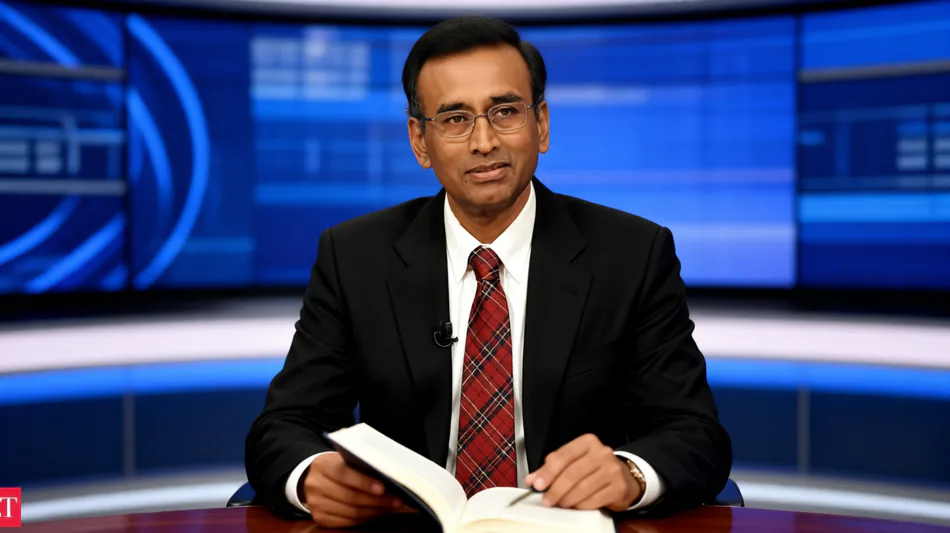
Nobel Laureate Venkatraman Ramakrishnan’s Journey from Academic Setbacks to Scientific Triumph

 استقرار أسعار الذهب مع ترقب المستثمرين لقرارات الفائدة الأمريكية

 Kuwait and Egypt Sign Eight Agreements to Expand Strategic Partnership

 تقارير إسرائيلية تكشف عن محاولات نتنياهو وزملائه للتأثير على نتائج الانتخابات عبر استهداف الفلسطينيين

 بنك القدس يتعهد بتأمين احتياجات مرضى السكري خلال أمسية توعوية في رام الله

 AI Job Losses at NAB, Qantas, Canva and Atlassian Signal Market Shift, Not Workforce Collapse

 Owner Review: 2023 Volvo XC60 Recharge Exceeds Expectations for Calgary Driver

 Indiana River Otters Make Comeback After Decades of Conservation Efforts
Venkatraman Ramakrishnan, the 2009 Nobel Prize winner in Chemistry, faced significant academic hurdles early in his life, including being rejected by prestigious institutions like the Indian Institutes of Technology (IITs) and Christian Medical College. Despite these setbacks, he pivoted from physics to biology, ultimately achieving global recognition for his scientific contributions.
Venkatraman Ramakrishnan, the Indian-American structural biologist who was awarded the Nobel Prize in Chemistry in 2009, overcame early academic rejections from some of India’s most prestigious institutions to build a distinguished scientific career.
Ramakrishnan’s path to global recognition was not linear. Early in his education, he faced setbacks when he failed to secure admission to an Indian Institute of Technology (IIT) or Christian Medical College (CMC). Rather than abandoning his academic ambitions, he adapted his focus, eventually enrolling at the Maharaja Sayajirao University of Baroda to study physics.
His career trajectory shifted significantly during his undergraduate years. Ramakrishnan moved from physics to biology, a pivot that would define his future contributions to science. He went on to conduct groundbreaking research on the structure and function of the ribosome, the cellular machinery responsible for protein synthesis. This work earned him the 2009 Nobel Prize in Chemistry, shared with Thomas A. Steitz and Ada E. Yonath.
Ramakrishnan’s story is often cited as an example of resilience in the face of academic competition. His experience highlights that failure to enter elite institutions does not preclude future success in scientific research or other fields. For students preparing for highly competitive entrance examinations, such as those for IITs, his journey serves as a reminder that alternative paths can lead to significant professional achievements.
Ramakrishnan’s career demonstrates the importance of adaptability and persistence. After his initial rejections, he continued his studies and research, eventually becoming a professor at Yale University and later at the MRC Laboratory of Molecular Biology in Cambridge, UK. His work has had profound implications for understanding antibiotic resistance and protein synthesis mechanisms.
The narrative of Ramakrishnan’s early struggles contrasts with his later acclaim, illustrating that academic setbacks are not definitive indicators of future potential. His success underscores the value of exploring diverse scientific disciplines and maintaining dedication to research despite initial obstacles.
H.Jarrar--SF-PST