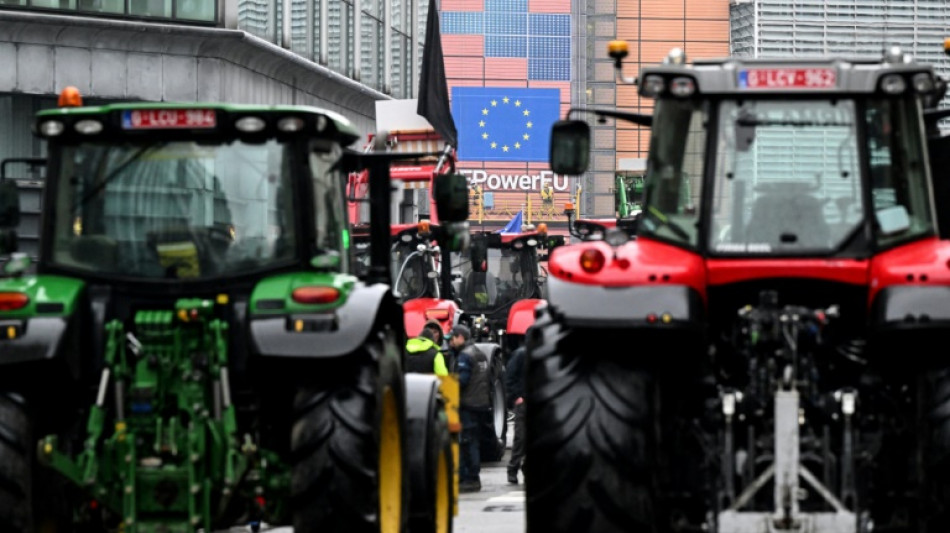
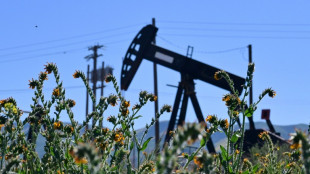
Stormclouds gather over EU's Green Deal / Photo: JOHN THYS - AFP/File

 LA28 Olympics torch relay to visit all 50 states
 Spain brush aside Croatia in Nations League, England down Czechs
 Trump hails 'morally binding' AI self-regulation pledge
 Yamal inspires Spain to Croatia romp on World Cup homecoming
 UN to hold fourth informal poll of secretary-general candidates
 Who are the Emiratis behind crisis-hit Manchester City?
 Singer Angelique Kidjo urges Africans to 'create together'
 Alleged Rihanna mansion shooter mentally fit for trial, says judge
 Mystery over UK airbase scare as police find petrol not explosives
 OpenAI unveils low-cost AI model, a day after shelving Astra upgrade
 Premier League confirms Man City guilty of serious financial breaches
 Brazil's Lula turns to Bad Bunny tune to criticise Trump ahead of polls
 Nigerian dancer eyes world record after seven-day marathon
 Swiss regulator concludes Julius Baer bank probe
 Brazil's patron saint pulled into latest election scrap

 Football overload leaves players near 'breaking point', warns Tebas
 Paris Eiffel Tower says chief to step down after uproar over removing women staff
 Amaze Holdings (NYSE: AMZE) Executes Binding LOI to Acquire BullionFX | Alchemy, a Decentralized Gold-Backed Financial Ecosystem for Valued at US$155 Million
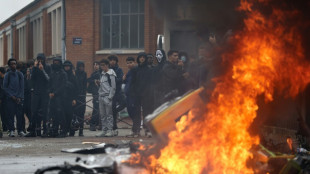 Clashes between French teens, police as school blockades intensify
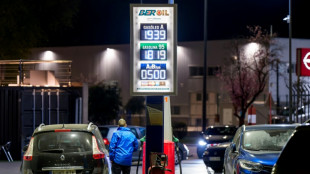
 Stocks move sideways despite oil moving lower
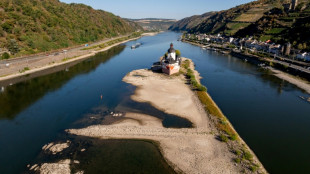
 African leaders to gather in Egypt for business summit
 UK decides against charging foreign visitors for museums
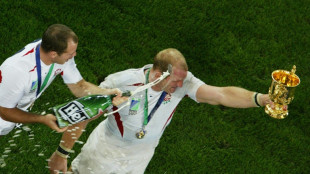 Dallaglio to sell England World Cup winners' medal
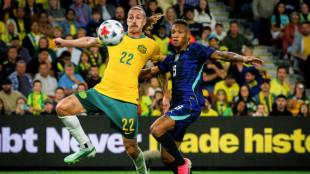 Brazil come from behind to beat Australia 4-2 in friendly
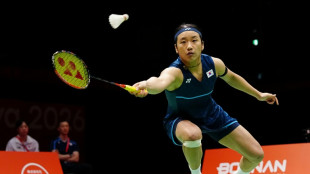 Ruthless An retains Asian Games badminton crown as Kunlavut triumphs

The EU's Green Deal -- once a core Brussels mission -- is looking increasingly under threat in the bloc's upcoming elections as resistance grows to its costs and consequences.
Farmers' protests, consumer cost-of-living worries and some countries' hesitation are already undercutting the ambitious plan to make the European Union carbon-neutral by 2050.
"The European Green Deal is our new growth strategy," European Commission chief Ursula von der Leyen announced back at the start of her mandate in 2019, as she unveiled dozens of pieces of legislation to meet climate targets agreed by EU member countries.
Five years on, the tone has changed.
Now, industry and farmers denounce the new "burdens" being piled upon them. Member states, including France, are calling for a "pause" in further measures.
"This backlash is centred on the agricultural area. It's not been true for energy, industry, transports," argued Pascal Canfin, chair of the European Parliament's environment committee.
He blames what he calls a "polarisation strategy" by right-wing parties.
Many of the Green Deal's laws have been adopted: an end to selling internal-combustion engine cars by 2035; a border carbon tax; rules against importing goods from deforested zones.
But momentum stalled last year with legislation to reduce chemical pesticides and to restore wilderness ecosystems -- opposed on grounds they could undermine food production in the bloc.
The biggest group in the European Parliament, the conservative European People's Party (EPP), from which von der Leyen hails, has made the shift an electoral gambit.
"It's easy to fix a figure. But it's more difficult to really make the transition happen in industry and also with the citizens," said a German EPP lawmaker, Peter Liese.
Farmland and forestry "should be protected much more" and farmers should not be seen "as an enemy of climate policy", he said.
- 'Identity politics' -
The climate crisis is becoming "a real identity politics issue" caught up in the farmers protests, said Susi Dennison, of the think tank the European Council on Foreign Relations.
It is being cast as "an either-or choice -- between either you do climate, or you are concerned about the economic picture," she said.
"There isn't really a strong enough response to that false dichotomy from progressive groups," Dennison said.
On the left in the parliament, Iratxe Garcia, of the Socialists & Democrats, laid the blame at the feet of "the extreme right and the EPP," accusing them of "trying to mix everything and to confuse the debate".
"What the conservatives are doing is trying to send the message that we have to choose between the farmers and the Green Deal," Garcia said, calling that "really irresponsible".
"The transition -- we have to do it. And we are prepared to confront, to speak, to explain," she said.
Yet a rightward shift in the European Parliament could put much of the legislative slate on the issue in jeopardy, undermining transitional steps needed after 2030. It could even slow the application of laws already adopted, some of which have revision clauses.
Phuc-Vinh Nguyen, of the Jacques Delors Institute, said a pause in the EU rules on battling climate change "risked being instrumentalised to legitimise populist attacks" that aim to bog down their application.
For Antonio Tajani, deputy prime minister in Italy's far-right government, it was time for Brussels "to abandon its extremist and ideological stance.
"Industry and farming cannot be penalised by unattainable environmental goals," he said.
Already Brussels has given up on trying to revise rules around chemical products and -- because of the farmers' revolt -- has put forward a lengthening list of concessions and opt-outs from environmental rules linked to its Common Agricultural Policy.
Von der Leyen herself -- vying for a second mandate -- has for the past few months been calling for a "new phase" of the Green Deal that factors in the need for better European competitivity for farmers and business.
The next EU legislature could seek to tie the deal to a reindustrialisation push, to attract investment, factories and jobs as part of the transition, said Neil Makaroff, of the think tank Strategic Perspectives.
Experts, however, point to a weak point in garnering those investments: a financing gap to reach 2030 climate goals that has been put at 406 billion euros ($445 billion) a year by the think tank I4CE.
D.Khalil--SF-PST