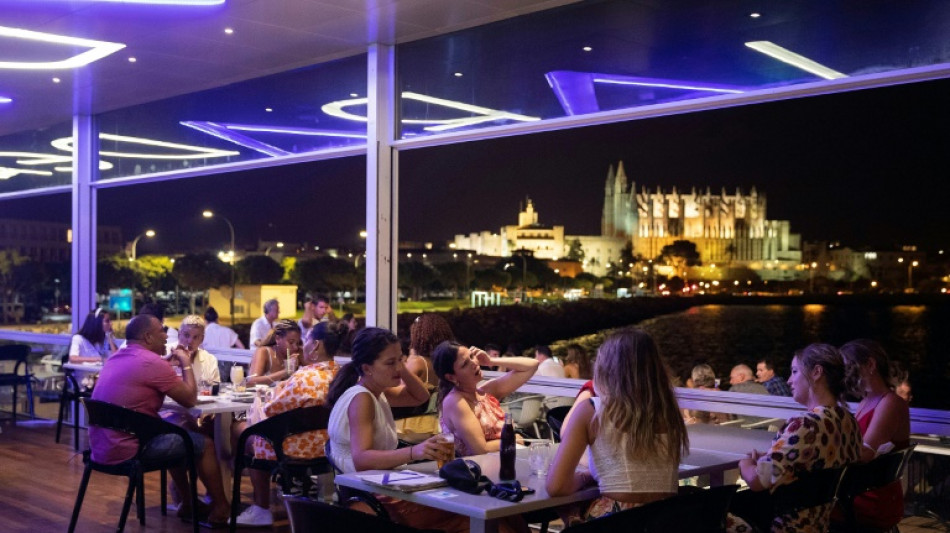
Are Spain's working hours too late? Govt reopens debate / Photo: JAIME REINA - AFP

 NBA close to picking new $12-13bn Vegas team owners: report

 LA28 Olympics torch relay to visit all 50 states

 Spain brush aside Croatia in Nations League, England down Czechs

 Trump hails 'morally binding' AI self-regulation pledge

 Yamal inspires Spain to Croatia romp on World Cup homecoming

 UN to hold fourth informal poll of secretary-general candidates
 Who are the Emiratis behind crisis-hit Manchester City?

 Singer Angelique Kidjo urges Africans to 'create together'

 Alleged Rihanna mansion shooter mentally fit for trial, says judge

 Mystery over UK airbase scare as police find petrol not explosives

 OpenAI unveils low-cost AI model, a day after shelving Astra upgrade
 Premier League confirms Man City guilty of serious financial breaches
 Brazil's Lula turns to Bad Bunny tune to criticise Trump ahead of polls

 Nigerian dancer eyes world record after seven-day marathon

 Swiss regulator concludes Julius Baer bank probe

 Brazil's patron saint pulled into latest election scrap

 Football overload leaves players near 'breaking point', warns Tebas
 Paris Eiffel Tower says chief to step down after uproar over removing women staff

 Amaze Holdings (NYSE: AMZE) Executes Binding LOI to Acquire BullionFX | Alchemy, a Decentralized Gold-Backed Financial Ecosystem for Valued at US$155 Million
 Clashes between French teens, police as school blockades intensify

 Stocks move sideways despite oil moving lower

 African leaders to gather in Egypt for business summit

 UK decides against charging foreign visitors for museums

 Dallaglio to sell England World Cup winners' medal

 Brazil come from behind to beat Australia 4-2 in friendly

An integral part of Spanish culture or a longstanding tradition that needlessly burdens staff? Spain's late working hours -- predominantly in bars, shops and restaurants -- have sparked heated debate over the government's wish to curb "unreasonable" excesses.
Regularly denounced by unions, Spain's working hours hit the headlines this week after some highly critical remarks by Labour Minister Yolanda Diaz.
"It is unreasonable that a country should have its restaurants open until 1:00 am. It's crazy to keep extending the working day indefinitely," said Diaz, head of the radical left-wing Sumar which is part of Spain's Socialist-led coalition.
"It's clear that the working hours in Spain are very different" from the rest of Europe, but "from 10:00 pm, these are night hours which present certain risks" for employees' mental health, said Diaz, a lawyer with roots in the Communist Party and who specialises in employment law.
Her remarks to a group of journalists on Tuesday, sparked a backlash from the right, who immediately pounced on her remarks as advocating a boring, stay-at-home lifestyle.
Diaz wants "everyone to go home and read the Communist manifesto by lamplight with a cup of tea," ironised Alfonso Serrano of the right-wing opposition Popular Party.
"Spain has the best nightlife in the world, with its streets full of life and freedom. They want to turn all of us into socialist puritans, with no soul, no light and no restaurants," jeered Isabel Diaz Ayuso, Madrid's hardline right-wing regional leader.
And their point was quickly echoed by the nightlife industry.
"We reject any proposal which questions Spanish lifestyle, which distinguishes and sets us apart in the tourist market," said Espana de Noche (Spain at Night), an association representing the Spanish nightlife sector.
- Long, drawn-out days -
According to Eurostat, the number of weekly working hours in Spain is in line with the European average. But the day is more spread out and ends later, Spain being the European country with the most people working after 6:00 pm.
"The problem is that working hours can be very spread out throughout the day" with long lunch breaks that don't give workers time "to organise their personal lives properly," Alfonso Serrano, a labour law expert at Alicante University told AFP.
That's linked to Spain's traditional way of life where people dine late, often at 10:00 pm, he said, meaning they have "even later leisure hours" which has a "knock-on effect" on other sectors, notably shops which end up closing late.
Diaz started a debate on the issue in 2022 in connection with a draft bill on "use of working time", commissioning a report from 60 experts who recommended consolidating working hours and closing shops earlier.
The bill was ultimately put on hold because of the July 2023 snap elections, but Diaz reopened the debate during talks on reducing the working week from 40 to 37.5 hours as outlined in Sumar's coalition agreement with the Socialists.
But it's a tricky proposal in a country which is proud of its nightlife.
The risk is that Spain ends up being "more boring than the Nordic countries, where you go home at 6:00 pm because nothing is open," warned Jose Luis Yzuel, head of Hosteleria de Espana, which represents the hotel and restaurant industry.
For Miguel Basterra, one of the experts involved in writing the report commissioned by Diaz, bars and restaurants "are responding to a demand in the market" which complicates the issue.
But improvements are "possible", he said, notably ensuring a better application of "laws and collective labour agreements" which are being sidestepped by some players in the sector.
D.AbuRida--SF-PST