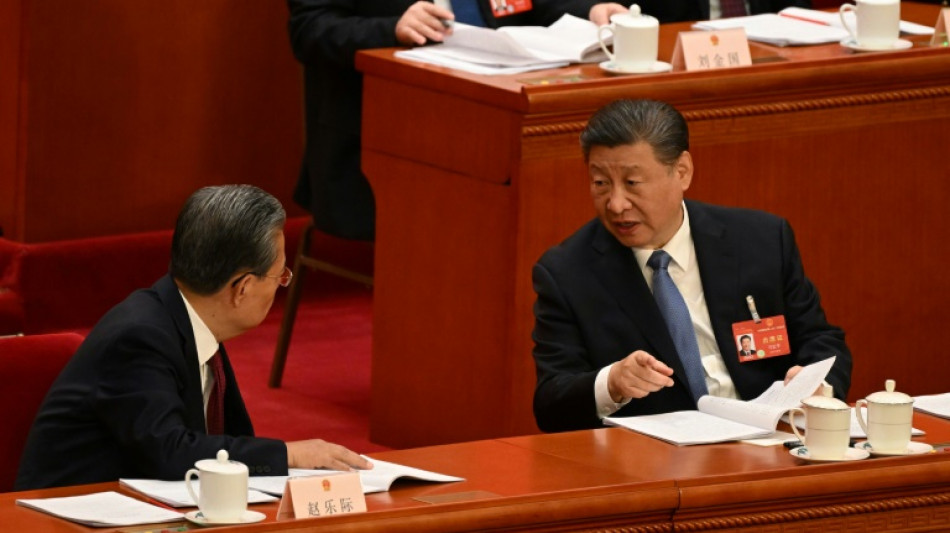
China vows to 'safeguard' national security with new laws at conclave / Photo: Jade Gao - AFP

 Brazil Faces Debt and Inflation Test as Lula Prepares Fourth Term

 مركز "شمس" في اليوم الدولي للتسامح: التسامح لا يسقط حق الضحايا في العدالة

 Canada Expands Asian Trade Push as US Negotiations Resume

 Quebec Math-Rock Duo Angine de Poitrine Earns Four Grammy Nominations

 Italy Raises 2026 Growth View but Warns Energy Will Keep Inflation High

 شطب 130 مليون اسم من قوائم الناخبين في الهند يثير مخاوف الترحيل

 US Wholesale Inflation Eases Monthly but Hits a Four-Year Annual High

 India's Wholesale Inflation Jumps to 12.29% as Fuel Costs Surge

 Japan's Economy Edges Into Contraction as Costly Oil Weighs on Demand

 Modi’s ASEAN Agenda Prioritizes Trade Balance and Defense Ties in Manila

 Egypt Demands Tripling of Climate Adaptation Finance for Africa by 2035

 Met Office Issues Yellow Snow Warning for Nottinghamshire on Tuesday

 اللواء أبو هارون: توطين التدريب العسكري الفلسطيني بنسبة 100% رغم القيود الإسرائيلية

 Ali Almansoori Claims BTCC Double at Bahrain National Race Day

China will adopt wide-ranging security laws in 2024 to "resolutely safeguard" its sovereignty, a top lawmaker vowed at a key legislative meeting Friday, as President Xi Jinping's government seeks to eliminate perceived threats to its rule.
The "Two Sessions" -- parallel meetings of China's rubber-stamp parliament and political consultative body -- offer a rare glimpse into the strategy of the Communist Party-led government for the year ahead.
Top legislator Zhao Leji on Friday promised that lawmakers would "resolutely safeguard China's sovereignty, security, and development interests" as he laid out the agenda for the National People's Congress (NPC) for the coming year.
"To modernise China's system and capacity for national security," he said, Beijing will enact "an emergency management law, an energy law, an atomic energy law, and a hazardous chemicals safety law."
It will also revise "the National Defense Education Law and the Cybersecurity Law," Zhao said in his report.
He did not offer more details about what the new laws would involve, nor when precisely they would be adopted.
The NPC is also set to introduce and amend laws in areas ranging from financial stability to preschool education and disease control.
"Military education and cybersecurity are clear priorities" for China's legislators, Jean-Pierre Cabestan, professor and Chinese politics expert at Hong Kong University, told AFP.
"They want to strengthen the legal framework in these areas, which is part of Xi's own priorities," he said, adding it was "no surprise" that national security was highlighted in Zhao's report.
China last year approved a revised anti-espionage law that dramatically expanded its definition of spying, giving Beijing more power than ever to punish what it deems threats to national security.
And a state secrets law adopted last month added more categories of sensitive information, including "work secrets" -- information not classified as state secrets but which could "impede the normal duties of (state) organs or work units" if leaked.
Such leaks must be met with "necessary protective measures", the amended law says.
E.Qaddoumi--SF-PST