'Worse than hell': the perils of pregnancy in war-torn Gaza / Photo: - - AFP

 One third of world population exposed to harmful air pollution: monitor

 North Korea denies South's claim it was apparently behind DMZ mine blasts

 West Bank's violent settlers part of a new generation fuelled by ideology

 US-led coalition ends mission in Iraq
 Pope-backed White Sox join Braves with MLB playoff wins

 NBA close to picking new $12-13bn Vegas team owners: report
 LA28 Olympics torch relay to visit all 50 states
 Spain brush aside Croatia in Nations League, England down Czechs

 Trump hails 'morally binding' AI self-regulation pledge

 Yamal inspires Spain to Croatia romp on World Cup homecoming

 UN to hold fourth informal poll of secretary-general candidates
 Who are the Emiratis behind crisis-hit Manchester City?

 Singer Angelique Kidjo urges Africans to 'create together'

 Alleged Rihanna mansion shooter mentally fit for trial, says judge
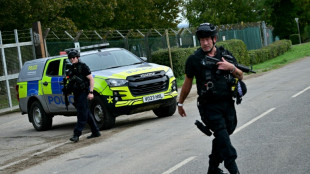 Mystery over UK airbase scare as police find petrol not explosives

 OpenAI unveils low-cost AI model, a day after shelving Astra upgrade

 Premier League confirms Man City guilty of serious financial breaches
 Brazil's Lula turns to Bad Bunny tune to criticise Trump ahead of polls

 Nigerian dancer eyes world record after seven-day marathon

 Swiss regulator concludes Julius Baer bank probe
 Brazil's patron saint pulled into latest election scrap

 Football overload leaves players near 'breaking point', warns Tebas
 Paris Eiffel Tower says chief to step down after uproar over removing women staff

 Amaze Holdings (NYSE: AMZE) Executes Binding LOI to Acquire BullionFX | Alchemy, a Decentralized Gold-Backed Financial Ecosystem for Valued at US$155 Million
 Clashes between French teens, police as school blockades intensify

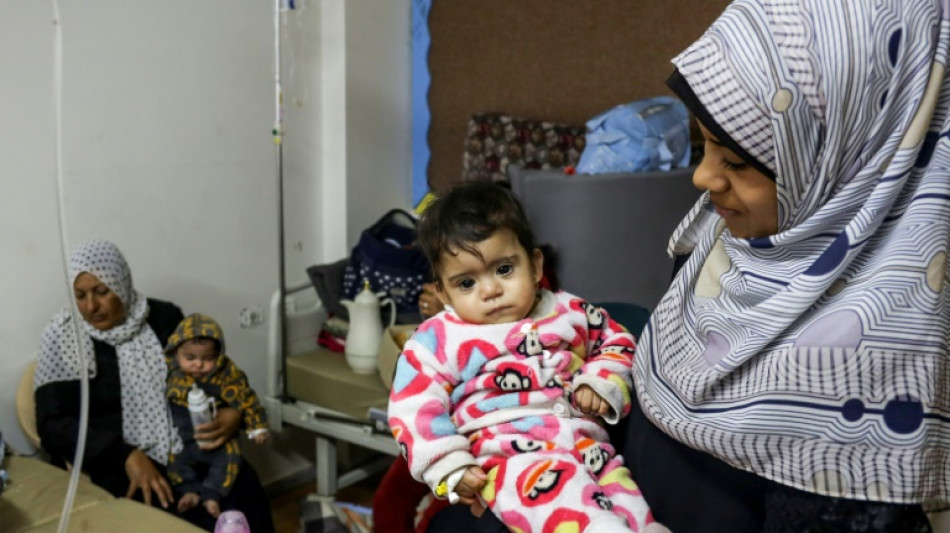
Forced to flee her home by Israeli bombardment, Asmaa Ahmed gave birth in the middle of the night in a Gaza City school that had no electricity.
The doctor arrived just in time, working by the light of a mobile phone and clamping the umbilical cord with whatever medical staff could find.
"I was very, very afraid to lose the baby," 31-year-old Ahmed told AFP, recounting how her son Faraj came into the world four months ago.
Baraa Jaber, the nurse who assisted in the delivery, said she was scared too.
"It was very late and at this time the occupation (Israel) could bomb anyone moving in the streets," she said.
Ahead of International Women's Day on March 8, aid workers and medics said Gaza's around 52,000 pregnant women -- a World Health Organization estimate -- are among those endangered by the collapse of the health system amid the ongoing war.
And their troubles don't end with a successful delivery.
New mothers confront the stark challenge of keeping infants alive in the besieged territory bereft of basics like food and water, to say nothing of heated tables for neonates and incubators.
The fast-deteriorating conditions have struck fear into the hearts of pregnant women like 21-year-old Malak Shabat, who has sought refuge in the southern Gaza city of Rafah after moving several times to escape Israeli air strikes.
"I'm so afraid of giving birth," said Shabat, whose due date is fast approaching.
- 'No doctors, no bed' -
The war in Gaza was triggered by Hamas's unprecedented October 7 attack on southern Israel that resulted in the deaths of around 1,160 people, mostly civilians, according to an AFP tally based on official Israeli figures.
Israel's retaliatory military campaign intended to destroy Hamas has killed at least 30,631 people, mostly women and children, according to the health ministry in Hamas-run Gaza.
The health system has been devastated, with the United Nations reporting last month that there were no fully functioning hospitals left, and just 12 of 36 working at some capacity.
Restrictions that the UN blames on the Israeli military mean that most aid convoys are halted.
The UN Population Fund (UNFPA) says it has 62 palettes of material to assist childbirth blocked outside Rafah on the border with Egypt.
There are only five rooms dedicated to childbirth at the Emirati maternity hospital in Rafah, a city where nearly 1.5 million Palestinians have sought refuge.
Among them is Samah al-Helou, who arrived in Rafah in the last month of her pregnancy but struggled to get the care she needed.
"They said that I would need a tiny surgery during childbirth. It was delayed for two weeks because there were no doctors, no bed and no operating room," she said.
Finally, she was able to give birth to her son Mohammed, but the hospital discharged her the next day to make room for emergency patients, meaning she had to return to a tent for the displaced.
"It was very cold; the situation was severe. I felt I was going to lose my son," she said.
"Our life here in the tent is harsh and worse than hell."
Raphael Pitti, a French doctor who recently completed an aid mission in southern Gaza, said such quick discharges are routine.
"When women give birth, they get back on their feet and their family comes to pick them up," he said.
"The hospital is unable to give a follow-up appointment... It's impossible because there are so many people showing up."
Several women told AFP they were instructed to bring a mattress and sheets if they wanted to stay in hospital after giving birth.
Others have had to deliver on unhygienic hospital floors -- or even in the street.
- 'Worse than our nightmares' -
Well before they go into labour, many pregnant women have had their health -- and that of the children they carry -- compromised by wartime shortages.
UNFPA said in a report last month that the proliferation of unsanitary toilets and showers meant dangerous urinary tract infections were widespread.
The UN children's agency, UNICEF, says 95 percent of pregnant or breastfeeding women in Gaza face "severe food poverty".
Living in a tent in Rafah with 20 other people, Rose Hindawi, who is pregnant with triplets, has consistently suffered from dizziness.
Since the war broke out, she has managed to eat a meal with enough protein -- some eggs -- just once.
"There are many crises in the region which are catastrophic for pregnant women," said Dominic Allen, UNFPA's representative for the Palestinian territories.
But because of Gaza's population density and the absence of safe places, he said the situation in Gaza is "worse than our nightmares".
I.Matar--SF-PST