Scientists launch hub to channel quantum power for good / Photo: Fabrice COFFRINI - AFP

 One third of world population exposed to harmful air pollution: monitor

 North Korea denies South's claim it was apparently behind DMZ mine blasts

 West Bank's violent settlers part of a new generation fuelled by ideology
 US-led coalition ends mission in Iraq

 Pope-backed White Sox join Braves with MLB playoff wins

 NBA close to picking new $12-13bn Vegas team owners: report

 LA28 Olympics torch relay to visit all 50 states

 Spain brush aside Croatia in Nations League, England down Czechs
 Trump hails 'morally binding' AI self-regulation pledge

 Yamal inspires Spain to Croatia romp on World Cup homecoming

 UN to hold fourth informal poll of secretary-general candidates

 Who are the Emiratis behind crisis-hit Manchester City?

 Singer Angelique Kidjo urges Africans to 'create together'

 Alleged Rihanna mansion shooter mentally fit for trial, says judge
 Mystery over UK airbase scare as police find petrol not explosives

 OpenAI unveils low-cost AI model, a day after shelving Astra upgrade
 Premier League confirms Man City guilty of serious financial breaches

 Brazil's Lula turns to Bad Bunny tune to criticise Trump ahead of polls

 Nigerian dancer eyes world record after seven-day marathon

 Swiss regulator concludes Julius Baer bank probe

 Brazil's patron saint pulled into latest election scrap
 Football overload leaves players near 'breaking point', warns Tebas

 Paris Eiffel Tower says chief to step down after uproar over removing women staff

 Amaze Holdings (NYSE: AMZE) Executes Binding LOI to Acquire BullionFX | Alchemy, a Decentralized Gold-Backed Financial Ecosystem for Valued at US$155 Million
 Clashes between French teens, police as school blockades intensify

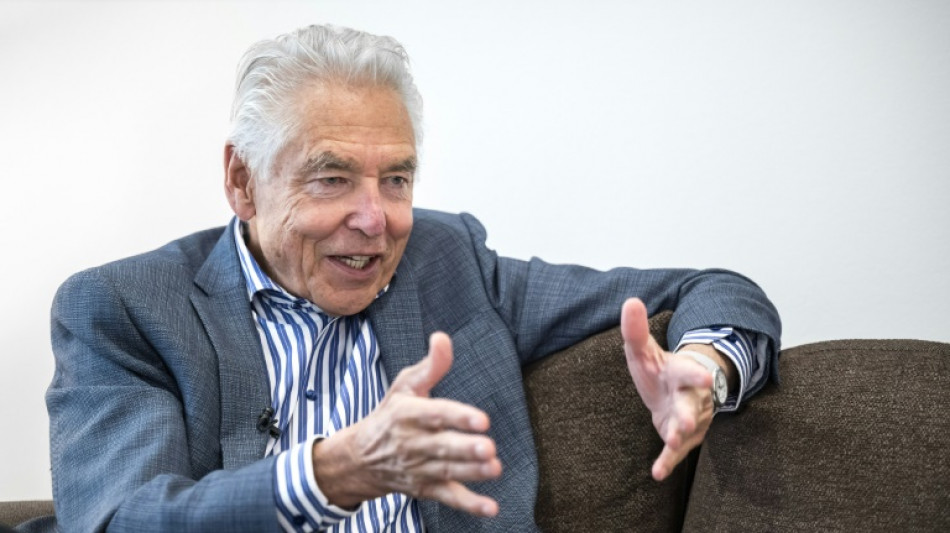
Scientists will work to channel the huge emerging power of quantum computers for the common good at a new institute that opened in Geneva on Tuesday, its founders said.
The Open Quantum Institute is calling on researchers from around the world to pinpoint the most promising future applications for the fast-emerging technology -- and ensure they are open and accessible to all.
"Quantum computing has the potential of changing almost everything," said Peter Brabeck-Latmathe, chairman of the science and diplomacy platform GESDA that conceived of the project.
He told AFP the future technology was expected to be "1,000 to 10,000 times more potent than the computing power we have today", insisting it was vital to begin thinking hard about how to govern it and ensure it is used for good.
During a ceremony late Tuesday at Europe's science lab CERN, where the institute will be housed during its three-year pilot period, experts summed up discussions after a day of workshops focused on the various visions for the role it will play.
- 'Huge risk' -
It is important to reflect on "the duality of the technology", Ozge Aydogan of the United Nations-run SDG Lab told the gathering.
"It can be an asset for the future, but it can be a huge risk".
CERN chief Fabiola Gianotti meanwhile said the landmark nuclear research lab was the perfect place for the centre, which would benefit from its long experience in "employing scientific and technological progress to the benefit of society."
Quantum computing combines advances in scientific understanding of the subatomic world with leaps in information theory to solve mathematical problems that are impossible for today's conventional computers.
While traditional computers process information in bits that can be represented by 0 or 1, quantum computers use qubits, which can be a combination of both at the same time, allowing them to solve more complex problems.
The first commercial quantum computers are still believed to be up to a decade away, and the technology is not expected to be fully developed before around 2050.
Brabeck-Latmathe, the former longtime head of Swiss food giant Nestle, said it was important to make sure that such a powerful technology was governed in an open and transparent way and was not allowed to be controlled by a handful of giant tech companies.
With quantum computing still under development, there is "time to think about what's going to be the impact of these new technologies ... the ethical considerations."
The institute will seek out applications of the technology that can move the world closer to implementing the UN Sustainable Development Goals.
Quantum computing simulations and calculations might for instance help determine how to reduce carbon dioxide in the atmosphere to help rein in climate change.
It could also potentially predict patterns of antibiotic resistance, and identify new, more effective chemical compounds for battling deadly bacteria.
In a bid to speed up the search for the best applications of the technology, GESDA has joined forces with Google and non-profit tech group XPrize and launched a competition Tuesday calling for researchers everywhere to submit proposals.
The three-year competition will reward the teams submitting the best projects, with $5 million in prizes at the end.
D.Khalil--SF-PST