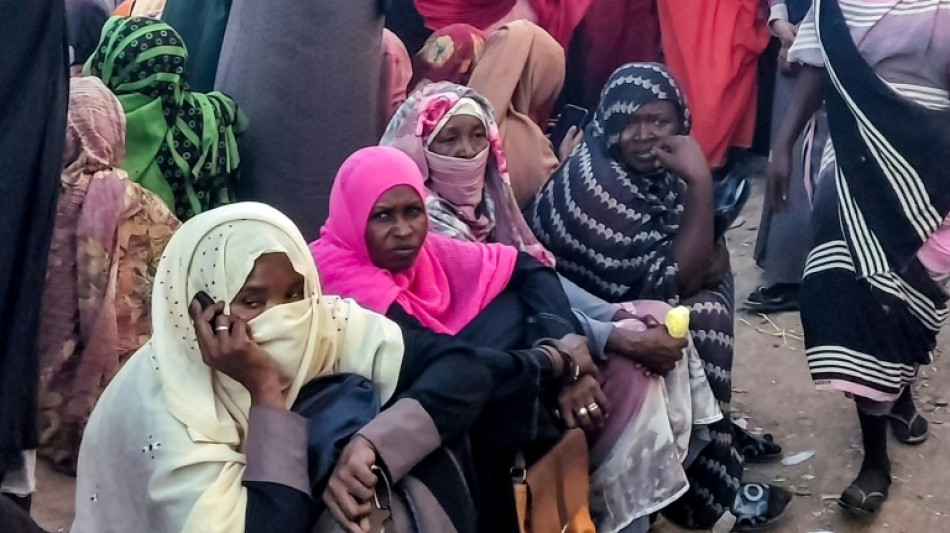
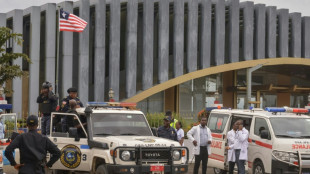
In former haven, Sudanese terrified by paramilitaries / Photo: - - AFP/File

 Dangote to launch $16bn refinery in Kenya
 North Korean leader 'extremely obese': Seoul spy agency

 Yankees and pope-backed White Sox start MLB playoffs with wins
 Malaysia's ex-PM Mahathir in hospital for observation
 'No limits': Marathon world record holder Sawe chasing history
 Countdown begins to biggest-ever Rugby World Cup

 Bangladesh women lose ground after quota reform
 Vietnam admits 'differing opinions' on Hanoi development
 Stocks temper gains as oil pares heavy losses, US data in focus
 New Zealand denies breaching climate commitments to EU

 Albert becomes youngest US scorer in 4-2 win over Chile
 Pirate island's plunging population shows Greece's demographic decline
 With elections ahead, Latvia's Russian-speakers reject Moscow's help
 Brazil football clubs face massive sponsorship blow from betting ban
 ChatGPT maker wants to be the App Store for AI as safety concerns grow
 Women fight fires and sexism in Indonesian Borneo

 Forsling's OT blast lifts Florida over Carolina in NHL opener

 Hurricane Polo sweeps over Mexico's Pacific coast, heads inland
 Grynspan pulls ahead in race to lead UN: diplomat

 Trump touts AI boss pledge to self-regulate

 Oil down, but stocks lower as bond yields rise

 England break down stubborn Czechs to claim first Nations League win
 UN Security Council extends Haiti anti-gang force by 6 months

 Manchester City guilty of Premier League charges: What comes next?
 Man City chief Soriano slams Premier League 'conspiracy theory'

A communications blackout has made information scarce from Sudan's Al-Jazira state, which paramilitaries pushed into in December, but rare interviews with residents have detailed grim conditions in the former safe haven.
One resident, who requested anonymity for their safety, told AFP that Mohamed Hamdan Daglo's Rapid Support Forces (RSF) shot at dozens of people in the village of Baranko last week.
The testimony adds to a litany of abuses during more than 10 months of war between Daglo's forces and Sudan's army led by Abdel Fattah al-Burhan.
The United Nations human rights chief on Friday said Sudanese civilians are living in "sheer terror" and both sides had consistently acted with impunity for multiple rights violations.
"On February 22, the militia fired on dozens of residents who were protesting against the arrest of several young people guarding the houses," said the resident of Baranko, about halfway between state capital Wad Madani and Khartoum to the north.
Multiple local sources reported 18 wounded in the shooting, a few of whom managed to reach a hospital in Shendi, 250 kilometres to the north, by taking side roads.
Breaking the communications siege via a rare satellite phone call, the anonymous resident told AFP that young men have been taking turns guarding houses at night.
It is a modest attempt to protect the homes from pillage, a signature RSF tactic.
The paramilitary force is the descendant of the Janjaweed militia, which began a scorched earth campaign in Sudan's western Darfur area more than two decades ago under strongman Omar al-Bashir.
Washington has accused both sides of war crimes, and said the RSF also carried out ethnic cleansing and crimes against humanity.
Al-Jazira, in central Sudan, had become a refuge for those fleeing the fighting in and around the capital Khartoum.
But in December, the RSF swept into the former breadbasket and proceeded to kill and plunder, witnesses told AFP at the time.
- Fleeing again -
The war has killed thousands, uprooted eight million people and led the country to the edge of famine, aid agencies have warned.
According to UN figures, nearly half a million people had sought refuge in Al-Jazira, including in Wad Madani, but the fighting eventually caught up with them there too, sending thousands fleeing again.
Then on February 7, the internet and telephones were cut off.
Many residents hope to leave Al-Jazira for somewhere safe, but getting away is not easy, said another Al-Jazira resident, Al-Samani, who only gave his first name out of fear of reprisal.
He lives in the village of Tabet, 80 kilometres northwest of Wad Madani, and spoke to AFP during a brief window of phone signal.
Buses have either been stolen or run out of fuel in a country where service stations have not been resupplied because of closed roads or challenges moving between areas under rival control.
Even for those lucky enough to find a bus and fuel, they need funds but "leaving is difficult because you have to pay, but online payment applications are paralysed" without internet, said Samani.
In the past 10 months in Sudan, the economy has gone mostly virtual, after a rise in cash thefts that often ruined families.
The mobile app for the country's main bank allows users to wire money, to collect tickets and pay for purchases in stores. But it requires an internet connection, which is no longer functioning.
- 'Terrorising women' -
"For a week, militiamen have been attacking houses and terrorising women to steal their gold jewellery," an essential dowry in Sudan, Samani told AFP.
"And there is not a tractor or agricultural tool they have not looted."
In the nearby village of Abu Adara, "five inhabitants were killed by the RSF on February 25," a local group, known as a resistance committee, reported.
The resistance committees used to organise pro-democracy protests but now provide aid during the war.
Throughout Al-Jazira during the past week, the resistance committee recorded 86 deaths, as well as others wounded, in 53 villages hit by RSF violence.
Amid the blackout, prices are constantly rising, residents say.
One litre of fuel now costs 25,000 Sudanese pounds, or about $20.
One kilogram (2.2 pounds) of meat, once priced at 6,000 Sudanese pounds before the RSF arrived, has doubled in cost.
RSF fighters took over swathes of land in Al-Jazira, leaving farmers unable to tend their crops, and accelerating economic damage on top of the looting.
With Sudan having lost "80 percent of its income because of the war", according to Finance Minister Gibril Ibrahim, an army loyalist, imports have nearly disappeared, compounding the struggle for survival in Al-Jazira state.
Y.Zaher--SF-PST