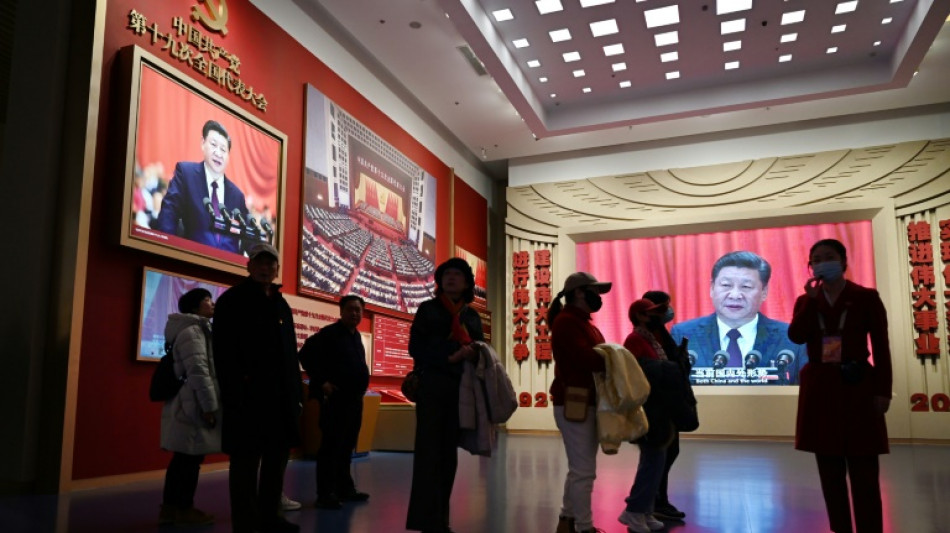
What to know about China's annual parliamentary meeting / Photo: GREG BAKER - AFP

 Dangote to launch $16bn refinery in Kenya
 North Korean leader 'extremely obese': Seoul spy agency

 Yankees and pope-backed White Sox start MLB playoffs with wins
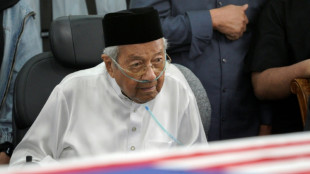 Malaysia's ex-PM Mahathir in hospital for observation
 'No limits': Marathon world record holder Sawe chasing history

 Countdown begins to biggest-ever Rugby World Cup

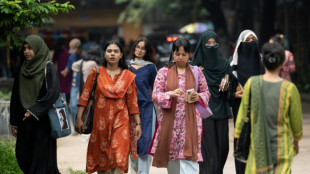 Bangladesh women lose ground after quota reform

 Vietnam admits 'differing opinions' on Hanoi development
 Stocks temper gains as oil pares heavy losses, US data in focus

 New Zealand denies breaching climate commitments to EU

 Albert becomes youngest US scorer in 4-2 win over Chile
 Pirate island's plunging population shows Greece's demographic decline
 With elections ahead, Latvia's Russian-speakers reject Moscow's help

 Brazil football clubs face massive sponsorship blow from betting ban
 ChatGPT maker wants to be the App Store for AI as safety concerns grow

 Women fight fires and sexism in Indonesian Borneo

 Forsling's OT blast lifts Florida over Carolina in NHL opener

 Hurricane Polo sweeps over Mexico's Pacific coast, heads inland
 Grynspan pulls ahead in race to lead UN: diplomat

 Trump touts AI boss pledge to self-regulate
 Oil down, but stocks lower as bond yields rise

 England break down stubborn Czechs to claim first Nations League win

 UN Security Council extends Haiti anti-gang force by 6 months

 Manchester City guilty of Premier League charges: What comes next?

 Man City chief Soriano slams Premier League 'conspiracy theory'

Thousands of delegates from across China will convene in Beijing next week for the start of the country's annual legislative meetings known as the "Two Sessions".
The tightly controlled voting on legislation already pre-approved by the ruling Communist Party means there will be no major changes.
But the meetings do provide a rare glimpse into the top leadership's priorities, with analysts eyeing support measures for China's ailing economy as well as an expected increase in defence spending.
Here's what you need to know:
- What are the 'Two Sessions'? -
The first one, due to kick off Monday, is a gathering of China's political advisory committee, the Chinese People's Political Consultative Conference (CPPCC).
The group's members -- who have included many of China's most famous celebrities, such as Yao Ming and Jackie Chan -- receive a lot of attention at home.
But its discussions are relatively low stakes: representatives provide lawmakers with policy suggestions that, more often than not, have little impact on national policy.
The real focus of the "Two Sessions" is the meeting of the National People's Congress (NPC), the country's legislature, starting Tuesday at Beijing's Great Hall of the People.
Two-thirds of the legislature's members come from the Communist Party.
And most of the bills that will be passed have already been decided by party leaders well in advance, leading to it being described as a "rubber-stamp" parliament.
- How important is it? -
China goes to great lengths to make sure there are no embarrassing incidents during the parliamentary session, which is touted by the Communist Party as proof that it answers to the people despite its monopoly on power.
The meeting place in the Great Hall of the People is freshened up, traffic is shut down, factories are closed to guarantee blue skies, plainclothes policemen seem to lurk on every corner and political dissidents are rounded up and asked -- or sometimes forced -- to go on "vacation" somewhere far away from the capital.
It is also the one time each year when the country's most powerful politicians are all in one place, making it a key venue for political horse-trading, glad-handing and backstabbing.
Every five years, the parliamentary session also sees the appointment of the president -- last year, Xi Jinping began his third term in the position, complementing two top Communist Party positions he secured at a congress in 2022.
This year's "Two Sessions" will also feature the first annual government work report presented by Premier Li Qiang since he ascended to the country's number-two position at last year's meeting.
- What are the top issues? -
The economy, beset by slumping consumer activity and a prolonged crisis in the property sector, will be the most closely-watched topic at this year's gathering.
The conference will see delegates set official growth targets for 2024, following a reported national GDP expansion of 5.2 percent last year -- the lowest rate in decades, excluding the pandemic years.
The release of details on military spending will offer signals as to China's confidence in current geopolitical conditions, as tensions persist across the Taiwan Strait and Russia's war in Ukraine enters its third year.
Observers will also be closely assessing any plans announced on the allocation of public resources into the tech sectors or major infrastructure development projects.
T.Khatib--SF-PST