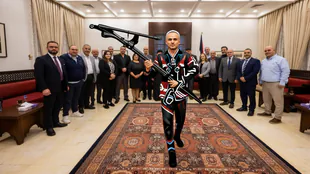
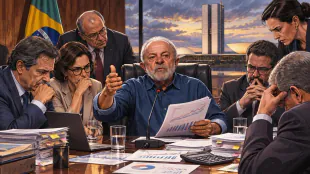
Brazil urges 'new globalization' at G20 meet overshadowed by Ukraine / Photo: Nelson ALMEIDA - AFP

 French Economy Shrinks 0.1% as Consumer Confidence Slumps
 NFL Week 11 Early Predictions: Titans vs. Cowboys and 49ers vs. Vikings Picks
 تحذيرات من نفاد مخزونات الغاز في ألمانيا بحلول 2027
 Kansas City Fed Chief Says Inflation Is Still Running Too Hot
 Asian Markets Slide as AI Concerns Hit Chip Stocks
 Tom Brady’s Viral Reaction to Deebo Samuel’s Trick-Play Touchdown
 Canada Signals Openness to Chinese Automakers if US Trade Talks Fail
 US Mortgage Rate Falls for Fourth Week but Remains Above 7%

 US Jobless Claims Rise to 200,000 but Layoffs Remain Historically Low
 Euro-Area Growth Slows to 0.4% While Employment Stalls

 UK Economy Grows 0.7% in Third Quarter as Services Lead Expansion
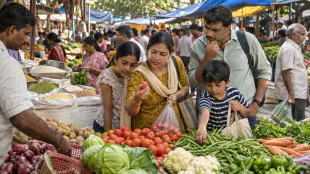 India's Retail Inflation Reaches 6.09% as Food Prices Accelerate
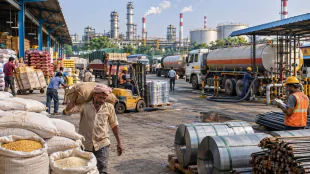
 China's October Activity Data Reveal a Weak Start to the Fourth Quarter
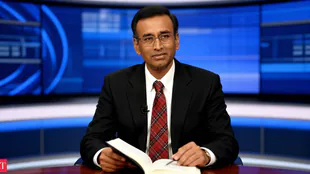 Nobel Laureate Venkatraman Ramakrishnan’s Journey from Academic Setbacks to Scientific Triumph
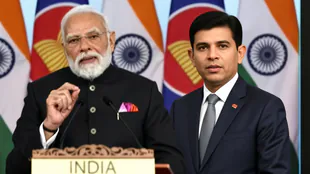
 استقرار أسعار الذهب مع ترقب المستثمرين لقرارات الفائدة الأمريكية
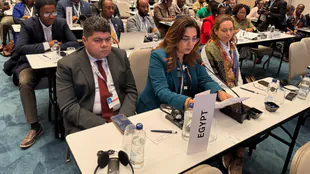
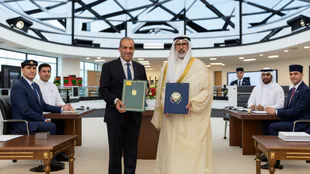 Kuwait and Egypt Sign Eight Agreements to Expand Strategic Partnership

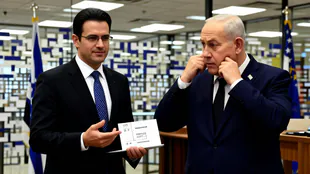 تقارير إسرائيلية تكشف عن محاولات نتنياهو وزملائه للتأثير على نتائج الانتخابات عبر استهداف الفلسطينيين
Brazil called for a "new globalization" to address poverty and climate change as it opened a meeting Wednesday of finance ministers from the world's top economies, but the Ukraine and Gaza wars risked overshadowing the plea.
"The global economic outlook is full of challenges," Brazilian Finance Minister Fernando Haddad told his counterparts from the Group of 20 leading economies, opening their first meeting of the year in Sao Paulo -- though he gave his speech remotely, after coming down with Covid-19.
"It is time to redefine globalization. We need to create incentives to ensure international capital flows are no longer decided by immediate profit but by social and environmental principles," said Haddad, a close ally of leftist President Luiz Inacio Lula da Silva.
US Treasury Secretary Janet Yellen, German Finance Minister Christian Lindner, IMF chief Kristalina Georgieva and other top economic policymakers are in the Brazilian financial capital for the two-day meeting -- though there are some notable absences, including the Chinese, Indian and Russian finance ministers.
Brazil, which took over the rotating presidency of the G20 from India in December, is pushing for the group to prioritize the fights against poverty and climate change, alleviating the crushing debt burdens of low-income nations, and giving developing countries more say at institutions like the International Monetary Fund and World Bank.
Also on the agenda: increasing taxes on corporations and the super-rich.
"We need to ensure the billionaires of the world pay their fair share of taxes," said Haddad.
French Finance Minister Bruno Le Maire backed that call, telling journalists that Paris is pushing to "accelerate" international negotiations on a minimum tax on the ultra-wealthy.
The meeting, which follows one by foreign ministers in Rio de Janeiro last week, will lay the economic policy groundwork for the annual G20 leaders' summit, to be held in Rio in November.
- G7 targets Russian assets -
But even before the G20 meeting opened, the conflict in Ukraine took center stage.
The Group of Seven countries -- Britain, Canada, France, Germany, Italy, Japan and the United States, plus the European Union -- held their own meeting on the sidelines to discuss shoring up Western support for Kyiv, which is desperate for more aid as Russia's invasion enters its third year.
Officials said the G7 finance ministers had discussed a proposal to seize an estimated $397 billion in Russian assets frozen by the West over Moscow's military operation.
Yellen said Tuesday it was "necessary and urgent" to tap those assets to help fund Ukraine, an idea British Prime Minister Rishi Sunak and Canadian Deputy Prime Minister Chrystia Freeland have also backed.
But there were divisions among G7 members.
"I want to be very clear: We don't have the legal basis for seizing the Russian assets now. We need to work further... The G7 must act abiding by the rule of law," said France's Le Maire.
Ukraine has warned it is in dire need of more military and financial assistance, with a fresh $60 billion US package stalled in Congress.
"What's really urgent is for the United States to unblock that $60 billion," said Le Maire.
The war in Gaza was also a recurring theme at the G20 meeting, amid fears Israel's offensive against Palestinian militant group Hamas could spiral into a wider war, with potentially catastrophic effects for the global economy.
"The real economic risks today are geopolitical risks, which can block the return of growth," said Le Maire, calling the potential expansion of the Middle East conflict a "significant risk."
Founded in 1999, the G20 accounts for more than 80 percent of global gross domestic product (GDP), three-quarters of world trade, and two-thirds of the world's population.
It has 21 members: 19 of the world's biggest economies -- including both industrialized nations and emerging powers -- plus the European Union and, participating as a member for the first time this year, the African Union.
Q.Bulbul--SF-PST