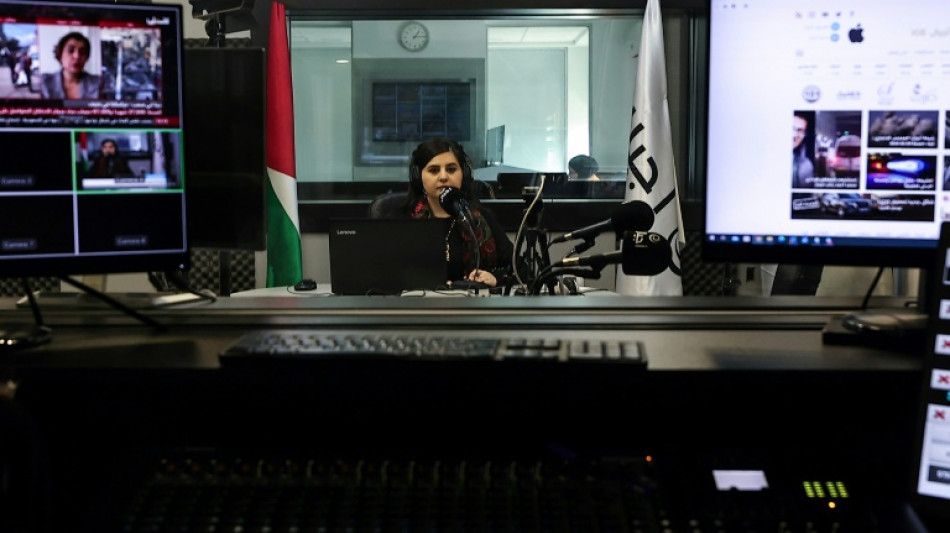
'Dad, come back': Palestinians send radio messages to loved ones in Israeli jails / Photo: Zain JAAFAR - AFP

 In Manchester, people say City scandal is 'shame for football'

 Stocks lacklustre as inflation data weighs on sentiment
 Israel-bound plane rerouted, pilots wounded in reported fight

 Truth commission on Sweden's Sami people seeks redress

 Energy costs spark inflation surges in France, Italy

 South Korea break China hearts to reach Asian Games football final

 Eala storms into Asian Games semi-finals to thrill adoring fans

 Turkey freezes ex-minister's assets as fund crisis grows

 What we know about the North Korean POW dispute

 Most equities rise after oil price plunge, US data in focus

 Polar oceans transformed as warming melts ice habitats: research

 Lost shark becomes viral star in South Korea

 Dangote to launch $16bn refinery in Kenya
 North Korean leader 'extremely obese': Seoul spy agency

 Yankees and pope-backed White Sox start MLB playoffs with wins

 Malaysia's ex-PM Mahathir in hospital for observation

 'No limits': Marathon world record holder Sawe chasing history

 Countdown begins to biggest-ever Rugby World Cup

 Bangladesh women lose ground after quota reform

 Vietnam admits 'differing opinions' on Hanoi development
 Stocks temper gains as oil pares heavy losses, US data in focus
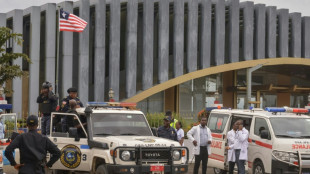
 New Zealand denies breaching climate commitments to EU

 Albert becomes youngest US scorer in 4-2 win over Chile

 Pirate island's plunging population shows Greece's demographic decline

 With elections ahead, Latvia's Russian-speakers reject Moscow's help

Palestinians with relatives in Israeli prisons have been deprived of visiting rights during the Israel-Hamas war, opting instead to send messages to loved ones on a radio programme.
"Hello, this message is for my brother Islam. How are you, my brother?" said one greeting sent via a Palestinian radio show called Messages for the Prisoners.
"Your house is ready. When you get out, you will be all set to find someone to marry!"
The show on popular Palestinian station Radio Ajyal, based in the city of Ramallah in the occupied West Bank, features personal messages from families that often end with the sentence: "We hope you will hear these words."
Campaigners say the number of Palestinian prisoners in Israeli jails has swelled to around 9,000, from about 5,200 before Hamas's October 7 attack on Israel that triggered the war.
After waves of arrests and tough restrictions on detainees followed the attack, the radio station has been inundated with messages from relatives. In response, it has extended the show by more than an hour.
"We get messages from everywhere" as many families "no longer have any news of their loved ones in prison," said Walid Nasser, Radio Ajyal's editor-in-chief.
"Dear dad, I can't wait for you to come back to take me to school," said one of the messages, which are often read by children and sometimes marked by a suppressed sob.
"Everything is fine at home, everything is fine at university, don't worry," said another message.
The show's host, Maysam Barghouti, who reads out some of the messages herself, said many families "are looking for hope to hold on to".
"The show is really the only means to communicate with a loved one or to get information."
- 'No news' -
Israeli prison authorities announced a "state of emergency" after October 7 to prevent potential involvement of inmates in any further unrest, cutting off visiting rights and barring phone calls.
The October 7 attack resulted in the deaths of about 1,160 people in Israel, mostly civilians, according to an AFP tally of official Israeli figures.
Hamas militants also took about 250 Israeli and foreign hostages -- 130 of whom remain in Gaza, including 30 presumed dead, according to Israel.
Israel's retaliatory campaign has killed at least 29,410 people, mostly women and children, according to the latest count by Gaza's health ministry.
Amid the war, radios have also been banned in prisons, but the families, as well as Radio Ajyal staff, hope that inmates are still somehow able to tune in.
The Palestinian Prisoners Club advocacy group said visits by the International Committee of the Red Cross have also stopped. Both the ICRC and Israel declined to comment.
While some Palestinians are detained without known charges, the most common grounds for arrest range from online calls for violence to alleged militant activity.
Prison conditions have deteriorated since the start of the war, several rights groups have said based on official Israeli data and accounts from former inmates.
"My brother has been in prison for 22 years, and the last three months have been the most difficult for all of us," said Ihsan Kamal, whose brother Saed was sentenced to 38 years for attacking Israelis.
"My parents used to visit him once a month," Kamal said. "Now, we have absolutely no news, and we hear that the situation is terrible in the prisons."
Rights groups say at least nine Palestinians have died behind Israeli bars since October 7.
The Association for Civil Rights in Israel has called on judges to visit prisons where Palestinians are held to inspect their conditions.
The Supreme Court has announced that judges would go to jails, but no visits have yet been reported.
- 'I miss him' -
Ola Zaghloul is used to being away from her husband Mohammed, now in his 60s, who has spent more than two decades in Israeli prisons.
"My daughters grew up without a father," she said.
One of their daughters, Aqsa, an 18-year-old student, said "we just need to hear his voice".
"Just by his tone of voice, we would know if he is okay or not."
Mohammed, who was released in July and arrested again on January 10, is ill and was due to undergo neurological examination in Germany, the family said.
He was arrested again just a few days before the planned departure.
"We know he's not doing well," said the Zaghlouls' youngest daughter, Dana.
Her father had been sentenced over his involvement in the Al-Aqsa Martyrs Brigades, the armed wing of Palestinian president Mahmud Abbas's Fatah party.
Mohammed has a "strong mind" but his health is worrying, said his brother, Youssef.
"I miss him," he said.
"We went to school together" before the war, Youssef added. "I think of him every time I head to the university."
Y.Zaher--SF-PST