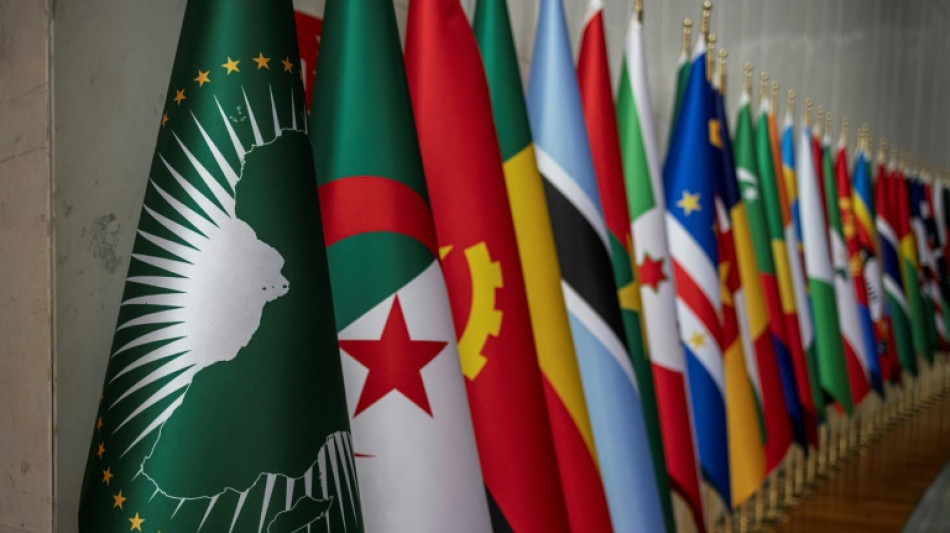
Coups, conflicts and crises confront African summit / Photo: Michele Spatari - AFP

 Europe's surging inflation spreads gloom in stock markets
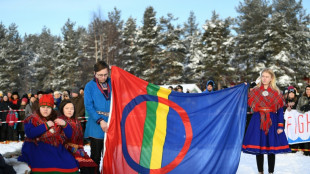 Truth commission demands compensation for Sweden's Sami people
 Japan win marathon penalty shootout to set up South Korea gold-medal clash
 Djokovic grinds out opening-round win at China Open
 Northern Ireland police probe blockade of disputed parade
 UK PM Burnham reopens divisive debate on rejoining EU
 Man City future in doubt after guilty verdict
 'Do something,' begs Iranian woman after death sentence over protests
 China extends 52-year unbeaten record as Games organisers say sorry
 In Manchester, people say City scandal is 'shame for football'
 Stocks lacklustre as inflation data weighs on sentiment
 Israel-bound plane rerouted, pilots wounded in reported fight
 Truth commission on Sweden's Sami people seeks redress

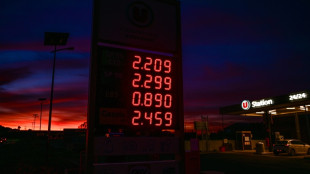 Energy costs spark inflation surges in France, Italy

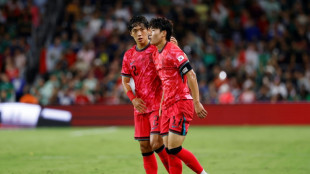 South Korea break China hearts to reach Asian Games football final
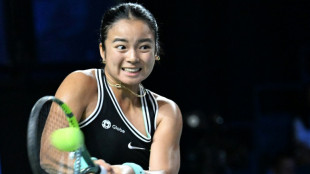 Eala storms into Asian Games semi-finals to thrill adoring fans

 Turkey freezes ex-minister's assets as fund crisis grows
 What we know about the North Korean POW dispute
 Most equities rise after oil price plunge, US data in focus
 Polar oceans transformed as warming melts ice habitats: research
 Lost shark becomes viral star in South Korea
 Dangote to launch $16bn refinery in Kenya
 North Korean leader 'extremely obese': Seoul spy agency
 Yankees and pope-backed White Sox start MLB playoffs with wins
 Malaysia's ex-PM Mahathir in hospital for observation
African leaders open a two-day summit on Saturday as the continent wrestles with coups, conflicts, political crises and regional tensions.
Ahead of the gathering in the Ethiopian capital Addis Ababa, African Union Commission head Moussa Faki Mahamat voiced alarm at the violence gripping many nations, both in Africa and other parts of the world.
Sudan was in "flames", Faki said, while also highlighting the jihadist threat in Somalia, "eternal tensions" in the eastern Democratic Republic of Congo, the "terrorist danger" in the Sahel, and constant instability in Libya.
"The resurgence of military coups, pre- and post-electoral violence, humanitarian crises linked to war and/or the effects of climate change are all very serious sources of concern for us," he told African foreign ministers on Wednesday.
A mini-summit aimed at finding ways to relaunch the peace process for the DRC opened Friday on the sidelines of the main AU meetings.
But the 55-member bloc has long been criticised for being ineffectual and for taking little decisive action in the face of numerous conflicts and power grabs.
"I doubt that there will be any strong decisions," said Nina Wilen, director of the Africa programme at the Egmont Royal Institute for International Relations think tank in Brussels.
The pan-African body has so far had "very little influence on countries that have suffered recent coups", she said, adding that member states did not want to set precedents that could clash with their own interests.
- Israel 'not invited' -
Gabon and Niger will be absent following their suspension over coups last year -- joining Mali, Guinea, Sudan and Burkina Faso, which are also barred.
The crisis in Senegal, set off by President Macky Sall's last-minute move to push back this month's elections, is also likely to be discussed.
Beyond Africa, the Israel-Hamas conflict in Gaza is a hot topic, with Faki describing it as a "war of extermination".
Palestinian prime minister Mohammad Shtayyeh will be taking part in the summit, according to a senior Palestinian official.
Asked about the possible presence of an Israeli delegation, Faki's spokeswoman Ebba Kalondo told AFP bluntly: "They are not invited. That's it."
Others are more welcome, including UN chief Antonio Guterres and Brazilian President Luiz Inacio Lula da Silva who are both due to speak on the first day.
- Chairmanship crisis averted -
The bloc has managed to avoid a crisis on another front by defusing tensions over the one-year rotating AU chairmanship, currently held by Comoros President Azali Assoumani.
The succession had long been blocked by a dispute between Morocco and Algeria, heavyweights of the North African region which is lined up to take over this year.
After months of intense negotiations, Mauritanian President Mohamed Ould Ghazouani will take over the chairmanship, Assoumani confirmed to AFP on Friday.
The episode had highlighted divisions within the AU even as it seeks to have a stronger voice on the global stage, including in the G20 grouping which it joined in September.
Analysts say the AU must act quickly to develop a consensus on how to conduct its business at G20, which represents more than 85 percent of global GDP.
By joining the G20, "the AU will become a player in international politics", said Paul-Simon Handy, regional director of the Institute for Security Studies in Addis Ababa.
"Working methods will have to be found quickly," he said.
- 'States looking inward' -
But the AU's room for manoeuvre could be limited in the face of myriad security crises on the continent of 1.4 billion people.
AU host nation Ethiopia is itself facing internal conflicts, and is in dispute with neighbouring Somalia over a deal with the breakaway region of Somaliland giving it long sought-after access to the sea.
Portending more challenges, 19 presidential or general elections are scheduled on the continent this year.
"The AU has ambitious institutional commitments and tools for mediation and peacekeeping but lacks the political and financial strength to make the most of them," the International Crisis Group said in a briefing note.
"Member states are looking inward, closely protecting their sovereign prerogatives rather than investing in collective security."
Another major subject of discussion is expected to be how the AU would transition to relying on African states to fund most of its budget rather than foreign donors.
The UN Security Council in December adopted a resolution to finance AU-led peace missions, but capped it at 75 percent of the budget.
M.AlAhmad--SF-PST