Trump threats spark new nuclear arms debate in Germany / Photo: Odd ANDERSEN - AFP

 Europe's surging inflation spreads gloom in stock markets

 Truth commission demands compensation for Sweden's Sami people
 Japan win marathon penalty shootout to set up South Korea gold-medal clash
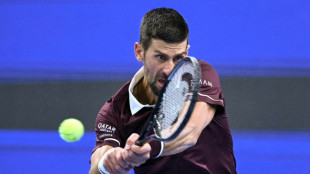 Djokovic grinds out opening-round win at China Open
 Northern Ireland police probe blockade of disputed parade
 UK PM Burnham reopens divisive debate on rejoining EU

 Man City future in doubt after guilty verdict
 'Do something,' begs Iranian woman after death sentence over protests
 China extends 52-year unbeaten record as Games organisers say sorry
 In Manchester, people say City scandal is 'shame for football'
 Stocks lacklustre as inflation data weighs on sentiment
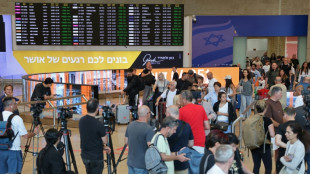 Israel-bound plane rerouted, pilots wounded in reported fight
 Truth commission on Sweden's Sami people seeks redress

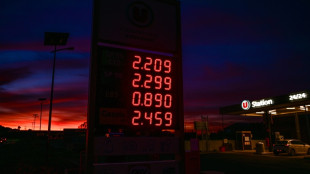 Energy costs spark inflation surges in France, Italy

 South Korea break China hearts to reach Asian Games football final
 Eala storms into Asian Games semi-finals to thrill adoring fans

 Turkey freezes ex-minister's assets as fund crisis grows
 What we know about the North Korean POW dispute

 Most equities rise after oil price plunge, US data in focus
 Polar oceans transformed as warming melts ice habitats: research

 Lost shark becomes viral star in South Korea

 Dangote to launch $16bn refinery in Kenya
 North Korean leader 'extremely obese': Seoul spy agency
 Yankees and pope-backed White Sox start MLB playoffs with wins

 Malaysia's ex-PM Mahathir in hospital for observation
Two years after its about-turn on defence policy in response to the Russian invasion of Ukraine, Germany is starting to rethink another national taboo: nuclear weapons.
Previously reluctant to engage in foreign military commitments following World War Two, Germany changed course after Russia's 2022 invasion, becoming one of the biggest contributors of weapons to Ukraine.
Now German officials are openly raising the question of nuclear weapons, prompted by recent comments about NATO from Donald Trump, a likely contender in this year's US presidential vote.
Trump's suggestion that the United States should abandon any NATO ally that did not meet the alliance's defence spending target has shaken officials in Berlin, which has long looked to Washington for protection.
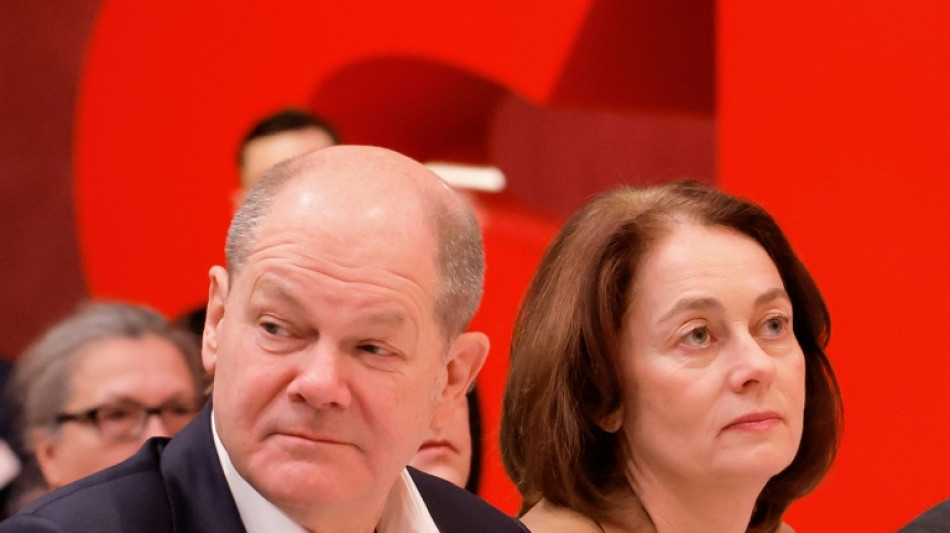
The nuclear arms "issue" might need to be discussed, Katarina Barley, the lead candidate for Chancellor Olaf Scholz's Social Democrats at the European Parliament elections, told the Tagesspiegel daily on Tuesday.
Barley's speculative words have sparked a debate on the ultimate deterrent in Germany, where anti-nuclear and pacifist politics are deeply rooted in society.
Already, the war in Ukraine has pushed others towards reconsidering the need for Germany to have a nuclear deterrent -- even an indirect one.
Joschka Fischer, a former foreign minister from the Greens, came out in favour of a joint European deterrent in December.
"Should the Federal Republic (of Germany) have nuclear weapons? No. Should Europe? Yes," said Fischer, whose party has had close ties to the anti-nuclear movement since its founding.
- Shifting debate -
The idea has been considered by senior figures within the government, too.
In an article for the Frankfurter Allgemeine Zeitung newspaper, Finance Minister Christian Lindner said it was time to think about a European bomb in cooperation with the continent's two nuclear powers, France and Britain.
"Under what political and financial conditions would Paris and London be ready to maintain or expand their own strategic capabilities for collective security? And vice versa, what contribution are we (Germany) willing to make?" Lindner said.
Successive German governments have seen little alternative to the transatlantic partnership with the United States and have rebuffed moves by other countries -- usually France -- to strengthen European sovereign defence.
"I do not see what the point of this discussion now is," Scholz said in December, when asked about a European bomb.
All the same, "the lines have moved" on the issue, said Markus Kaim, researcher at the German Institute for International and Security Affairs (SWP).
"Ten years ago there was a Berlin consensus that nuclear weapons were unnecessary," Kaim said.
"Now the question is how we organise (nuclear deterrence)," he said, adding that such a project still faced major hurdles.
"The European Union would have the money and the know-how, but as long as there is no 'United States of Europe', the model cannot work," Kaim said.
- 'Far away' -
Who would have the codes for launching a European bomb, the head of the Commission in Brussels or one or all of the 27 capitals?
A joint deterrent "requires a massive integration step by the EU, which we are still very far away from", said Lydia Wachs, a researcher on international relations at Stockholm University.
Relying on just one member state -- France again -- would prove similarly difficult.
In 2020, French President Emmanuel Macron put forward a "strategic dialogue" to other European countries on the "role of the French nuclear deterrent for our collective security".
But opening a nuclear umbrella from Paris to cover the rest of Europe was "highly unrealistic from both a political and military-technical perspective", said Wachs.
France would have to "massively expand and rebuild its nuclear arsenal and change its strategy", a process which would take massive time and investment, she said.
For the German daily Handelsblatt, the chilling logic of nuclear deterrence was however one Germany could no longer afford to ignore.
"Hoping that (US President Joe) Biden will win the election or that things will not be so bad under Trump seems like a comfortable strategy, but also a very risky one," it said.
P.AbuBaker--SF-PST