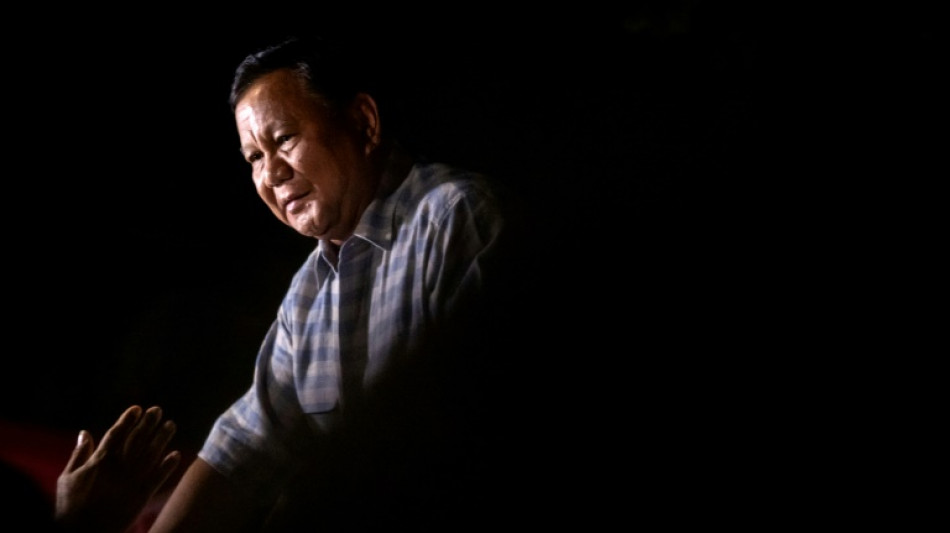
Ex-general Prabowo promises continuity on economic growth for Indonesia / Photo: Yasuyoshi CHIBA - AFP

 Europe's surging inflation spreads gloom in stock markets

 Truth commission demands compensation for Sweden's Sami people

 Japan win marathon penalty shootout to set up South Korea gold-medal clash

 Djokovic grinds out opening-round win at China Open

 Northern Ireland police probe blockade of disputed parade
 UK PM Burnham reopens divisive debate on rejoining EU
 Man City future in doubt after guilty verdict
 'Do something,' begs Iranian woman after death sentence over protests
 China extends 52-year unbeaten record as Games organisers say sorry
 In Manchester, people say City scandal is 'shame for football'
 Stocks lacklustre as inflation data weighs on sentiment
 Israel-bound plane rerouted, pilots wounded in reported fight
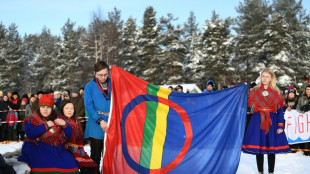 Truth commission on Sweden's Sami people seeks redress

 Energy costs spark inflation surges in France, Italy

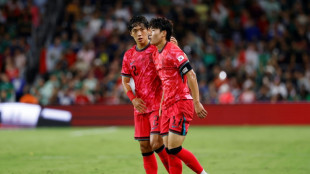 South Korea break China hearts to reach Asian Games football final
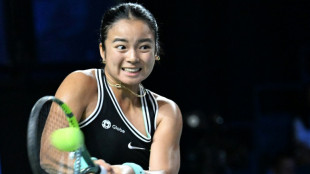 Eala storms into Asian Games semi-finals to thrill adoring fans

 Turkey freezes ex-minister's assets as fund crisis grows

 What we know about the North Korean POW dispute
 Most equities rise after oil price plunge, US data in focus
 Polar oceans transformed as warming melts ice habitats: research
 Lost shark becomes viral star in South Korea
 Dangote to launch $16bn refinery in Kenya
 North Korean leader 'extremely obese': Seoul spy agency
 Yankees and pope-backed White Sox start MLB playoffs with wins
 Malaysia's ex-PM Mahathir in hospital for observation
Once a feared general under late dictator Suharto, Indonesia's likely new president Prabowo Subianto now faces the challenge of honouring his campaign pledges to maintain the country's economic growth.
According to ongoing official and preliminary counts that show him on course for a majority, Prabowo looks set to helm the world's third-largest democracy after Wednesday's presidential election.
Currently serving as defence minister, Prabowo has embraced the popular agenda of outgoing leader Joko Widodo, who broke into an Indonesian political scene long dominated by Suharto-era elites and who beat him twice at the polls.
Prabowo's rise to the cusp of the presidency came after pledges to carry on the policies of Jokowi, as the incumbent leader is popularly known, including a development drive and a move of the capital from traffic-clogged Jakarta to Nusantara on Borneo island later this year.
"He'll surely continue what Jokowi has done, especially IKN (the new capital). There's political and economic interest tied to the project, so he'll definitely continue it," said Ambang Priyonggo, a political analyst at Multimedia Nusantara University.
Indonesia enjoyed steady economic growth of around five percent annually under Prabowo's former rival, who was constitutionally barred from seeking another term, so Prabowo's promises and recruitment of Jokowi's eldest son as running mate have proved appealing.
Prabowo made it a campaign promise to turn Indonesia, a G20 member, into an "advanced and developed" economy.
To do that he has supported the resource nationalism of Jokowi, particularly in the nickel sector where Jakarta has imposed export restrictions in a bid to become a key player in the electric vehicle supply chain.
That has ramifications for climate change, a subject Prabowo said little about on the campaign trail.
Indonesia is one of the world's biggest fossil fuel polluters and Prabowo has backed gradually reducing the country's reliance on them, but his family retains ties to the coal industry and processing vast sums of nickel requires coal-fired power plants.
Prabowo has promised free school meals for students and hinted at potential revenue reforms that suggest he could spend more freely than his predecessor, but his other campaign pledges indicate he will largely stay the course Jokowi has charted.
"A Probowo victory bodes policy continuity," said Anushka Shah, senior credit officer at Moody's ratings agency.
- 'More toxic' -
Less clear are the 72-year-old's plans for the country's democracy -- and whether there will be a slide back toward the days when he was accused of ordering the kidnapping of activists, including more than a dozen who have never been found.
"We are seeing a democracy setback with this victory," said Priyonggo.
"Because he's such a typical ultra-nationalistic figure, there's a possibility his government will be more centralistic."
Questions have also been raised about the appropriateness of Jokowi's indirect support for Prabowo's campaign.
Some legal experts and rights groups have accused Jokowi of improperly using government funds to tilt the election in Prabowo's favour -- allegations the president has rejected.
Some critics worry that Prabowo will seek to weaken opposition voices and the press.
Last week he skipped a press freedom event where his rivals signed a declaration pledging to protect that right.
In 2014 he derided direct elections as Western imports not suitable for the country.
But in a January speech he said he supported both democracy and press freedom.
"Press freedom, checks and balances, they are there to control those in power," he said.
But critics fear he could continue Jokowi's practice of using defamation laws to silence his opponents, weakening the country's young democracy.
"Criminal defamation articles are Jokowi's weapons to silence critics. Prabowo is likely to use that tactic, if not more," said Andreas Harsono of Human Rights Watch.
"He might also change and use more toxic laws than what Jokowi did."
Prabowo was the only candidate who refused to answer a human rights questionnaire from HRW during the campaign.
Others were more optimistic about a Prabowo presidency because of the constraining forces of civil society, freedom of speech -- and voters who can evict him from office at the next election if they are so inclined.
"Indonesian voters' enthusiasm for Prabowo does not represent a disillusionment with democracy," wrote Ben Bland, director of Chatham House's Asia-Pacific programme, in an essay in Foreign Affairs before the vote.
"It reflects their conviction he will uphold Jokowi's positive economic legacy -- and their implicit faith that their democratic institutions can rein in even a strong-willed president."
F.Qawasmeh--SF-PST