Israelis grapple with 'broken' security promise since Hamas attack / Photo: AHMAD GHARABLI - AFP/File

 Watchdog finds no criminal misconduct over US Fed renovations despite Trump probe

 In Manchester, City fans 'devastated' while rival fans call for relegation

 UK-France Channel migrant exchange deal scrapped: London

 Portugal boss denies 'incident' with Ronaldo

 Israel PM says one of the pilots of rerouted flight tried to crash plane

 Manchester City: Main points of damning judgement and possible sanctions

 Italy looking for 'identity' under Mancini says Scalvini
 The voices of Spain's housing camp protesters

 Romanian parliament rejects pro-EU PM candidate

 Court halts Tennessee's first execution of woman in 200 years

 Israelis march between once-closed West Bank settlements

 'Welcome back,' says Macron, as UK PM opens door to EU return
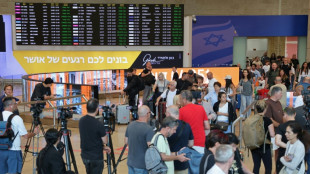 Israel PM says pilot of rerouted flight tried to crash plane

 Demuro hopes to deliver Japan a 'magical' Arc victory

 'Devastated' AI scandal author Orelien returns to Quebec

 US reports firm Q2 economic growth, inflation steady

 Energy costs spark inflation surge across Europe

 Parma appoint Italy World Cup winner Gilardino

 West Indies pile up record 405-7 in second ODI against India

 Romanian parliament rejects pro-EU PM candidate amid political deadlock
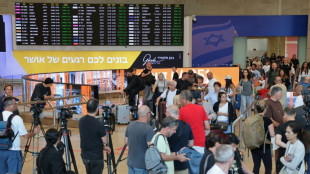 Passenger on rerouted flydubai flight says pilot tried to crash plane

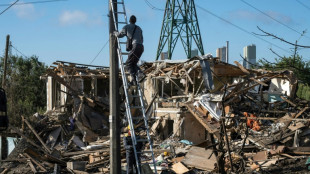 Russia targets Kyiv power supply as freezing winter approaches

 Haze pushes Kuala Lumpur, Singapore into world's most polluted cities

 Dangote's $16bn Kenya refinery 'new chapter' for Africa
 Ireland coach Hallgrimsson confirms second Israel game will go ahead

Since she moved to Israel, Marie-Lyne Smadja had been confident the state would protect her, but Hamas's October 7 attack made her doubt whether she can count on the authorities to keep her safe.
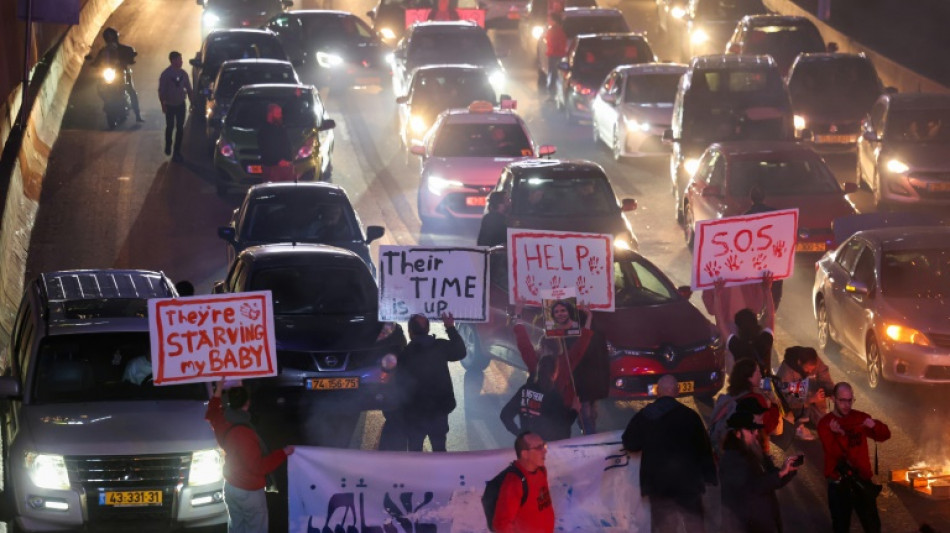
The plight of relatives and supporters of hostages held by Gaza militants as well as of residents of the border area has haunted Israeli society, threatening to unravel what many view as the fundamental contract between the government and its citizens.
"I'm frightened," said Smadja, 62, an unfamiliar feeling for the French-Israeli teacher and education researcher who had survived three attacks since making Israel her home more than four decades ago.
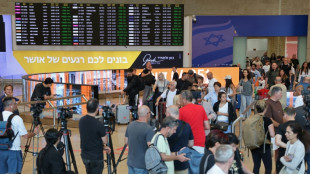
"We lost trust," she told AFP in a Tel Aviv square which has been the focus for protests by families of the 250 people kidnapped on October 7.
More than 75 years after it was founded as the homeland for the Jewish people in the aftermath of World War II and the mass murder of Jews by Nazi Germany, Israel remains a refuge to many.
But the unprecedented Hamas attack has shattered that sense of security in a way multiple wars and decades of conflict had not.
And while Prime Minister Benjamin Netanyahu has repeatedly vowed to rescue the remaining hostages, negotiations in recent weeks have failed to produce results.
Militants on October 7 seized about 250 hostages. Israel in an overnight raid rescued two, but has said that 130 remain in Gaza including 29 believed to be dead.
To Carmit Palty Katzir, whose brother is held in Gaza and whose mother was freed during a November truce, the state has not kept its part of the security bargain.
In return for joining the military, being productive members of society and "raising children next to the border" with Gaza, "the state provides us with security", said Katzir at a recent rally in Tel Aviv.
"On October 7, this contract was broken."
In order to restore trust, families of hostages believe the government must bring back their loved ones.
- 'Turning point' -
Smadja, one of the founders of Women Wage Peace, a grassroots movement calling for a negotiated solution to the Israeli-Palestinian conflict, said that "on October 7... Israel lost."
"Israel made a colossal mistake in terms of security, intelligence and the military," she said.
The Israeli military said documents its forces had seized pointed to "years of preparation" by Palestinian militants, right under the nose of Israel's intelligence services.
Hamas's attack on southern Israel left more than 1,160 people dead, most of them civilians, according to an AFP tally based on official figures.
Israel retaliated with a relentless military offensive on Hamas-ruled Gaza that has killed more than 28,000 people, most of them women and children, according to the territory's health ministry.
According to Nitzan Perelman, a doctoral student in political sociology at France's CNRS research centre, October 7 was a "turning point" for Israelis.
The military's "inability to react" and a slow response from numerous government agencies "tarnished the image of the state in the eyes of society, causing a significant rupture", she said.
A study by Israeli think-tank Adva found that Israeli communities near Gaza had been subject to financial "abandonment" even before the devastating attack on the area that has long suffered rockets from Gaza.
State funding for border towns and villages fell drastically after Netanyahu returned to power in late 2022, Adva said in a report.
It noted that development and security budgets fell from 137.8 million shekels ($37.5 million) in 2022 to 99 million shekels for 2023-24.
Residents of the border area "gave up easier lives elsewhere for the love of Israel," said Smadja.
"Their children only know rocket fire and alerts", she said, adding that they deserve to live in peace and security.
As the war has raged for more than four months, protesters have increasingly made the case for early elections and a new government they feel they can trust.
To Smadja, once the hostages are back, there will be time for "political reckoning".
Z.AlNajjar--SF-PST