Chance for Italy's toxic steelworks to finally go green / Photo: Tiziana FABI - AFP/File

 Panic, anger, tears: Evan Gershkovich's uneasy journey after Russian jail
 UK PM says 'strong indications' Iran involved in airbase incident

 Google restricts access to new AI model over safety concerns

 Watchdog clears former US Fed chief Powell in renovation probe

 Israel PM hails Indian pilot of rerouted flight for averting disaster
 Fury, Joshua kick off 'battle of Britain' in good spirits

 Ronaldo leaves Portugal training camp after coach says he is dropped

 Florence Pugh stars in 'East of Eden' adaption on Netflix

 Watchdog finds no criminal misconduct over US Fed renovations despite Trump probe
 In Manchester, City fans 'devastated' while rival fans call for relegation

 UK-France Channel migrant exchange deal scrapped: London

 Portugal boss denies 'incident' with Ronaldo
 Israel PM says one of the pilots of rerouted flight tried to crash plane

 Manchester City: Main points of damning judgement and possible sanctions
 Italy looking for 'identity' under Mancini says Scalvini
 The voices of Spain's housing camp protesters
 Romanian parliament rejects pro-EU PM candidate
 Court halts Tennessee's first execution of woman in 200 years

 Israelis march between once-closed West Bank settlements
 'Welcome back,' says Macron, as UK PM opens door to EU return
 Israel PM says pilot of rerouted flight tried to crash plane

 Demuro hopes to deliver Japan a 'magical' Arc victory

 'Devastated' AI scandal author Orelien returns to Quebec

 US reports firm Q2 economic growth, inflation steady
 Energy costs spark inflation surge across Europe

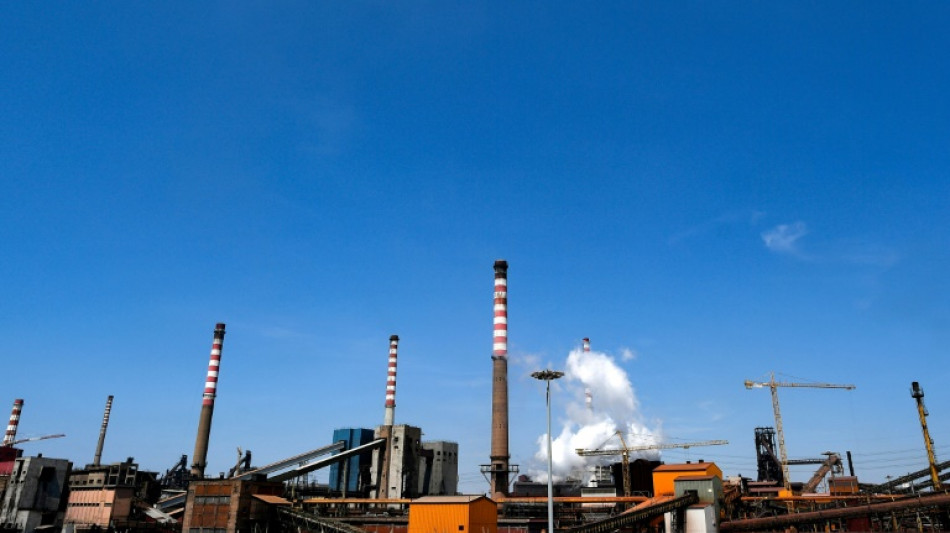
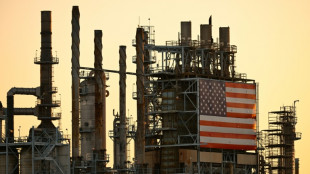
Doctor Maria Grazia Serra's patients have been "breathing, eating and drinking" toxins from Taranto's steelworks for decades, but a dispute over the vast Italian plant could finally see its ecological conversion.
Italy's hard-right government is set to decide this week whether to place the debt-ridden former Ilva plant under state administration, in a bid to secure production and thousands of jobs in a region with crippling unemployment.
Prime Minister Giorgia Meloni considers the site a strategic asset, but experts, authorities, residents and doctors are urging her to look beyond short-term measures to keep the site afloat.
"If we want to try to relaunch production in compliance with European policies, we have no choice but to shut down the sources of pollution, radically converting the plant's technologies," Taranto mayor Rinaldo Melucci told parliament last week.
The steelworks, which dates from the 1960s and is one of Europe's largest, has been dogged by legal and political battles since 2012 over its killer emissions, with experts linking thousands of deaths to exposure to pollutants.
ArcelorMittal, the world's second-largest steelmaker, took control in 2018, pledging to boost production to eight million tonnes in 2025 while cleaning up the site, which runs along a stretch of the coastal city.
Among other measures, it installed giant coverings over huge stockpiles of iron-ore and coal, designed to prevent red and black toxic dust from blowing towards houses, parks and schools.
- 'Urgent modernisation' -
But relations between ArcelorMittal and Rome soured in 2019 after the then-government removed a pre-existing legal shield granting managers immunity from prosecution over the environmental disaster.
The once bright white coverings are now tinged red with dust, seen as a symbol of ArcelorMittal's failure, Serra said.
She is one of 150 doctors who last month appealed to the government not to waste the opportunity to finally turn the plant around.
"Everyday we are forced to treat an increasing number of ever more serious, ever more disabling illnesses," Serra told AFP.
As well as a rise in birth defects and cancers, a 2021 study found an alarming drop in IQs of children born or living near the plant.
The promised increase in output has not happened either.
Hit by energy price hikes and a weak global market, production fell below three million tonnes in 2023.
The government and ArcelorMittal accuse each other of failing to respect commitments.
Italy is the second-largest steel producer in Europe. Taranto is the last of its sites to produce primary rather than recycled steel, but experts say maintaining its coal blast furnaces is not a viable option.
"The existing 50-year-old facilities in Taranto have reached their natural end of life and need large investments for urgent modernisation," energy consultant Alex Sorokin said.
"Investments in outdated coal-based technology would be an enormous waste of money," he told AFP.
Transitioning from using coal to natural gas and electricity would reduce greenhouse emissions, while also costing less.
The costs associated with renewables within Europe are already lower than those of fossil fuels, according to the European Central Bank.
And dirty energy costs will rise as EU rules oblige steel plants to pay the full cost of carbon dioxide emissions by 2034.
At Taranto, natural gas could later be substituted with clean hydrogen -- technology that is currently very expensive but is already being adopted at some European steel plants.
- 'Political will' -
Chiara Di Mambro, head of decarbonisation policy at Italian climate think tank ECCO, told AFP it would cost an estimated 2.5 billion euros to build the gas and electricity-powered units to produce eight million tonnes of steel in Taranto annually.
The site could be supplied from the grid and could use surplus renewable electricity. It would cost another six billion euros to transition to green hydrogen.
The EU has earmarked nearly 800 million euros for green initiatives in the city of Taranto as part of a green transition fund.
But last year, Rome turned down one billion euros from the separate post-pandemic EU recovery fund for hydrogen conversion at the plant, saying the 2026 deadline was too tight.
Industry association Federacciai has called on the government for subsidies, pointing to Germany and France, where Thyssenkrupp and ArcelorMittal have respectively secured two billion euros and 850 million euros from state coffers to help fund decarbonisation.
Italy's industry minister, Adolfo Urso, has vowed a "dramatic intervention" to make the plant "competitive in green technology", but cash-strapped Italy has yet to show signs it is willing to invest in its conversion.
Julian Allwood, professor of engineering and the environment at Cambridge University, said it was unlikely Rome would find any private sector company willing to fund the transition alone.
"The steel industry worldwide can't make large capital investments because the margins are so low," he told AFP.
Transformation of the site will happen only if and when Italy has the "political will" to support the costly transformation.
"But as we move to more renewables, that is the only sensible future for steel making".
U.Shaheen--SF-PST