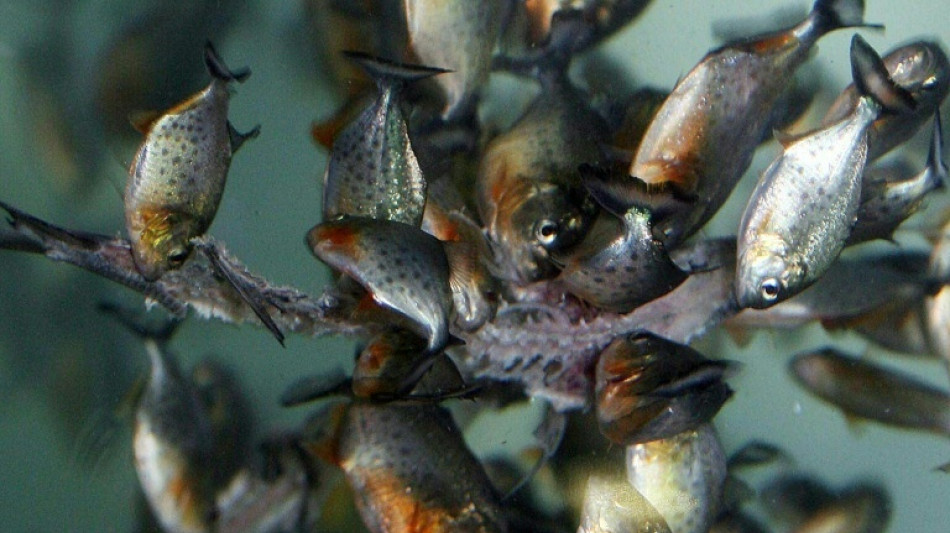
Sri Lanka to ban predatory pet fish to protect ecosystems / Photo: ADEK BERRY - AFP/File

 مصلحة مياه القدس توحّد جهودها مع بلديات الرام ومخماس لتعزيز استدامة المياه

 Saudi PIF Retains Top Sovereign Wealth Fund Brand Title for Third Year

 Binance Secures $6.5 Billion Asset-Freezing Order from Abu Dhabi Court

 Malta PM Abela Refuses Parliamentary Question on Maritime Borders Amid Turkey-Libya Deal

 محافظ طولكرم يدعو لمبادرة مجتمعية لخفض تكاليف الأعراس وتعزيز التكافل
Sri Lanka will ban four species of predatory ornamental fish including Piranhas that have escaped into rivers and lakes, devastating native species and threatening fragile freshwater ecosystems, the fisheries minister said Wednesday.
"We want to protect our inland water bodies from invasive species," Ramalingam Chandrasekar said, adding it was aimed at protecting the livelihoods of fishermen on the island nation.
The import, sale and transportation of Redline Snakehead, Knife Fish, Alligator Gar and Piranha, imported from Southeast Asia, will be banned from Saturday, the minister said in a statement.
Snakeheads, which can grow to over three feet (one metre), were rapidly multiplying in a lake in the northwestern part of the island, threatening the native species.
Officials believe they may have been released into the Deduru Oya lake by owners who could no longer care for them.
The fisheries ministry has organised a competition for anglers to catch Snakeheads, coinciding with the ban on Saturday.
Sri Lankans are not used to consuming Snakehead fish which is a voracious predator, eating smaller native fish and amphibians and disrupting the ecological balance.
Pet owners rearing the four species have been asked to notify the authorities and hand them over so the fish can be confined to state-run aquariums.
W.AbuLaban--SF-PST



