New Ebola outbreak in DR Congo: What we know / Photo: Jospin Mwisha - AFP

 Hotel Blacklist Launches New Accommodation Industry Risk Assessment Tool
 Bangladesh nuclear plant draws hope -- and worry

 US beat Canada 1-0 to wrap up four-win international break
 Turkey, Australia's joint COP31 leadership raises doubts

 For Turkish NGOs, COP31 offers rare space for action
 Sleep, appetite, gene-editing experts contend for Nobel chemistry prize

 Nobel Peace Prize haunted by the 'spectre' of Trump

 Africa launches own credit agency in bid for cheaper borrowing

 US, China, EU: three paths to regulating AI

 Australia's High Court rules against coal mine in landmark climate case
 Australia touts new funds for Pacific infrastructure at Fiji 'pre-COP'

 Eva Marie Saint, Oscar winner of Hollywood classics, dies at 102

 Australia probes app used in cheap smart glasses over privacy fears
 England needed to 'move on' from World Cup pain, says Tuchel

 O'Neill to stay at Celtic after period of "reflection"

 Kane marks 125th England cap with Wembley Nations League double

 Quebec's incoming separatist leader wants to block Crown from swearing-in
 Emmys gala will now stream its premier television awards

 Paramount completes Warner Bros takeover, creating Skydance
 Trump blames France unrest on Islam, migration

 Apple's Cook praises EU over efforts to protect children online

 Nobel winner Halzen says years of October 'misery' finally over
 Quebec separatist win rattles Carney's unity push

 'Itching' for change: Shiffrin cuts back slaloms this season
 'Gen Z has risen up': Tens of thousands mass for tense France school protests
An Ebola outbreak in the Democratic Republic of Congo believed to have killed more than 90 people has been declared an international health emergency by the World Health Organization (WHO).
There is no vaccine or specific treatment for the strain responsible for the current outbreak of the highly contagious haemorrhagic fever, which has killed more than 15,000 people in Africa in the last 50 years.
- Deaths -
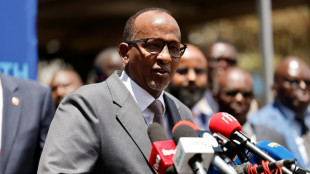
Ninety-one reported deaths are suspected to have been caused by the current outbreak, according to the latest figures released on Sunday by Congolese Health Minister Samuel-Roger Kamba.
Around 350 suspected cases have been reported. Most of those affected are aged between 20 and 39 and more than 60 percent are women.
Few samples have been tested in a laboratory to date, and the reports are based mainly on suspected cases.
The centre of the outbreak is northeastern Ituri province, which borders Uganda and South Sudan. The gold-rich region sees intense daily population mobility linked to mining activities.
Violence by several armed groups also plagues some parts of the province, making access difficult for security reasons.
- Regional risk -
The virus has already spread beyond both Ituri province and the DRC.
A case has been reported in Goma, a major city in eastern DRC under the control of the Rwanda-backed M23 anti-governmental group since early last year. The city is the capital of North Kivu province and neighbours Ituri.
A confirmed case and one death have also been recorded in Uganda, according to the Ugandan government. The cases involve two Congolese who had travelled from the DRC. No local outbreak cluster has been reported.
Laboratory tests have confirmed a link with Ebola in all three cases.
The Africa Centres for Disease Control and Prevention (CDC Africa) has warned of a high risk of spread to eastern African countries that border the DRC.
On Sunday, the WHO declared the outbreak a "public health emergency of international concern" -- the second-highest level of alert under international health regulations.
- No vaccine -
The current outbreak is caused by the Bundibugyo strain, for which no vaccine or specific treatment is available.
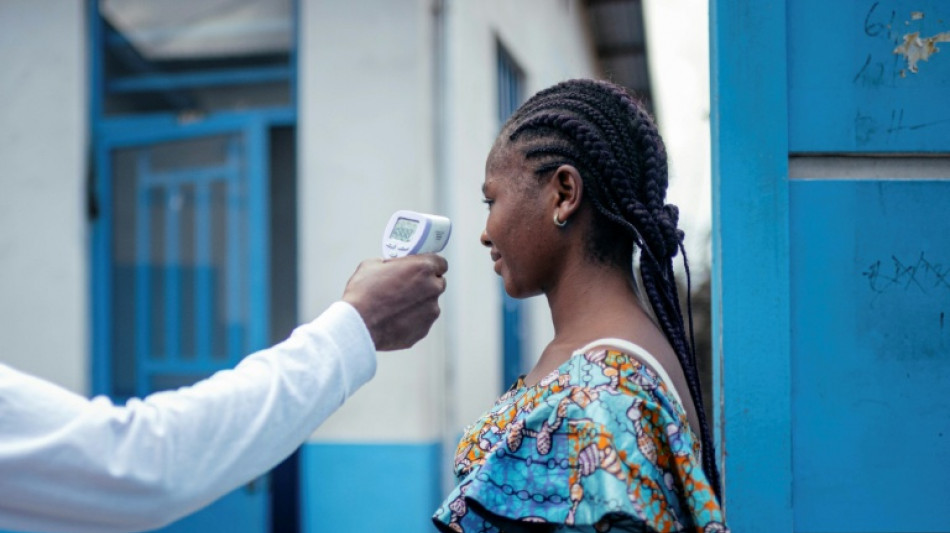
Steps to curb its spread rely on adherence to protective measures and detecting cases quickly to limit contact.
Existing vaccines against Ebola are only effective for the Zaire strain of the virus, which is responsible for the largest recorded outbreaks.
The Bundibugyo strain has previously been responsible for two outbreaks -- in Uganda in 2007 and in the DRC in 2012. The mortality rate was 30 to 50 percent.
- Spread -
The deadliest Ebola outbreak in the DRC claimed nearly 2,300 lives out of 3,500 cases between 2018 and 2020.
The previous outbreak before the current one killed 45 people between September and December last year, the WHO said.
Despite the country's long experience in managing outbreaks of Ebola, the specific features of the current one -- the 17th in the vast central African country with a population of more than 100 million -- worries experts.
"It's an outbreak that will spread very rapidly, all the more so because it has broken out in a densely populated province," virologist Jean-Jacques Muyembe told AFP.
Muyembe was the co-discoverer of Ebola in 1976 and head of the Congolese research institute, which confirmed the reemergence of the virus.
If the suspected cases so far reported were all confirmed, the current outbreak would rank as the seventh biggest ever recorded involving all strains of the virus and the second biggest of the non-Zaire strain of Ebola, according to specialists.
- 'Mystical illness' -
Epidemiological investigations are under way to establish the origin of the outbreak.
The first identified case in the current outbreak was a nurse, who went to a health centre on April 24 in the city of Bunia, the capital of Ituri province.
But the epicentre of the outbreak is about 90 kilometres (56 miles) away, in the health zone of Mongbwalu.
The WHO was alerted to the emergence of a high-mortality disease on May 5 after the deaths of, among others, four healthcare workers in four days in the area of Mongbwalu.
People infected by the Bundibugyo strain initially show symptoms similar to flu or malaria which can delay detection.
The Congolese health ministry said the current outbreak was also slow to be reported because the communities affected initially believed it to be a "mystical illness" or "witchcraft". That led those who were ill to go to "prayer centres" instead of consulting health professionals.
R.Halabi--SF-PST