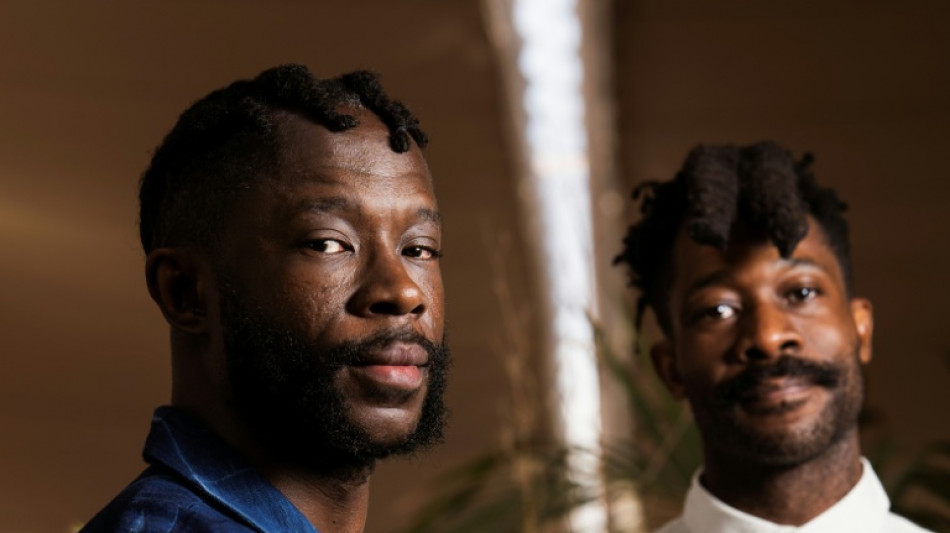
Twins wow Cannes with 'mesmeric' tale of Nigeria's rich / Photo: Julie SEBADELHA - AFP

 Spain PM calls early election after housing crisis defeat

 Stocks rally as 'Goldilocks' jobs data ease rate fears
 Myanmar says 10,000 migrants returned from Malaysia this year

 Big guns back for Australia's Rugby League World Cup defence
 Braves rock Dodgers to level series, Brewers win thriller

 Most Asia stocks rally as 'Goldilocks' jobs data ease rate fears

 Sunken Silk Road city reveals Central Asia's lost history

 Three years on, Israeli rescuer cannot escape October 7

 Research into weight-loss drugs tipped for Nobel as award week opens

 US Supreme Court hears bid to shut the door on climate suits

 Chourio walk-off single lifts Brewers over Padres

 Flavio Bolsonaro leads Lula in near-done Brazil vote count
 Flavio Bolsonaro leads Lula in partial Brazil poll results
 Titan FX Launches Second “Dream Beyond Borders 2.0” Brand Commercial Featuring Keisuke Honda

 Patriots inflict first Bills defeat as Rams surge late

 Brazil's Indigenous back Lula as El Nino fuels forest fires
 Brazil braces for results of election battle between Lula and Bolsonaro
 Indians protest election chief ahead of top court hearing
 'Verity' kills, Cruise bombs in N. American movie theaters

 Colts top Commanders in NFL London game

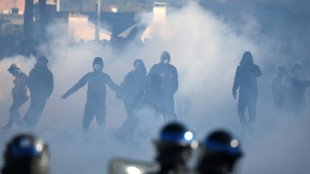 Hundreds of schools to shut Monday as student protests rock France
 Three previous two-time Arc de Triomphe winners

 'Champion' Daryz wins second successive Arc in fine style
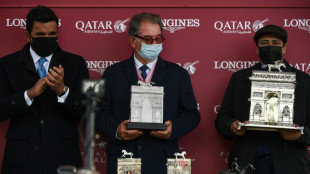
 Daryz wins second successive Prix de l'Arc de Triomphe

 England's seven-goal spree sends message to Euro rivals: Kane

The Lagos of Arie and Chuko Esiri's Cannes Film Festival hit "Clarissa" is not one that has ever been seen on the big screen.
The lives, loves, petty snobberies and private torments of some of Nigeria's most privileged people would not seem the stuff to solicit much sympathy in a megacity where the rich float over so much human misery.
But critics at Cannes have found the brothers' sly post-colonial take on Virginia Woolf's novel "Mrs Dalloway" one of the most subtle and affecting movies of the year so far.
"How lucky we are" they took it on, wrote the Hollywood Reporter's Lovia Gyarkye, while The Guardian's Peter Bradshaw called the movie "seductive" and "mesmeric". Veteran RogerEbert.com critic Brian Tallerico declared it "one of the better films I'll see this year".
Waking up as the major discoveries of the festival so far has not phased the twins one bit, they told AFP the morning after its triumphant premiere in the Director's Fortnight section.
- 'Wired differently' -
Fortunes "rise and fall like the currency" in Nigeria, joked Chuko, the marginally younger and more talkative of the two 40-year-olds.
Nor have the inevitable comparisons with other film-making siblings like the Coen brothers, the Dardennes and the Wachowski sisters, who made "The Matrix".
Arie, the older of the two, said shooting with his twin is a kind of superpower, admitting he usually plays the tough guy on set.
"We're twins but we're wired differently. I'm right-handed," said Chuko, "and he's left-handed. He's visual, I'm more narrative."
- Two Nigerias -
"Clarissa", told in restrained flashback, is as much about post-independence Nigeria as it is about its upper crust, which the brothers say they know only too well, having "been born into it".
Africa's most populous nation "is like any underdeveloped country -- the middle disappears and so it's basically just two classes", the poor and the rich, Chuko said. And most of the wealthy in the film have adopted the manners and clipped accents of their old colonial masters, the British.
The twins' tale turns on the intertwining stories of a high-society hostess and the soldier husband of her dressmaker, who returns from fighting Boko Haram jihadists in the north with PTSD and his faith in humanity shattered by the corruption of his superiors.
Part of the tragedy is that the suffering of the two-decade insurgency "doesn't touch you in Lagos, in the south at all", Chuko said. "It's like being in England and seeing the war in Iraq," he argued.
That disconnect is symbolised by a wonky mosaic mirroring the shape of the country in the hostess's chic seaside home that no one can quite set straight.
"It's a perfect motif of the nation," the director said. It's slightly off and needs correcting." Like Nigeria, "it could be amazing. It just needs a little adjustment" but no one quite knows how.
"The idea of Nigeria is like an ongoing debate. Do we become two countries? Do we stay as one, because it was two countries pushed into one during the colonial era," said Chuko.
- African wave -
Neon, the distributors of the last six winners of Cannes' top prize, have already snapped the film up.
The Esiris meamwhile have another film, "Three Souls", about the break-up of a band, already in development and a Nigerian whodunnit to follow.
"Clarissa" is the second African film to have got a rapturous reception at Cannes this year after "Congo Boy" from the Central African Republic, with two others from Rwanda and Morocco also competing for prizes.
Just like the brothers' first film, the highly-praised "Eyimofe (This Is My Desire)" in 2020, "Clarissa" is punctuated with power cuts, "an everyday occurrence" in Nigeria, Chuko said.
Nigeria followed them to the Cannes premiere, with life imitating art as the projector jammed during the opening credits, forcing organisers to start the film all over again.
An hour and a half later, the critics who had jeered at the embarrassing hitch were on their feet clapping and cheering.
J.Saleh--SF-PST