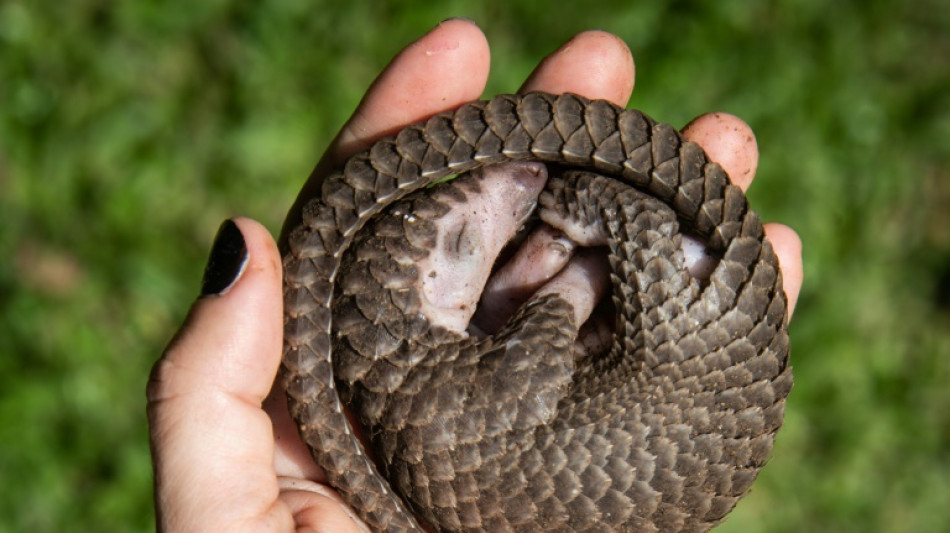
Conservationists call for more data to help protect pangolins / Photo: Isaac Kasamani - AFP

 SGFX Creates a Standout Brand Experience at Forex Expo Dubai 2026

 Pope urges Europe to help combat 'deceit and lies' in international ties

 Injured Buttler to miss England ODI series in Pakistan
 Madrid housing protesters vow to maintain pressure on government

 In kayaks or waist-deep in floodwater, shoppers return to Bangkok markets

 UK police probes Iran link to air base bomb scare: media

 Eala blasts into Asian Games quarters in just 55 minutes

 Taiwan gender-row boxer Lin Yu-ting guarantees Asian Games medal

 Comedian on trial for allegedly insulting Erdogan in standup show

 More Asian Games transport woes as bus takes Pakistan to wrong venue

 Death toll in South Africa bar shooting rises to 18

 Aide to Venezuelan opposition leader returns from exile

 Messi and Alcaraz love it, now padel takes step closer to Olympics

 Tolls mount in Thailand, Myanmar floods

 Why India's opposition wants top poll official out

 PU Prime Strengthens UAE Momentum with Strong Showing at Forex Expo Dubai 2026

 Eight dead in Thailand floods since mid-September

 Oil prices spike after Trump rejects Iran truce offer

 Taylor Swift sets new record at MTV VMAs
 Seoul seeks apology after Ukraine reveals transfer of North Korean POWs

 Messi on target again but Miami downed by Columbus

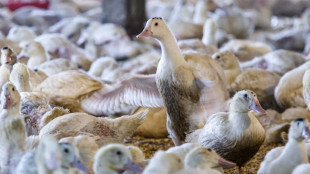 In Washington's political cauldron, a fight over foie gras

 Flavio Bolsonaro: political heir in his father's shadow

 Ravens grab last-second win in Rio as Commanders stop Seahawks

 USA rallies to capture 11th consecutive Presidents Cup

All eight known pangolin species remain at high risk of extinction due to over-exploitation and loss of habitat, conservationists warned Wednesday, warning knowledge gaps were hampering protection efforts.
The scale of the threat faced by the world's most heavily-trafficked mammals is not yet fully understood, said the International Union for Conservation of Nature (IUCN) and the Convention on International Trade in Endangered Species of Wild Fauna and Flora (CITES).
Found in the forests, woodlands, and savannas of Africa and Asia, pangolins are small, nocturnal creatures known for their distinctive appearance, slow and peaceful demeanour, and habit of curling into a ball when threatened.
The world's only scaly mammals, often likened to walking pinecones, have keratin scales that are coveted in traditional medicine, while their meat is also considered a delicacy in some regions.
"Today, they are under immense pressure due to exploitation and habitat loss," warned IUCN director general Grethel Aguliar.
Pangolins, which use their long, sticky tongues to feast on ants and termites, "are one of the most distinctive mammals on Earth and are among the planet's most extraordinary creatures: ancient, gentle, and irreplaceable," Aguliar said in a statement.
"Protecting them is not just about saving a species, but about safeguarding the balance of our ecosystems and the wonder of nature itself."
- 'Highly organised' trafficking -
A report prepared for CITES by IUCN experts called for more robust and targeted conservation measures, particularly involving local and indigenous communities as the first line of defence.
Under CITES, international commercial trade in wild pangolins has been banned since 2017.
Despite a sharp decline in legal trade since then, trafficking remains "extensive and highly organised", IUCN said.
Between 2016 to 2024, seizures of pangolin products involved more than an estimated half a million pangolins across 75 countries and 178 trade routes, it said, with scales accounting for 99 percent of confiscated parts.
"However, while seizure records provide useful indicators, they capture only a fraction of the overall trade as not all illicit consignments are detected or seized by law enforcement," said IUCN.
Besides international trafficking, demand for pangolin meat and other products persists.
Matthew Shirley, who co-chairs the IUCN Species Survival Commission's pangolin specialist group, suggested "even pangolin consumers" and those in the supply chain should be brought onboard to help devise conservation solutions.
"Ongoing pangolin trafficking and population declines underscore that trade bans and policy changes alone are not enough," he said.
R.AbuNasser--SF-PST