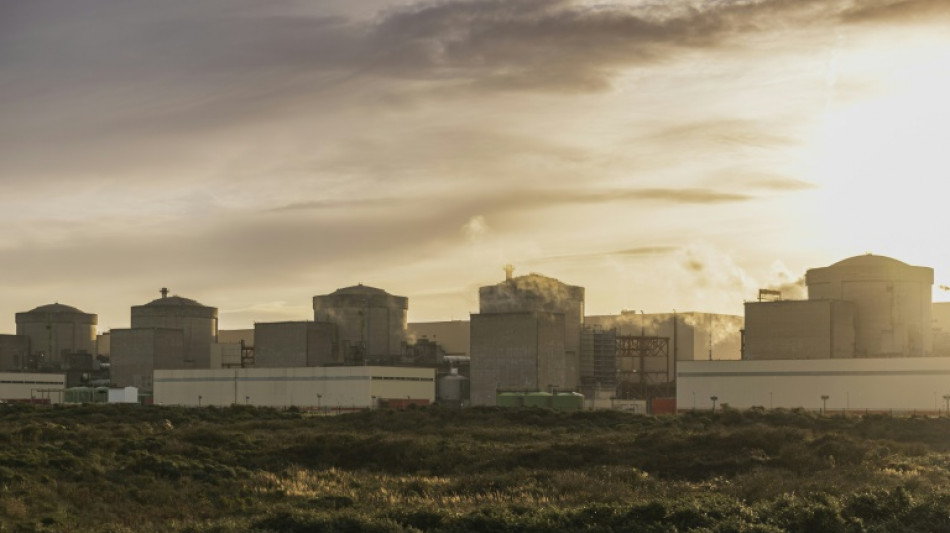
Jellyfish force French nuclear plant shutdown / Photo: Sameer Al-DOUMY - AFP/File

 Oil up, Wall Street dips after Trump rejects Iran truce offer

 Gakpo withdraws from Netherlands squad

 SpaceX puts Starship megarocket in orbit for first time
 Iran denies link to suspected bomb plot at UK airbase used by US

 Ex-boss Mancini says City charges 'not my concern'

 Berlin Marathon winner Assefa finished race with torn Achilles

 Comedian convicted for Erdogan 'insult' but freed pending appeal

 French prosecutors seek two-year sentence for ex-minister Dati in graft case

 Eala makes fast start as weather and transport woes hit Asian Games

 Hurricane Polo approaches Mexico, threatens severe damage

 Energy markets rally after Trump rejects Iran truce offer
 Japanese convenience store enlists Lady Gaga to bolster recruitment

 Seoul summons Ukraine envoy in row over North Korean POWs

 Ireland 'raised awareness worldwide' in Israel game: Hallgrimsson

 Colombian police capture wife, daughter of Ecuador drug lord

 More Asian Games woes as bus takes Pakistan team to wrong venue

 Radio frequencies vital to Earth observation must be protected: UN

 Comedian on trial for insulting Erdogan in standup show

 Women's Fashion Week kicks off in Paris

 Pope arrives in French border city to speak on united Europe

 The wildfires choking Indonesia, sparking regional haze

 PU Prime Deepens Argentina Presence Through FX Expo Buenos Aires 2026

 Nothing to seal here: NZ police help stranded pup home

 White House releases list of products US, China could tax less

 'Pseudo-journalism': Partisan 'news' sites target US midterms

A nuclear plant in northern France was temporarily shut down on Monday after a swarm of jellyfish clogged pumps used to cool the reactors, energy group EDF said.
The automatic shutdowns of four units "had no impact on the safety of the facilities, the safety of personnel, or the environment", EDF said on its website.
"These shutdowns are the result of the massive and unpredictable presence of jellyfish in the filter drums of the pumping stations," the Gravelines plant operator said.
The site was fully shut after the incident, with its two other units already offline for maintenance.
Teams were carrying out inspections to restart the production units "in complete safety", EDF said, adding the units were expected to restart on Thursday.
"There is no risk of a power shortage," the company added, saying other energy sources, including solar power, were operational.
Gravelines is Western Europe's largest nuclear power plant with six reactors, each with the capacity to produce 900 megawatts.
The site is due to open two next-generation reactors, each with a capacity of 1,600 megawatts, by 2040.
This is not the first time jellyfish have shut down a nuclear facility, though EDF said such incidents were "quite rare", adding the last impact on its operations was in the 1990s.
There have been cases of plants in other countries shutting down due to jellyfish invasions, notably a three-day closure in Sweden in 2013 and a 1999 incident in Japan that caused a major drop in output.
Experts say overfishing, plastic pollution and climate change have created conditions allowing jellyfish to thrive and reproduce.
O.Salim--SF-PST