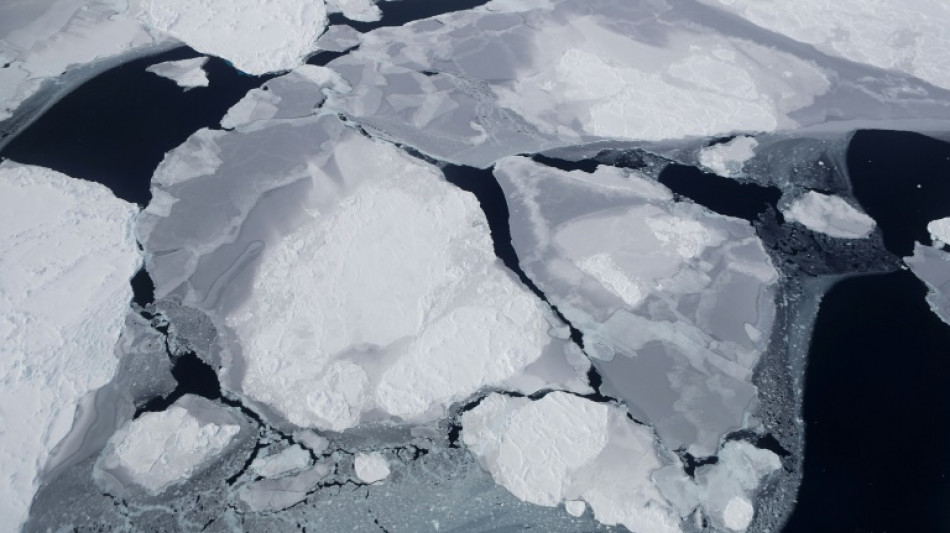
Ice sheets could retreat faster than expected: study / Photo: MARIO TAMA - GETTY IMAGES NORTH AMERICA/AFP

 Oil takes off again, Wall Street dips after Trump rejects Iran truce offer

 AlgoQuant Asset Management Selects Liquid Mercury to Enhance Digital Asset Trading Infrastructure

 UK to reopen refugee resettlement scheme to push 'safe' migration

 Pope urges Europe to help combat 'lies and deceit' in world affairs

 Iranian lawyer Nasrin Sotoudeh wins Council of Europe's rights prize

 French far-right's Bardella denies alleged 2013 antisemitic comments

 Oil up, Wall Street dips after Trump rejects Iran truce offer

 Gakpo withdraws from Netherlands squad

 SpaceX puts Starship megarocket in orbit for first time
 Iran denies link to suspected bomb plot at UK airbase used by US

 Ex-boss Mancini says City charges 'not my concern'

 Berlin Marathon winner Assefa finished race with torn Achilles

 Comedian convicted for Erdogan 'insult' but freed pending appeal

 French prosecutors seek two-year sentence for ex-minister Dati in graft case

 Eala makes fast start as weather and transport woes hit Asian Games

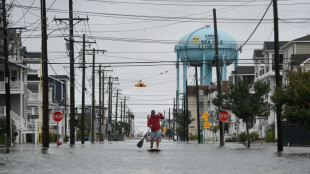
 Hurricane Polo approaches Mexico, threatens severe damage

 Energy markets rally after Trump rejects Iran truce offer

 Japanese convenience store enlists Lady Gaga to bolster recruitment

 Seoul summons Ukraine envoy in row over North Korean POWs

 Ireland 'raised awareness worldwide' in Israel game: Hallgrimsson

 Colombian police capture wife, daughter of Ecuador drug lord

 More Asian Games woes as bus takes Pakistan team to wrong venue

 Radio frequencies vital to Earth observation must be protected: UN

 Comedian on trial for insulting Erdogan in standup show

 Women's Fashion Week kicks off in Paris

Antarctic ice-sheets risk breaking into the sea faster than previously thought in stretches of up to 600 metres a day, speeding up the rise in sea levels, new research indicates.
In a paper published Wednesday in science journal Nature, researchers studied traces left by retreating ice-shelves thousands of years ago on the seabed off Norway.
Ridges revealed how quickly the "grounding line" -- the point where an ice sheet starts to float -- had retreated during the transition from the last ice age: from 55 to 610 metres (667 yards) a day.
"These values far exceed all previously reported rates of grounding-line retreat across the satellite and marine-geological records," they wrote.
They calculated that similar low-lying ice sheets in the Antarctic such as around the so-called Thwaites "doomsday" glacier could retreat at a similarly quick rate under current climate conditions.
Global warming due to human-caused carbon emissions is reducing ice, raising warnings that dangerous "tipping points" could be reached, with sudden major melting driving sharp rises in sea level.
"Our study shows that pulses of extremely rapid ice-sheet retreat could occur across flat-bedded areas of Antarctica even under present-day rates of melting," lead author Christine Batchelor of Newcastle University told AFP.
"Whilst our findings cannot tell us when or if an ice-loss tipping point will be reached, they shed new light on which parts of ice sheets are vulnerable to retreat and how fast such retreat could occur."
D.Qudsi--SF-PST