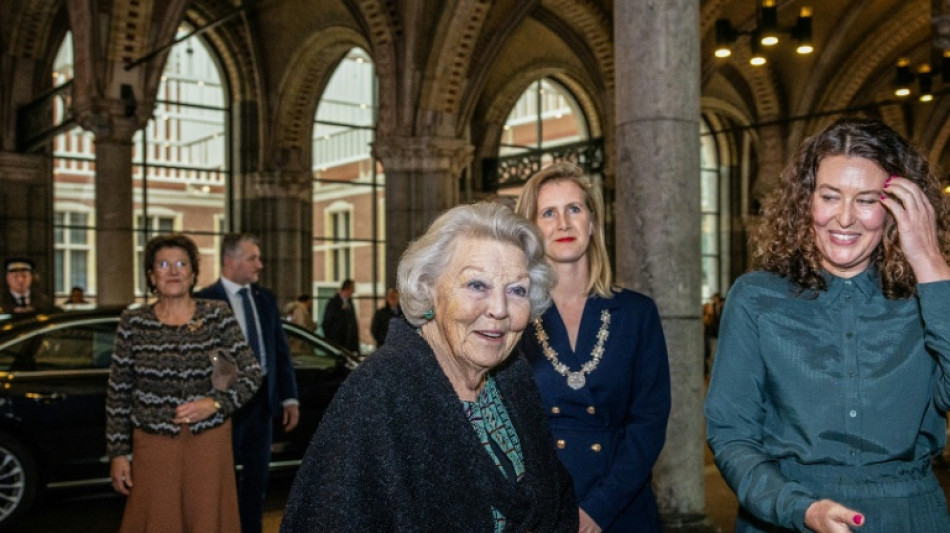
Rijksmuseum puts the spotlight on Roman poet's epic / Photo: Dingena Mol - ANP/AFP/File

 Maryland Regulators and Air Force Clash Over Jet Fuel Spill Cleanup and Golf Course Exemption

 Bishop Museum Races to Save Rare Megamouth Shark Specimen

 Musk Questions AI Development Viability as SpaceX Leasing Revenue Surges

 مصطفى معروفي ينشر قصيدة 'أصوغ كلامي أهتدي بتجاربي'

 Luxembourg Housing Petition Passes Threshold for Parliamentary Consideration

 Raheem Sterling Receives Suspended Sentence After Lamborghini Crash

 Audience to Choose the Set List at Luxembourg's First FAMIL Jukebox Night

 Luxembourg Pay Rise Delayed as Regional and World Headlines Develop

 مواجهة في البرازيل بين نشطاء وفلسطينيين وسياح إسرائيليين حول جدارية مؤيدة

 رئيس جامعة القدس يستعرض نموذج الشراكة بين التعليم العالي والصناعة في قمة QS بأبوظبي

 ابتكارات فلسطينية في مسابقة "سيف" العالمية بالرياض
Amsterdam's Rijksmuseum on Friday opens the biggest exhibition ever devoted to art inspired by "Metamorphoses", Roman poet Ovid's most famous work, featuring contributions from artists as varied as Caravaggio, Magritte and Bernini.
Ovid's epic poem, written more than 2,000 years ago, has been the source for countless Roman, Greek and modern era paintings, statues and literary works.
More than 80 of them -- from more than 50 museums around the world -- have been assembled by the Rijksmuseum and the Borghese gallery in Rome for this exhibition.
The exhibition, said the museum, would reveal the work's "passion, desire, lust, jealousy and cunning".
"Everybody to whom we said we want to make an exhibition about "Metamorphoses" was immediately enthusiastic, because it's a theme that has inspired artists over so many centuries, and there was never really an exhibition about it," Rijksmuseum director Taco Dibbits told AFP.
There are paintings from Italian master Caravaggio and the Belgian Surrealist Rene Magritte, while a 17th-century marble sculpture, Bernini's Sleeping Hermaphroditus, is one of the centrepieces.
Ovid's 15-book "Metamorphoses" tells the story of the world from its creation until the death of Emperor Julius Caesar through myths.
The Sleeping Hermaphroditus tells how nymph Salmacis falls in love with Hermaphroditus and implores the gods to unite the two. Their bodies become one, both man and woman.
"It's a very modern idea in itself, with its fluidity of gender," said Frits Scholten, head of sculpture at the the Rijksmuseum.
"But at the same time, it's very ancient, which makes it all the more relevant."
- 'Universal' theme -
Modern readers may find "Metamorphoses" somewhat impenetrable, Scholten conceded. But it still inspires art even after more than 2,000 years.
"The theme is universal," he argued.
"You find it in games, you find it in modern art, you find it everywhere, people are constantly inspired, it's like with fairy tales, and these are the fairy tales -- to a certain extent -- of the ancient period."
The figure of Medusa, represented in the exhibition by works dating from the 16th to the 21st century are shown in the exhibition.
Long presented as an evil symbol, Medusa, raped by the god Poseidon and whose eyes have the power to petrify anyone who meets her gaze, has been reclaimed in recent decades as a feminist symbol.
The exhibition has different forms of Medusa "to show that each generation uses its own, takes the motifs from Ovid, from the Metamorphoses, for its own use," said Scholten.
The exhibition runs until May 25 at the Rijksmuseum before transferring to the Borghese gallery in Rome.
N.Shalabi--SF-PST

