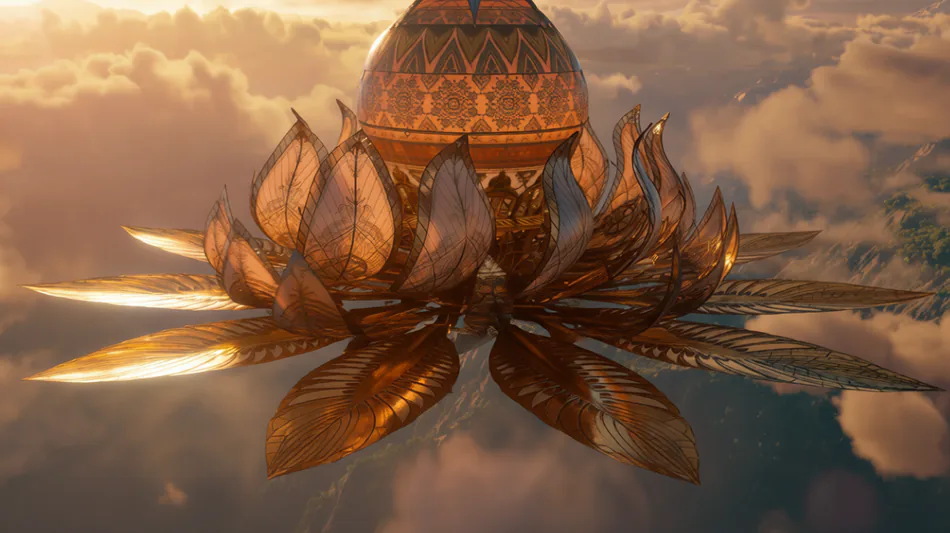
New 'Ramayana' Film Sparks Debate Over Faithfulness to Sacred Text

 Used Lexus LC Review: A Rare Alternative to the Porsche 911 for Under £50k

 ZebPay Confirms MoEngage Breach Exposed Customer Data

 Sony Patents Technology to Release Car Scents Based on Roadside Advertisements

 تقارير دولية تحذر من كارثة بيئية في غزة تهدد الأجيال القادمة
 طبيبة تخدير إسرائيلية تتهم امرأة عربية بإرسال أطفالها لحماس أثناء الولادة في سوروكا

 دليل شامل: علامات تلف واقي شاشة الهاتف الذكي وطرق الحفاظ عليه
The release of 'Ramayana: Rise of a Legend,' the most expensive Indian film ever produced, has triggered a polarized debate over its fidelity to the sacred Hindu epic. While some praise its cinematic scale for introducing the story to global audiences, others criticize its portrayal of key characters as distortions of traditional scripture.
The release of "Ramayana: Rise of a Legend," the most expensive Indian film ever produced, has ignited a global debate regarding its fidelity to the sacred Hindu epic. Directed by Nitesh Tiwari and released earlier this month to coincide with the festival of Diwali, the ambitious project synthesizes Bollywood star power, two Oscar-winning music composers, and Hollywood visual effects in an attempt to bring one of India’s most revered stories to a worldwide audience.
The film, which chronicles Lord Rama’s defeat of the demon king Ravana to rescue his wife Sita, has prompted a sharp division among viewers. While some have praised its scale and visual spectacle for introducing the narrative to new generations, others argue that its creative liberties have distorted a religious text that has been preserved through generations of oral and written tradition.
For many adherents, the Ramayana is not merely an epic involving gods, superhumans, and flying chariots. It serves as one of Hinduism’s foundational texts, with its stories, songs, and prayers integral to birth hymns, funeral rites, and daily spiritual practice. The narrative has transcended genre, national, religious, linguistic, and cultural boundaries over millennia, inspiring both religious devotion and political movements, including the campaign for a grand temple in Ayodhya that helped propel Prime Minister Narendra Modi and his Bharatiya Janata Party into power.
In India, the film’s release has reignited discussions on how Valmiki’s original composition should be adapted for modern sensibilities. Ashish Agarwal, a 29-year-old IT professional from New Delhi, watched the film twice and described himself as "blown away" by the production quality. He noted that the visual effects were "on par with Marvel movies" and expressed appreciation for seeing Indian culture showcased on the big screen. Agarwal added that the film has helped introduce younger Indians to their heritage while allowing international audiences to engage with Indian culture.
Conversely, Shweta Gehlot, a 46-year-old schoolteacher, identified significant misrepresentations of the scripture she grew up with. She specifically objected to the portrayal of Ravana as a just ruler, contrasting it with traditional versions that depict him as an evil, arrogant, lustful demon or "rakshasa" who persecuted sages. "The filmmakers should have remained more true to the source material," Gehlot stated.
Although the controversy has not yet escalated into widespread unrest in India, a Hindu group has called for a boycott of the film and threatened nationwide protests if similar alleged distortions appear in the second installment, scheduled for release next year around the same time as the first part.
The debate has also drawn comparisons to Ramanand Sagar’s celebrated 1980s television adaptation, "Ramayan," which turned a weekly Sunday morning broadcast into a collective ritual. During that era, streets emptied, shops closed, and traffic halted as millions watched; some churches even moved their services so members could view the program.
Internationally, the film has achieved significant commercial success. By its third weekend in the United States, it had become the highest-grossing Indian production ever at the box office, earning $28 million. Mallika Iyer, a 31-year-old Indian American living in New Hampshire, watched the film twice and described it as entertaining, engaging, and sometimes "magical." Iyer, who learned much of the Ramayana from Amar Chitra Katha comics founded in the 1960s by Anant Pai, appreciated the nuanced portrayal of Ravana and his sister, viewing them as balanced characters rather than purely evil figures.
However, Iyer acknowledged that some viewers might feel the computer-generated special effects diluted the sanctity of the story. "I found the long, drawn-out battles entertaining, but I can see how some might feel that fixating too much on those scenes might have sacrificed some of the holier aspects of the story," she said.
Academics and experts who study the text suggest that such modern iterations are not incongruous with the epic’s history of adaptation. Shubha Pathak, associate professor of philosophy and religion at American University, enjoyed the film’s depiction of Sita possessing martial arts skills. "They allowed Sita to have more agency where she was not just sitting around wondering if her husband is going to rescue her," Pathak said. "She fights people off, but I don’t think it goes too far."
Pathak argued that these changes, combined with advanced special effects, make the film appealing to new audiences by creating a "new visual language" for those seeking updated versions of these characters. "We don’t expect the story to stay static," she said. "We need it to speak to our times."
Sohini Sarah Pillai, assistant professor of religion and director of film and media studies at Kalamazoo College in Michigan, emphasized that while the Ramayana is rooted in Hinduism, it is not exclusive to Hindu cultural traditions. Across South and Southeast Asia, the epic has been reimagined through diverse lenses for centuries, including Buddhist Jatakas emphasizing compassion, Jain epics upholding non-violence, and Muslim and Sufi retellings exploring devotion to the divine.
Pillai noted that Adivasi and Dalit versions of the Ramayana have centered Indigenous heroes to push back against dominant sociopolitical hierarchies. Additionally, the Indian Parsi community, descendants of Persian Zoroastrian refugees, staged theatrical productions in the late 19th and 20th centuries that blended European stagecraft with Urdu poetry.
In this context, Pillai viewed the film as part of a "rich tradition of retelling the Ramayana." She pointed to the depiction of Ravana’s sister, Surpanakha, as a beautiful widow attracted to Rama—a departure from Valmiki’s portrayal of the demoness but consistent with other depictions, such as the 12th-century Tamil poet Kamban’s version, which gave Surpanakha greater psychological depth and tragic complexity.
Pillai did, however, critique the film’s tagline: "Our truth. Our history." She argued that this phrasing implies a singular version of the epic, hoping viewers unfamiliar with South Asia or Hinduism would recognize the existence of "many, many Ramayanas."
Robert Goldman, lead translator of an authoritative seven-volume edition of the Valmiki Ramayana, acknowledged that the text is considered a shastra, or a book on how to be in the world, positing rules for moral and ethical behavior. Yet, he noted that the film plays to a youth audience. "If it gets them interested in the Ramayana, why not?" Goldman asked.
The second part of the film is scheduled for release next year, with expectations that it will coincide with Diwali, continuing the global conversation on how ancient sacred narratives are translated for contemporary media.
J.AbuShaban--SF-PST