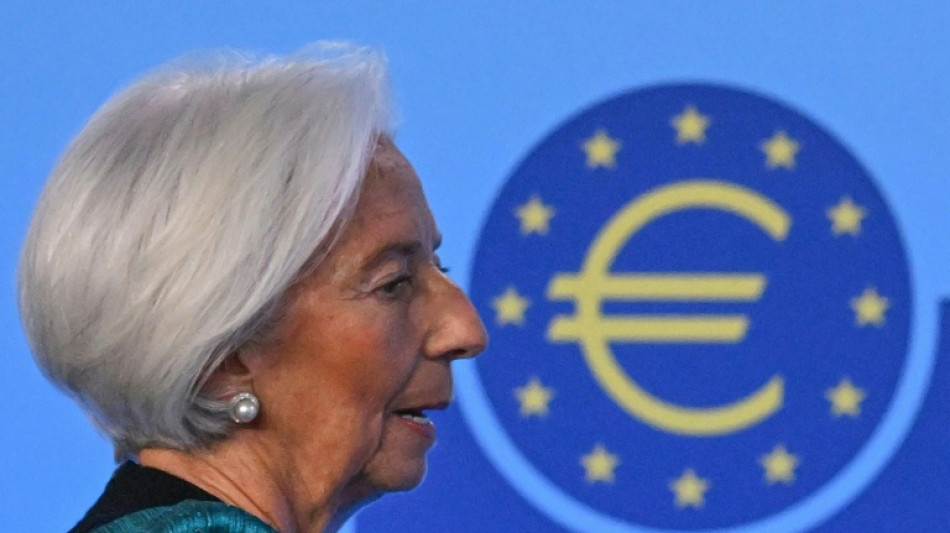
Rising euro, falling inflation in focus at ECB meeting / Photo: Kirill KUDRYAVTSEV - AFP

 Myanmar leader lands in Malaysia for migrant return talks

 Indian central bank hikes rates for first time since 2023

 US military on Okinawa face curfew, alcohol ban after murder case

 Fierce lobbying in EU over 'forever chemicals'

 Dodgers beat Braves and Padres avoid sweep in MLB playoffs
 Mourning, war and elections as Israel marks October 7

 Messi says Argentina retirement is 'saddest day of my career'

 Oil rises and stocks fall as Hormuz worries flare

 Pacific presses world for help 'surviving' climate change at pre-COP summit

 Verstappen revival to be put to the test in steamy Singapore
 US woman who survived botched execution is conscious, speaking: lawyers

 Climate champion Australia digging more coal
 Emotion, tears as Messi retires from Argentina national team

 Dodgers push Braves to the brink of MLB playoff exit

 Crisis-stricken Haiti postpones elections

 N. Korea's Kim pledges 'invariable support' in Putin birthday letter

 OGRD Alliance Advances PLPC Multi-Asset Platform Following APHELAR Milestone, Expanding Licensing and Strategic Capital Frameworks

 Emotion, tears as Messi prepares for Argentina farewell

 Kane eyes Ronaldo record after matching England cap mark
 Spain fight back to beat Croatia, Kane adds to record for England
 Merino double helps Spain beat Croatia, reach Nations League quarters

 US stocks hit fresh records as oil stabilizes on rising supplies

 As Messi bows out, Argentines say 'thank you'

 Ronaldo opens door for Portugal return, apologises for walkout

 'Nobody seems to care': Russian city shrugs off plague reports

A rising euro and falling inflation will present fresh challenges for the European Central Bank at its meeting Thursday, potentially reviving debate about if and when policymakers should start cutting interest rates.
There is little doubt that the central bank for the 21-nation single-currency area will keep its benchmark rate on hold at two percent for its fifth straight meeting.
But a marked strengthening of the euro last week, followed by news that eurozone inflation eased to 1.7 percent in January -- below the ECB's two-percent target -- will invite questions about whether rate cuts are on the horizon.
A stronger currency makes imports cheaper, which could drive inflation down even further -- potentially leading consumers to delay purchases, with negative ripple effects across the economy.
But a strong euro can also weigh on the eurozone's crucial exporters, particularly Germany, as it makes the cost of companies' goods pricier overseas.
It could thus hit the eurozone economy at a time growth is starting to get back on track, potentially undermining efforts to close the gap with China and the United States.
ECB President Christine Lagarde has at recent meetings emphasised that the central bank is in a "good place", seen as indicating that policymakers are happy with the current level of rates.
But for Carsten Brzeski, an economist at ING, recent market developments "have started to make the ECB's 'good place' a little less comfortable".
"The weakening of the US dollar and hence the strengthening of the euro have led to some unease at the bank," he noted.
The euro has been gaining ground for some time, in particular due to worries about US President Donald Trump's volatile policies, from levelling tariffs against trading partners to threatening to seize Greenland.
But it extended gains sharply last week as investors sold off the dollar, briefly hitting a four-and-a-half-year high above $1.20.
- Jitters in Frankfurt -
While emphasising that recent euro gains were "modest", Austrian central bank governor Martin Kocher warned last week that the ECB might have to consider rate cuts if there were further increases.
Lowering borrowing costs tends to support inflation while weakening currencies.
"If the euro appreciates further and further, at some stage this might create of course a certain necessity to react in terms of monetary policy," Kocher, who sits on the ECB's rate-setting Governing Council, told The Financial Times.
The ECB does not target any particular exchange rate, but officials do monitor currency movements as they could impact inflation.
A stronger euro is not all bad news -- it boosts household spending power, at home and on holidays overseas.
The rise of the single currency also points to the growing appeal of Europe at a time of investor worries about the United States and Trump's unorthodox stewardship of the world's top economy.
- Cuts on the horizon? -
At a press conference after the rate decision Thursday, Lagarde is expected, as usual, to stay tight-lipped on the future direction of rates.
When asked about the euro, the ECB chief will likely opt for phrasing along the lines of "we are... monitoring developments", Marco Wagner, an economist at Commerzbank, told AFP.
She will avoid "indicating a clear direction for monetary policy if the euro reaches a certain exchange rate", preferring instead to "remain neutral", he added.
But given the slowdown in inflation, analysts at Capital Economics said they had now "pencilled in rate cuts towards the end of the year".
E.Qaddoumi--SF-PST