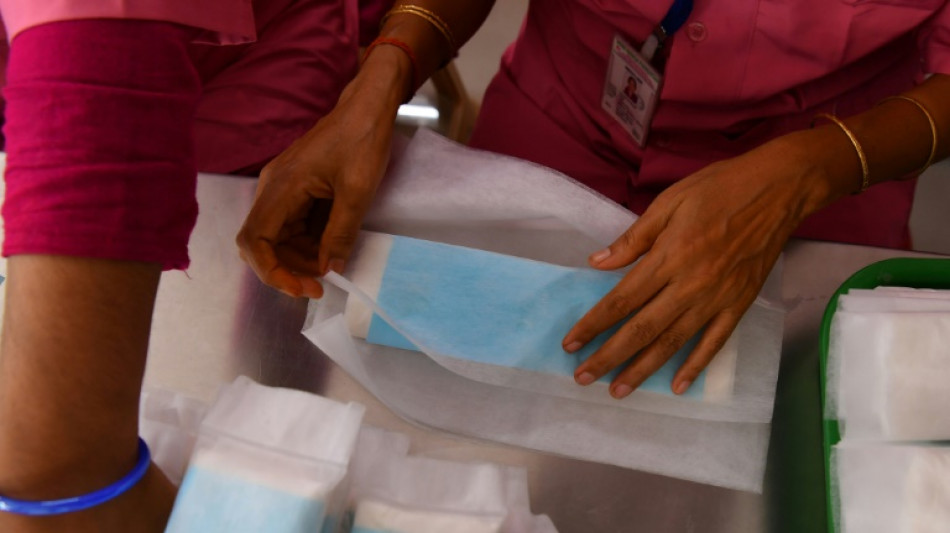
Sri Lanka cuts tax on female hygiene products / Photo: INDRANIL MUKHERJEE - AFP/File

 El Nino’s Weakening Grip on Tamil Nadu Rainfall Hinges on Potential Cyclone

 South Africa Places 36 Hospitals on Standby for Possible Imported Ebola Cases

 Two A1 Crashes Create Kilometres of Rush-Hour Congestion

 Luxembourg City Plans €13 Million Abrigado Centre for 2029

 Luxembourg Housing Petition Passes Threshold for Parliamentary Consideration

 Raheem Sterling Receives Suspended Sentence After Lamborghini Crash

 Tamil Nadu Secures Rs 58,214 Crore in Investments at Vettri Conclave

 فرنسا تدعو لتجريم "الفصل العنصري القائم على الجنس" دولياً

 أزمة الصواريخ الاعتراضية في البنتاغون: استنزاف المخزونات يفرض تعبئة صناعية حتى 2030

 Huawei Found Guilty of Trade Secret Theft in Landmark US Case

 Indian Markets Set for Gain as Foreign Inflows Offset Tariff Fears
Sri Lanka's government on Sunday cut taxes on female sanitary products in a bid to help women and girls unable to afford them because of the country's economic crisis.
Even before the downturn last year, many schoolgirls and women in Sri Lanka, like in other poor countries, would stay home when menstruating because they couldn't afford sanitary products.
A study this year by policy advocacy group Advocata said "period poverty" -- being unable to afford sanitary products -- among Sri Lanka's 5.3 million women of reproductive age was about 50 percent.
Campaigners believe the situation has worsened with Sri Lanka suffering severe shortages of essential goods and inflation rates in excess of 70 percent.
President Ranil Wickremesinghe's office said Sunday that customs duties, airport levies and other local taxes on raw materials imported to make female hygiene products was waived with immediate effect.
Imported pads and tampons will also cost 20 percent less due to a reduction in import duties, Wickremesinghe's office said in a statement.
The tax cut was to "make hygiene products more affordable in view of ensuring hygiene among women and school girls," the statement said.
Months of protests over economic hardships led to the resignation of president Gotabaya Rajapaksa in July.
The country defaulted on its $51 billion foreign debt in April and is in talks with the International Monetary Fund to secure a $2.9 billion bailout.
The new government of Wickremesinghe on Sunday began implementing a new turnover tax of 2.5 percent on all goods and services in a bid to raise state revenue.
However, the government marginally reduced the price of petrol in line with global prices, but kept the price of diesel, commonly used in public transport, unchanged.
K.Hassan--SF-PST

