Lights out for Cuban students as blockade bites / Photo: YAMIL LAGE - AFP

 El Nino’s Weakening Grip on Tamil Nadu Rainfall Hinges on Potential Cyclone

 South Africa Places 36 Hospitals on Standby for Possible Imported Ebola Cases

 Two A1 Crashes Create Kilometres of Rush-Hour Congestion

 Luxembourg City Plans €13 Million Abrigado Centre for 2029

 Luxembourg Housing Petition Passes Threshold for Parliamentary Consideration

 Raheem Sterling Receives Suspended Sentence After Lamborghini Crash

 Tamil Nadu Secures Rs 58,214 Crore in Investments at Vettri Conclave

 فرنسا تدعو لتجريم "الفصل العنصري القائم على الجنس" دولياً

 أزمة الصواريخ الاعتراضية في البنتاغون: استنزاف المخزونات يفرض تعبئة صناعية حتى 2030

 Huawei Found Guilty of Trade Secret Theft in Landmark US Case

 Indian Markets Set for Gain as Foreign Inflows Offset Tariff Fears
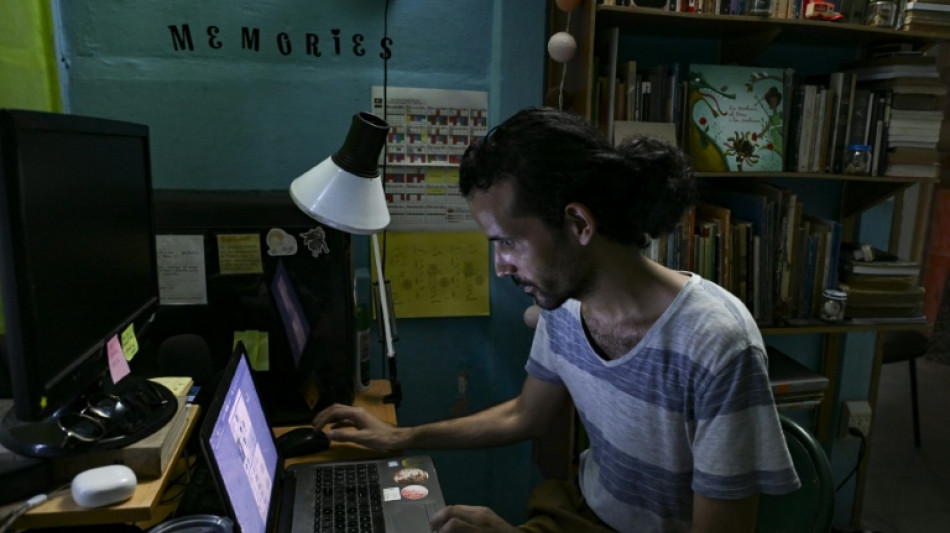
It's the middle of the night in Havana, but Alejandro Benitez is just getting down to work.
The power is back on for the first time in 15 hours and Benitez, a fourth-year architecture student, needs to get his assignment in fast before the electricity cuts out again.
Desperate times call for desperate measures in crisis-hit Cuba, where a US fuel blockade -- part of a pressure campaign which Havana fears will culminate in a military intervention -- has aggravated an energy crisis, leaving people without power for up to 20 hours a day.
In February, the government moved university classes online, part of a raft of measures aimed at conserving electricity.
But distance learning has proven challenging in a country with patchy internet and dwindling power supplies.
Students struggle in fields like architecture, which require regular feedback and direction from insructors.
"Having direct contact with the teacher is really important," said 28-year-old Benitez, who has to ask all of his questions via WhatsApp or Telegram.
With only one oil tanker mooring in Cuba in the last four months, the situation is rapidly deteriorating.
The government announced that it had run out of diesel and fuel oil needed to power the generators that supplement the output of its seven dilapidated power plants.
And as public transport grinds to a halt, so too have students' social lives.
Benitez, who cooks over an open charcoal fire, hasn't left his neighborhood of Punta Brava since February.
- Self-starters required -
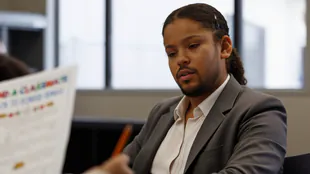
Shalia Garcia, a 19-year-old second-year industrial design student, is also struggling to adapt.
Some courses which are central to her degree have been suspended or pared back.
Teachers send around agendas, course material and submission dates for assignments.
Then the responsibility is on the students in a system that requires them to be self-starters.
"This type of teaching puts the onus on the student, which I find hard to manage," Garcia said.
Even the most zealous pupils face multiple hurdles.
The discounted mobile data packages available to students do not have the capacity to download large folders, and it can take time for teachers to respond to questions.
Teachers, too, say they feel hamstrung by the lack of face time with students.
Benitez's partner, Alfredo Rodriguez, a 34-year-old industrial design professor, told AFP there were entire sections of the syllabus that his students "simply have not seen" because they need to be taught in person.
He also has to regularly extend students' deadlines.
"We cannot make the same demands when we know that some students have no electricity or internet connection," he explained.
Garcia's mother, a doctor, worries that her daughter's education is suffering as a result.
"I'm very concerned but I have no choice but to face the situation," Luisa Odalys Destrade said with a sigh.
Benitez, for his part, feels his future is being held hostage by Havana's standoff with Washington.
"What sort of architect will I become?" he wondered.
J.AbuShaban--SF-PST