WHO facing 'new realities' as US withdrawal looms / Photo: FABRICE COFFRINI - AFP/File

 HSBC 'consults' over UK unit job cuts amid AI adoption
 UK court quashes five ex-traders' Libor rate rigging convictions
 XM Receives “Global Customer Experience Leader Award 2026” at the TrustFinance Performance Awards
 Stocks slide as oil climbs on Mideast flareup
 Heavy casualties in Ukraine after Russian strikes
 French wine harvest set to hit historic low

 Kyiv 'cannot agree' to EU membership limiting food exports: minister

 Arteta targets more Arsenal glory after signing new deal until 2030

 Russell hit with Singapore grid penalty for taking new power unit

 Spotify expands audiobooks to more than 180 markets

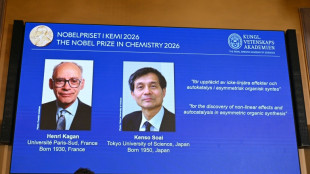 French-Japanese duo wins chemistry Nobel for solving molecular 'mystery'

 England's Nations League surge helps heal World Cup wounds

 Mayor of opposition stronghold Izmir defects to Erdogan party
 Mertens beats Gauff to set up Swiatek clash at China Open
 Benin full of pride at role in Messi's last dance

 France suspends stun grenade use at student protests ahead of PM speech
 Indonesian court hears 'negligence' complaint against state over fires, haze

 Rubio in Greece to urge against Western civilisation 'decline'
 Micron workers at Taiwan plant vote in favour of strike
 In 'The Social Reckoning,' Jeremy Allen White takes on Facebook's 'frightening' ambition
 Chip industry activists call for South Korea to recognise cancer cases
 Famine-scarred southern Madagascar braces for El Nino
 How the EU regulates lobbyists
 I.Coast refuge offers lifelong care for youngsters scorned as 'sorcerers'

 Indian central bank hikes rates for first time in more than 3 years
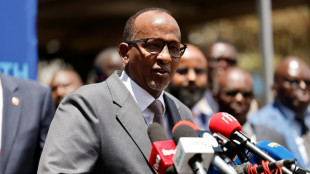
The World Health Organization on Tuesday wrapped up its executive board meeting, held against the backdrop of the United States -- by far its largest donor -- heading for the exit.
The agenda-setting eight-day gathering at the WHO's Geneva headquarters wrestled with the impact of US President Donald Trump's January 20 decision to start the one-year process of withdrawing from the UN health agency.
"We are operating with twin strategic goals: to mobilise resources and to tighten our belts," WHO chief Tedros Adhanom Ghebreyesus said in his closing remarks.
"We regret the announcement by the United States of its intention to withdraw, and it was also sad to see them participating less this week," he said.
"I think we all felt their absence. We very much hope they will reconsider and we would welcome the opportunity to engage in constructive dialogue."
The United States is on the executive board, but made only fleeting contributions throughout the eight-day event.
The board is composed of 34 member states, who nominate a board member who is technically qualified in health.
The board agrees the agenda and resolutions for the decision-making World Health Assembly in May.
"We have had to face new realities, with the announcement of the withdrawal of the US from the WHO," said Barbados's health minister Jerome Walcott, the board's chair, as he closed the meeting.
"Despite the many challenges we faced, we have come together and found agreement on 40 decisions and seven resolutions, which aim to strengthen our work and to enhance good public health."
- Prioritising funding -
If anything, the US move has driven home the need for more secure and reliable funding at WHO, which in recent years has relied heavily on voluntary contributions.
As part of a plan to swell membership fees to cover at least half of the organisation's budget by 2030, the board recommended a 20 percent fee hike.
Boosting membership fees is seen as a way for WHO to reduce its reliance on a handful of major donors and ensure more predictable and flexible finances.
"This is a very strong signal of your support, and it's a major step towards putting WHO on a more predictable and sustainable financial footing," Tedros said.
"You said we need to prioritise based on realistic funding. We agree," he added.
"You said we need to improve efficiency, enhance oversight and reduce unnecessary expenditures. We agree."
Last week, the board also re-adopted a resolution on responding to the health conditions in the Palestinian territories.
The total planned costs required to implement the decision were given as $648 million, including $275 million for emergency response and $265 million for early recovery and rehabilitation.
Other topics discussed by the board included non-communicable diseases, mental health, skin diseases, environmental health, air pollution, the global health workforce, substandard and falsified medicines, maternal and newborn health, health emergencies, and universal health coverage.
A.Suleiman--SF-PST