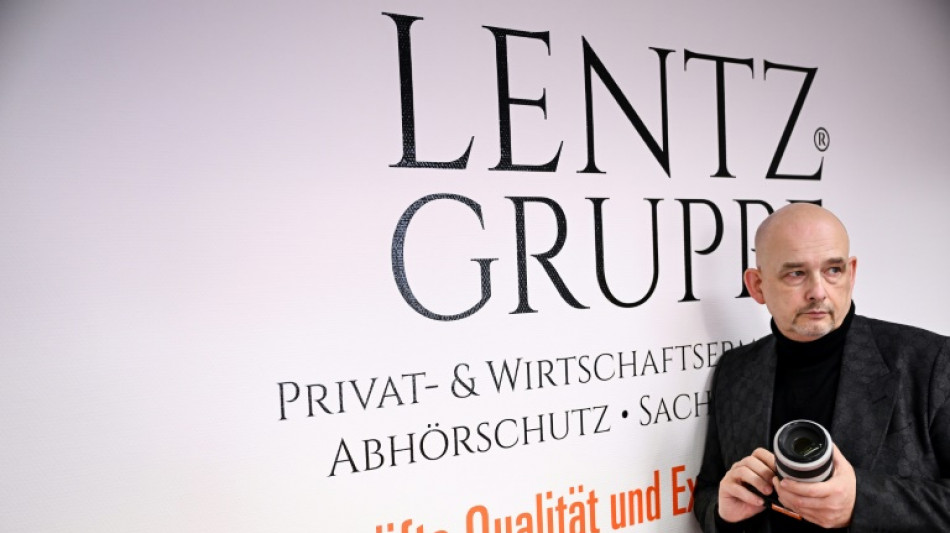
For German 'sick leave detective', business is booming / Photo: Kirill KUDRYAVTSEV - AFP

 US woman who survived botched execution is awake and speaking
 From 1800s to modern pharma: a Nobel-winning chemistry quest
 Southampton boss Eckert given suspended ban over 'Spygate'
 Russia warns of 'false' information as second plague case reported

 IEA ready to release more oil reserves if necessary
 HSBC 'consults' over UK unit job cuts amid AI adoption
 UK court quashes five ex-traders' Libor rate rigging convictions
 XM Receives “Global Customer Experience Leader Award 2026” at the TrustFinance Performance Awards
 Stocks slide as oil climbs on Mideast flareup
 Heavy casualties in Ukraine after Russian strikes
 French wine harvest set to hit historic low

 Kyiv 'cannot agree' to EU membership limiting food exports: minister
 Arteta targets more Arsenal glory after signing new deal until 2030

 Russell hit with Singapore grid penalty for taking new power unit
 Spotify expands audiobooks to more than 180 markets

 French-Japanese duo wins chemistry Nobel for solving molecular 'mystery'

 England's Nations League surge helps heal World Cup wounds

 Mayor of opposition stronghold Izmir defects to Erdogan party
 Mertens beats Gauff to set up Swiatek clash at China Open
 Benin full of pride at role in Messi's last dance

 France suspends stun grenade use at student protests ahead of PM speech

 Indonesian court hears 'negligence' complaint against state over fires, haze
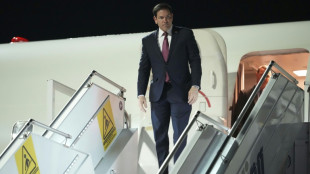 Rubio in Greece to urge against Western civilisation 'decline'

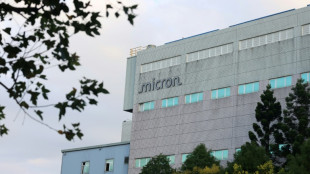 Micron workers at Taiwan plant vote in favour of strike
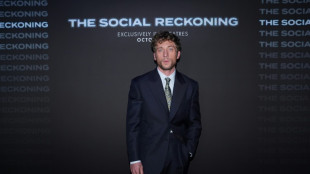 In 'The Social Reckoning,' Jeremy Allen White takes on Facebook's 'frightening' ambition

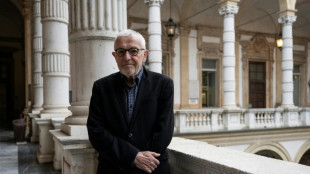
Rising sick leave rates may be bad news for German companies at a time the economy is already ailing -- but for private eye Marcus Lentz, it has been a boon for his business.
He is seeing a record number of requests from firms for his agency to check up on employees suspected of calling in sick when they are actually fit to work.
"There are just more and more companies that don't want to put up with it anymore," he told AFP, adding his Lentz Group was receiving up to 1,200 such requests annually, around double the figure from a few years earlier.
"If someone has 30, 40 or sometimes up to 100 sick days in a year, then at some point they become economically unattractive for the employer," he said in an interview at his office in the gritty district around Frankfurt's main train station.
From auto titans to fertiliser producers, companies are ringing the alarm about the impact of high rates of sick leave on Europe's biggest economy.
While some say changes to reporting in sick have made it easier to fake illnesses, experts insist the reasons behind the rising numbers are more complex, ranging from increases in mental illnesses to more work pressure.
- 'Sick man of Europe' -
Many agree that the trend is weighing on Germany at a time the country's woes, from a manufacturing slowdown to weak demand for its exports, have led some to once again dub it "the sick man of Europe".
"The impact is significant and certainly affects economic activity," Claus Michelsen, chief economist at the German association of research-based pharmaceutical companies, told AFP.
The association calculated that higher rates of absenteeism at work due to illness shaved 0.8 percent off Germany's output in 2023 -- helping push the economy into a 0.3 percent contraction.
Workers in Germany on average took 15.1 days of sick leave last year, up from 11.1 days in 2021, according to federal statistics agency Destatis.
The TK, one of Germany's major statutory health insurers, reported the average number of sick days among workers it covers was 14.13 in the first nine months of the year -- a record high.
According to OECD data, Germans missed on average 6.8 percent of their working hours in 2023 due to illness -- worse than other EU countries such as France, Italy and Spain.
Some corporate leaders have been outspoken about the problem, with Mercedes-Benz chief executive Ola Kallenius lamenting that "absenteeism in Germany is sometimes twice as high as in other European countries".
Elon Musk's electric car giant Tesla went further, reportedly sending managers worried about high illness-related absences at its German factory to personally check up on employees on sick leave at their homes.
Critics say a system of allowing patients with mild symptoms to get sick notes from their doctor over the phone is providing employees who could work an easy way to take days off -- or fake illnesses entirely.
Some industry groups are calling for the system, first introduced during the Covid pandemic, to be abolished.
- 'Dangerous shortcuts' -
Detective Lentz said in many cases where people are pretending to be sick for long periods, they are doing work on the side.
He gave the example of a person who was helping out at his wife's business while officially off sick. Others, he said, have taken long-term sick leave to renovate their properties.
While it can be expensive to hire a detective, Lentz said firms will be looking to get rid of highly unproductive workers at a time of mounting economic woes.
"They say, anyone who is off sick so often is not making us any money -- out they go," he said.
Still, not everyone is convinced the high reported sick rates reflect the true picture.
Some say a new system whereby doctors automatically transmit sick notes to patients' insurance companies has led to more accurate reporting of sick leave, pushing up the figures.
Others meanwhile take a more nuanced view of the rising trend.
The Hans Boeckler Foundation's WSI institute, which is linked to German trade unions, said blaming workers for deciding to stay home too easily or for faking sickness were "dangerous shortcuts".
"They obscure the view of the really relevant causes," said Bettina Kohlrausch, WSI's scientific director, who pointed instead to more stressful working conditions, increasing respiratory ailments and fraying social protections.
R.AbuNasser--SF-PST