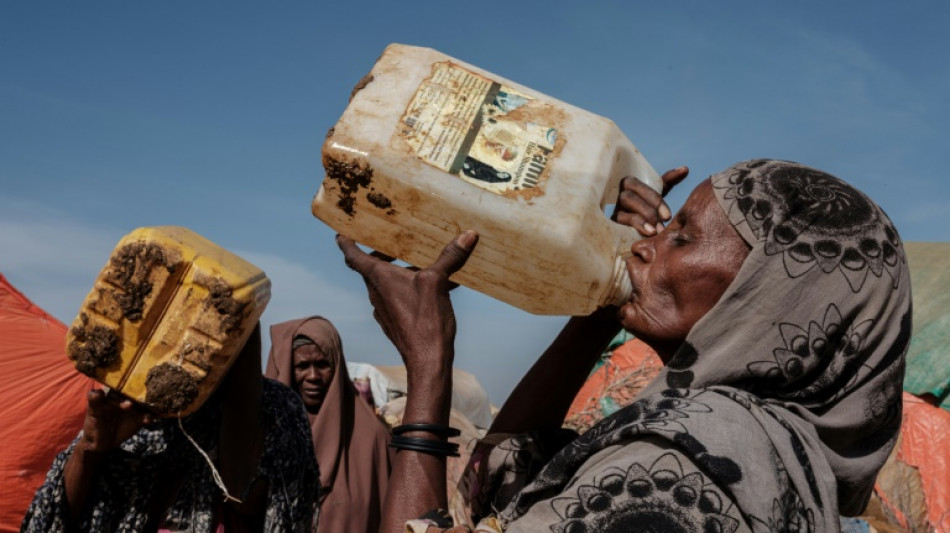
40 million more faced acute hunger in 2021: UN / Photo: YASUYOSHI CHIBA - AFP/File

 Gauff says online abuse was 'draining' after China Open exit

 As sector struggles, Porsche puts luxury ahead of volume

 'It's personal': Fiji minister pushes better climate finance at pre-COP

 Russia glosses over dark Soviet past in reinvented museum

 UK tax body opened probe into Man City in 2018: FT

 Yemen's Houthis claim new attacks on Saudi airports as conflict deepens

 Germany factory production at highest level for 18 months

 Thailand floods death toll rises to 60 since mid-September

 US pushes Russia for information on plague reports

 Myanmar leader lands in Malaysia for migrant return talks

 Indian central bank hikes rates for first time since 2023
 US military on Okinawa face curfew, alcohol ban after murder case

 Fierce lobbying in EU over 'forever chemicals'

 Dodgers beat Braves and Padres avoid sweep in MLB playoffs

 Mourning, war and elections as Israel marks October 7

 Messi says Argentina retirement is 'saddest day of my career'

 Oil rises and stocks fall as Hormuz worries flare

 Pacific presses world for help 'surviving' climate change at pre-COP summit

 Verstappen revival to be put to the test in steamy Singapore
 US woman who survived botched execution is conscious, speaking: lawyers

 Climate champion Australia digging more coal

 Emotion, tears as Messi retires from Argentina national team

 Dodgers push Braves to the brink of MLB playoff exit

 Crisis-stricken Haiti postpones elections

 N. Korea's Kim pledges 'invariable support' in Putin birthday letter

The number of people facing hunger rose to 193 million last year as conflict, climate change and economic crises ravaged people's livelihoods, the UN's Food and Agriculture Organization said Wednesday.
While experts have warned that Russia's war in Ukraine could cause famine, the FAO said in an annual report that nearly 40 million more people were pushed into "acute food insecurity" in 2021.
Among 53 countries facing the problem, the most affected include the Democratic Republic of Congo, Ethiopia, Yemen and Afghanistan where millions face hunger after the country plunged into financial crisis following the Taliban takeover in 2021.
The United Nations defines "acute food insecurity" as when a person's inability to consume adequate food puts their lives or livelihoods in immediate danger.
"This is hunger that threatens to slide into famine and cause widespread death," the FAO said.
The number has risen constantly since the first report was published by the FAO, the World Food Programme and the European Union in 2016.
The increase in 2021 has been "driven by a toxic triple combination of conflict, weather extremes and economic shocks", with people affected in 53 countries, the FAO said.
Although the report does not take into account the conflict in Ukraine, the FAO said the war "stands to have the most devastating impacts on food crisis countries and on those on the brink of famine".
Russia and Ukraine are major exporters of essential agricultural products, ranging from wheat and sunflower oil to fertiliser, and the FAO has previously said the conflict sent world food prices to an all-time high in March.
"The war has already highlighted the interconnected nature and fragility of global food systems," the FAO said.
- Outlook 'not good' -
The agency noted that several countries battling major food crises obtained almost all of their wheat imports from Russia and Ukraine last year, including Somalia, the Democratic Republic of Congo and Madagascar.
The FAO warned that the "outlook moving forward is not good".
"Today, if more is not done to support rural communities, the scale of the devastation in terms of hunger and lost livelihoods will be appalling," the report said.
"Urgent humanitarian action is needed on a massive scale to prevent that from happening," it said.
In 2021, conflict and insecurity was the main driver of acute hunger in 24 countries, affecting 139 million people.
Economic "shocks", worsened by the impact of Covid, hit 30.2 million people in 21 countries.
Extreme weather was the main driver of acute food insecurity for 23.5 million people in eight African countries.
The FAO said it needs $1.5 billion to stabilise and increase local food production in at-risk regions where planting season is starting.
"There is no time to waste," it said as it meets on the issue on Wednesday.
S.AbuJamous--SF-PST