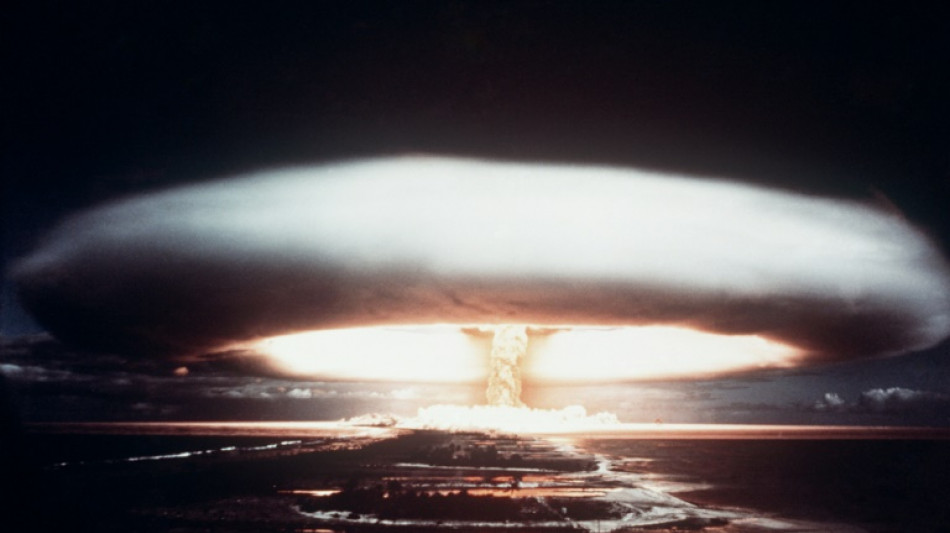
French lawmakers to probe Polynesia nuclear tests / Photo: © AFP/File

 Dodgers beat Braves to advance in MLB playoffs, Rays oust Yankees
 'A sun as black as my lungs': how corruption crucified a polluted Albania city

 The British historian helping the French rediscover de Gaulle
 Dodgers beat Braves to advance, Guardians survive in MLB playoffs
 Latin American, Caribbean women top Nobel literature buzz
 US says Fiji-based Chinese official paid bribes for Beijing

 After botched US execution, Christa Pike was nearly taken off life support

 Guinea-Bissau junta urges military unit loyal to ex-president to disarm
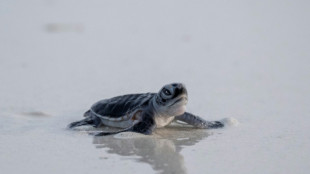 As species decline, green turtles offer glimmer of hope
 Brothers Scott and Beauden Barrett named to start for All Blacks
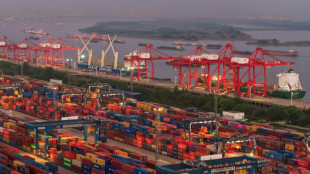 EU trade chief seeks to dial down China tensions
 'Never again Bolsonaro': thousands march ahead of Brazil election runoff

 After botched execution, US woman was nearly taken off life support before revival
 Searing AIDS drama 'Elsinore' opens London film festival

 Evicted pensioner who sparked Spain housing protests dies: tenant union
 Golf star Rahm quitting LIV tour over 'unacceptable' terms
 Thousands march fearing return of a Bolsonaro presidency in Brazil
 French PM denies police ordered to confront student protesters

 Rubio touts US power, calls on Europe to emerge from 'slumber'

 Trump says 'we don't think' Russian plague is bio-weapon
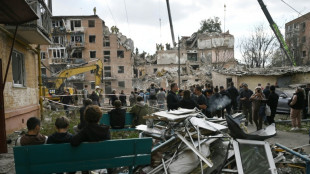
 Five children among 26 killed in Ukraine after Russian strikes

 Man City should 'accept' punishment for rule breaches, says Lineker
 US woman who survived botched execution is awake and speaking
 From 1800s to modern pharma: a Nobel-winning chemistry quest
 Southampton boss Eckert given suspended ban over 'Spygate'
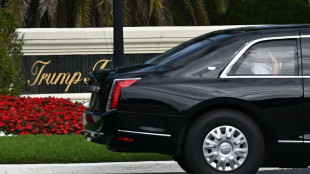
French lawmakers are expected to launch a probe into the impact of the country's nuclear weapons tests in French Polynesia over three decades.
France detonated almost 200 bombs from the 1960s to the 1990s in French Polynesia -- a scattered Pacific island territory thousands of kilometres east of Australia -- including 41 atmospheric tests between 1966 and 1974.
"We need to ask ourselves what the French government knew about the impact of the tests before they were carried out, as they occurred and up to today," the largely communist GDR group in the National Assembly said in a written request for an investigation.
The GDR used its right to request one parliamentary investigation per session to demand the probe, which must be formally approved by the defence committee.
The blasts "had numerous consequences: They relate to health, the economy, society and the environment," GDR said in the text written by Mereana Reid Arbelot, a French Polynesian member of parliament.
She called for a "full accounting" of the consequences and added that the group wanted to "shed light" on how testing sites were first chosen during the 1950s.
Reid Arbelot said those decisions inflicted "trauma on the civilian and military populations".
GDR said that Paris' claims about how much radiation people were exposed to at the time of the tests are contested among scientists and should be revised.
Paris first opened a path to compensation in 2010 when it acknowledged health and environmental impacts.
A study published by the French National Institute of Health and Medical Research (INSERM) last year found that the nuclear tests slightly increased the risk of thyroid cancer for local people.
But campaigners at the time said that it should have looked at a larger segment of the population and called for more reparations.
On a 2021 visit, President Emmanuel Macron said the nation owed French Polynesia "a debt" for the nuclear tests, the last as recently as 1996.
He called for archives on the testing to be opened, save only the most sensitive military information.
France's independent nuclear programme was launched in the wake of World War II and pushed by Fifth Republic founder Charles de Gaulle.
One of nine nuclear powers in the world, it maintains a stock of around 300 warheads -- a similar level to China or Britain, but far short of heavyweights Russia and the United States.
French nuclear doctrine calls for the bombs to be used only if the country's "vital interests" are under threat -- a relatively vague term leaving the president wide leeway to decide on their use.
Q.Bulbul--SF-PST