'No heavier burden': the decades-long search for Kosovo war missing / Photo: Armend NIMANI - AFP

 Hotel Blacklist Launches New Accommodation Industry Risk Assessment Tool

 Bangladesh nuclear plant draws hope -- and worry

 US beat Canada 1-0 to wrap up four-win international break
 Turkey, Australia's joint COP31 leadership raises doubts

 For Turkish NGOs, COP31 offers rare space for action
 Sleep, appetite, gene-editing experts contend for Nobel chemistry prize
 Nobel Peace Prize haunted by the 'spectre' of Trump

 Africa launches own credit agency in bid for cheaper borrowing

 US, China, EU: three paths to regulating AI
 Australia's High Court rules against coal mine in landmark climate case
 Australia touts new funds for Pacific infrastructure at Fiji 'pre-COP'

 Eva Marie Saint, Oscar winner of Hollywood classics, dies at 102

 Australia probes app used in cheap smart glasses over privacy fears
 England needed to 'move on' from World Cup pain, says Tuchel

 O'Neill to stay at Celtic after period of "reflection"

 Kane marks 125th England cap with Wembley Nations League double
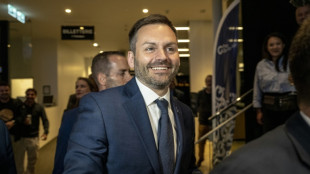 Quebec's incoming separatist leader wants to block Crown from swearing-in

 Emmys gala will now stream its premier television awards

 Paramount completes Warner Bros takeover, creating Skydance
 Trump blames France unrest on Islam, migration
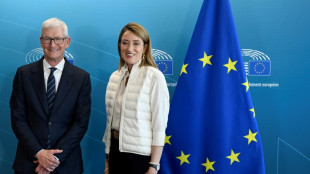 Apple's Cook praises EU over efforts to protect children online
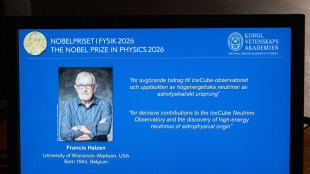 Nobel winner Halzen says years of October 'misery' finally over
 Quebec separatist win rattles Carney's unity push

 'Itching' for change: Shiffrin cuts back slaloms this season

 'Gen Z has risen up': Tens of thousands mass for tense France school protests
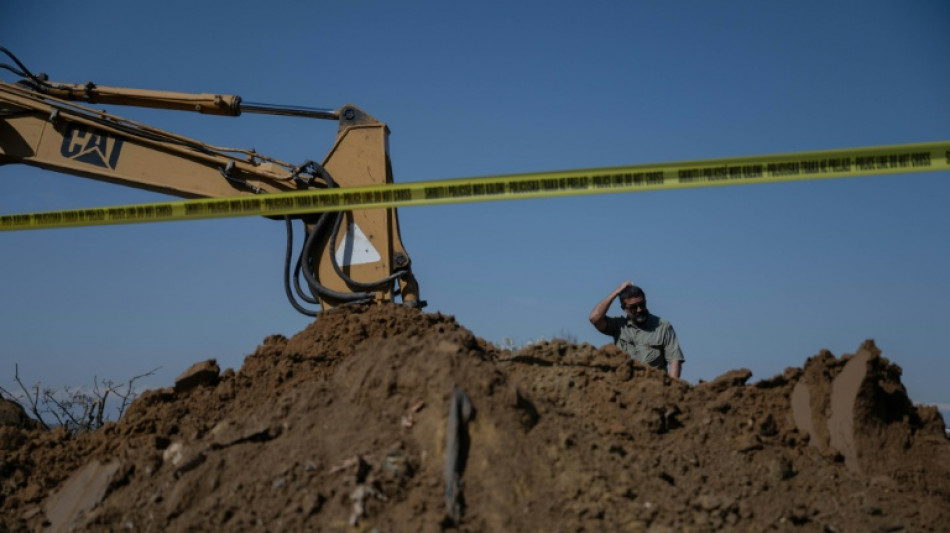
Halit Krendali peered over the edge of a freshly dug pit in southern Kosovo, desperately hopeful his uncle, missing for nearly 30 years, had finally been found in a mass grave.
The 70-year-old looked on as forensic experts in white coveralls carefully examined the excavated earth for any sign of the dozens of dead believed to be buried there.
"Inshallah, I'll never come here again because there is no heavier burden than this," he told AFP during his third visit to the site.
For over a week, forensic teams have been exhuming remains at the Perzhina site in southern Kosovo, the latest in hundreds of mass graves uncovered since the end of the Balkan country's 1998-1999 war with Serbia.
The conflict between independence-seeking ethnic Albanian guerrillas and Serbian armed forces killed around 13,000 people and left 4,000 missing.
Thousands of people have been identified through exhumations and DNA testing but 1,600 are still missing.
Most of the latter are ethnic Albanians. Another 500 are Serbs, Roma and other minorities.
- 'Damaged, fragmented, burned' -
So far, the remains of three people have been exhumed at Perzhina, where the government's missing persons commission expects as many as 47 bodies to be uncovered in the coming days.
But the chairman of the government's commission for missing persons, Kushtrim Gara, said he suspected the bodies of dozens more Albanian civilians had been moved from the site to another location.
"They were excavated and buried elsewhere by Serbian forces to hide war crimes," Gara said.
During the war, Serb forces moved bodies from mass graves to conceal massacres, regularly using heavy machinery, making the job of forensic teams even harder, he said.
Around 1,000 bodies have been recovered from sites in Serbia alone -- with over 740 found in one mass grave in the outer Belgrade neighbourhood of Batajnica in 2001.
It can take years and even decades to identify remains found in these graves accurately and some are still unknown.
At the Institute of Forensic Medicine in Pristina, boxes containing remains of between 250 and 300 people recovered from sites around the region are stored for years after being uncovered.
"Why don't we know the exact number? Because their bones are often damaged, fragmented (or) burned to the point that a DNA profile cannot be taken from them," institute forensic anthropologist Ditor Haliti said.
- 'A place to put a flower' -
Naxhije Dushi, whose brother Nazmi was abducted during a Serbian police operation in 1999, is still searching for answers.
"I need to know at least where his bones are, to cry and talk to him like I used to when he was alive," the 60-year-old said.
Her brother, then 23, was taken by Serbian forces along with her 26-year-old cousin, Masar, and never seen again.
She was hopeful, when excavations revealed Masar's body in 2024, that Nazmi would also be found.
But he remains missing.
It took around two years for scientists to confirm her cousin's identity.
But when he was finally buried in Klina last month, along with two other victims, it was with state honours, their caskets draped in flags with a military escort.
Klina mayor Zenun Elezaj, speaking at the funeral, said the burial gave only a small but important respite to families.
"It just gives families a place to put a flower for their loved ones," he said.
- Unbearable waiting -
Serbia has never recognised the independence of Kosovo, its former province, and relations between the two remain strained.
In January, both countries agreed to a joint commission to accelerate the search for war missing.
Despite this, Gara said Belgrade remained reluctant to share reliable information that could help find mass graves.
"This is directly related to the lack of willingness on the Serbian side to provide data from their archives, especially the military," he said.
For its part, Serbia accuses Kosovo of a lack of interest in searching for mass graves containing Serb victims.
For those who don't know where their loved ones are, the slow progress is excruciating.
"This waiting is unbearable," said Krendali.
Now a retiree, he attends every excavation he can in the decades-long search for his uncle Ramadan but fears it could take years more.
"I don't have much time to wait."
I.Saadi--SF-PST